|
|
Butt Mountain and Other Aids for Roles |
|
The Role Aids adventure line comes to an end. After this, its all sourcebooks and settings supplements. |
|
|
| |
|
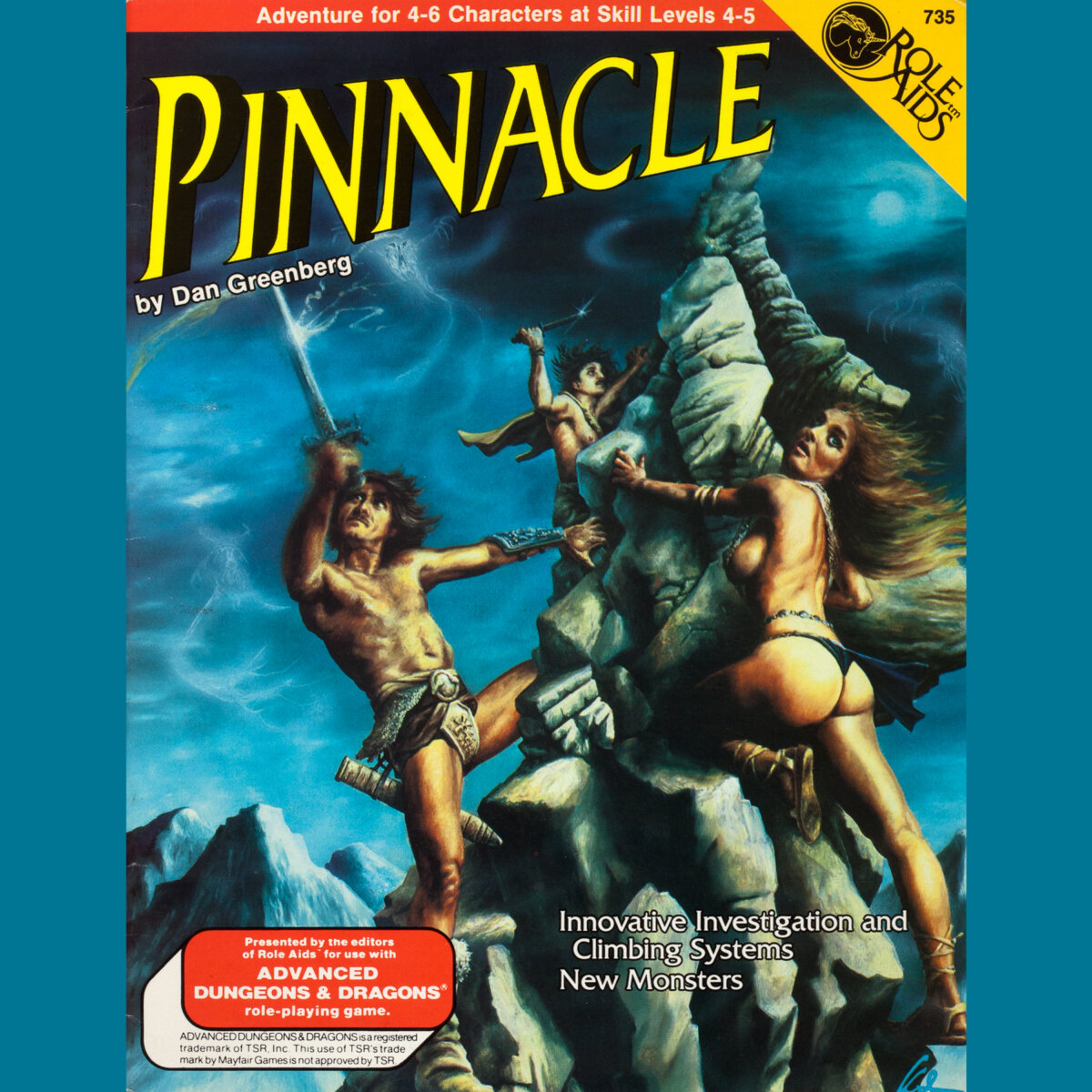
Well, that sure is a butt-tastic cover, huh? Struggling to not make a “dying from exposure” joke. More than the general lack of clothing, I think the most troubling thing about this painting, by Stephen Venters, is that fellow’s metal loincloth. That thing looks deeply uncomfortable with or without the frigid wind of a mountaintop.
Anyway, this is Pinnacle (1986) and we’ve reached the last batch of Role Aids adventures. That might be for the best? After this it’s…all down hill. Ugh, I hate me, too, don’t worry.
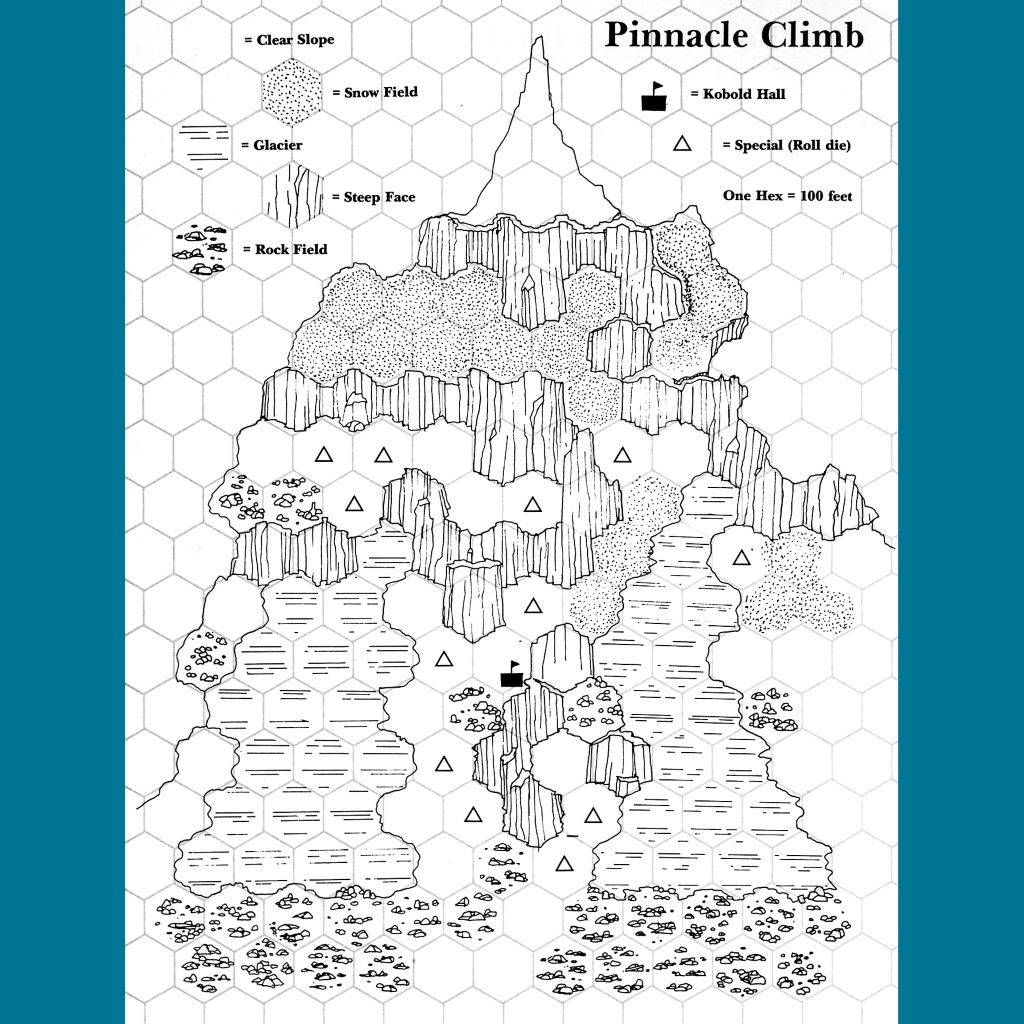
But yea, this is about a race to climb to the top of an unclimbable mountain. It immediately reminds me of Fritz Leiber’s “Stardock,” but also the recent RuneQuest adventure “Pegasus Plateau,” which I feel must be inspired in some way by this. There is more to the mountain than punishing elements and weird magical storms, though. There’s an ancient ruined city and a dreaming titan thing and a secret assassin factory? I really didn’t see one of those things coming. The whole mountain is hollow, too. Players are gonna be so pissed when they get to the top, wander inside and find the elevator.
There is a whole lot of intrigue too. The sponsors of the climb have hidden motives, the assassin factory folks have secrets that they wish to keep secret. There are rival climbers, too — the reward is 100k gold pieces to whoever reaches the summit, so expect lots of bedchamber scorpions ahead of the climb.
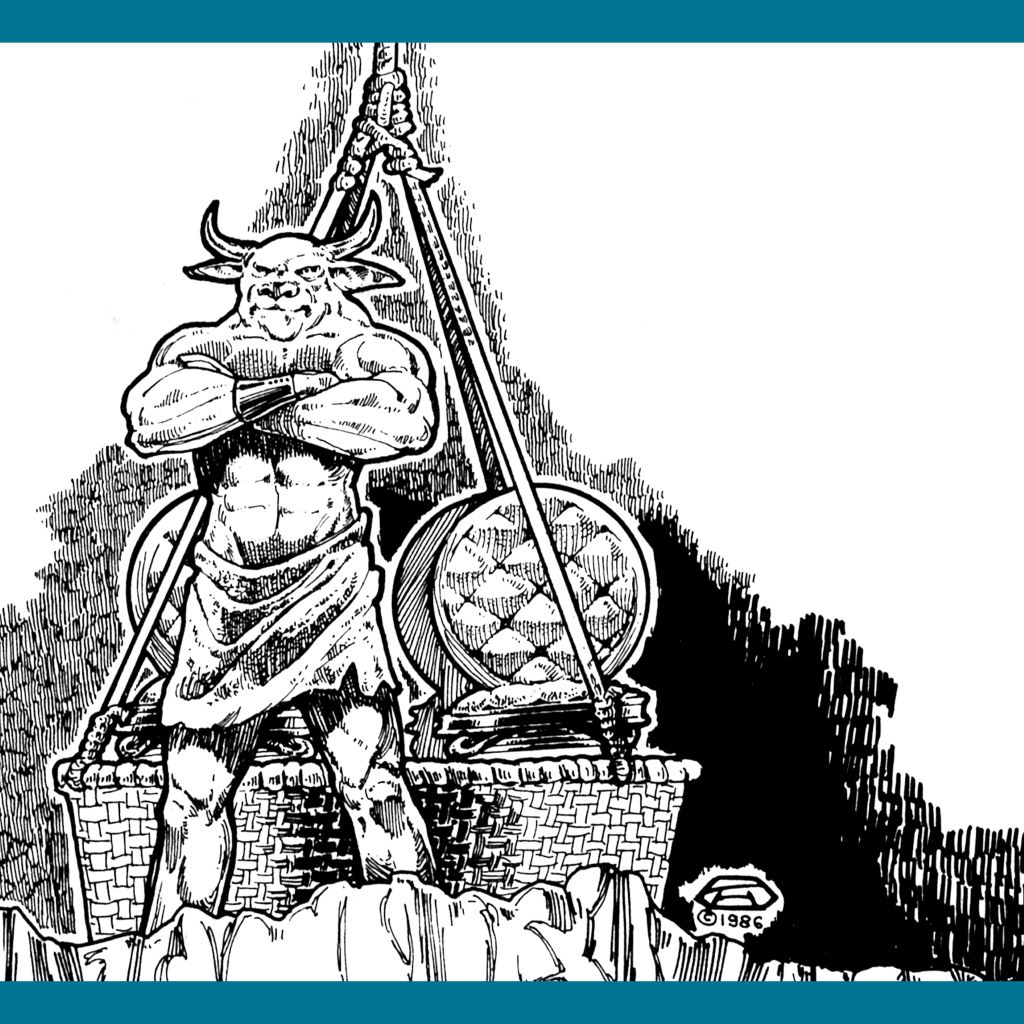
The investigative system is really just a set of rumor charts, so that’s a little underwhelming. Otherwise, a solid adventure. The climb is a pretty unique character test, and the subsequent encounters, while over the top (there is an assassin in a cake!), should be satisfying. A top shelf Role Aid. |
| |
|
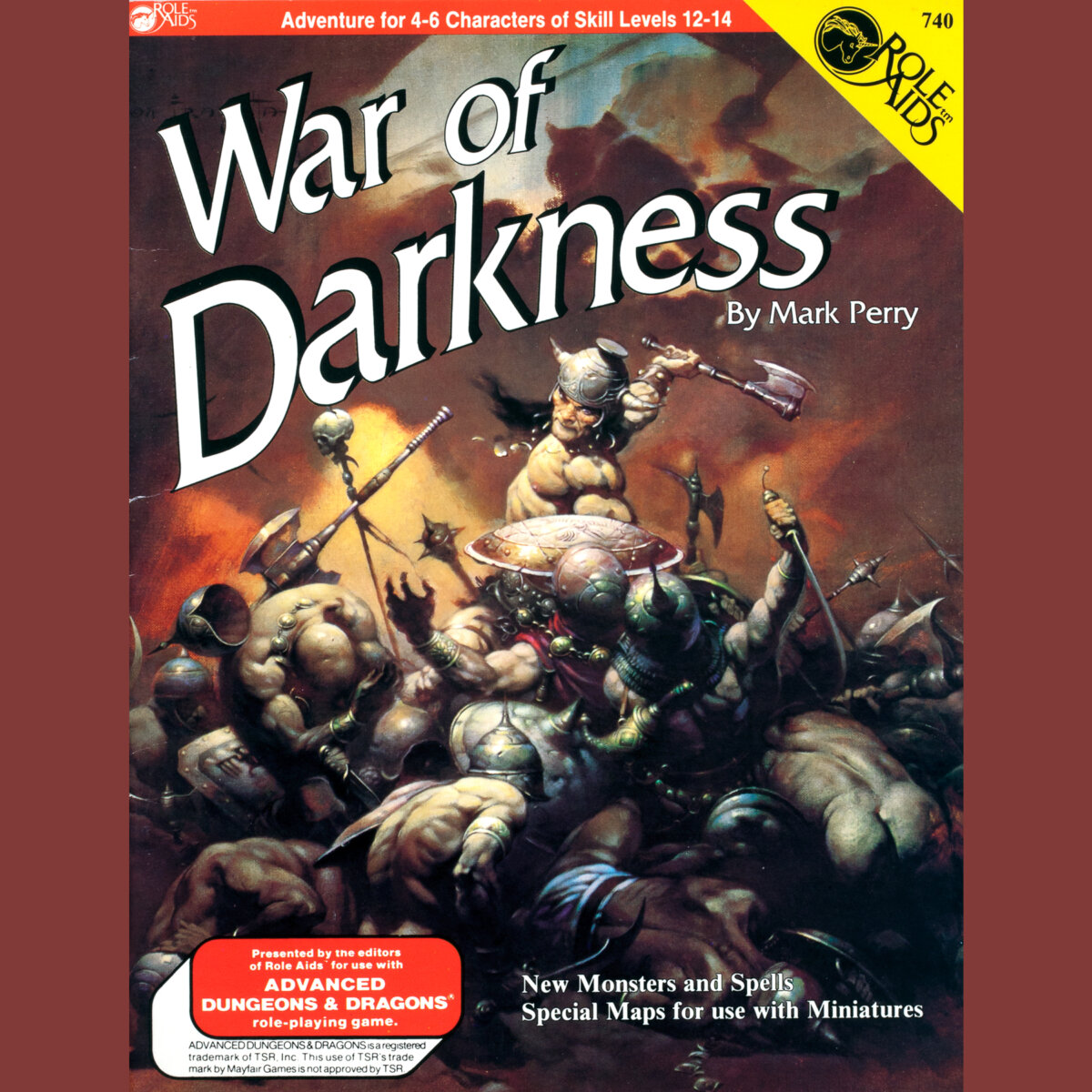
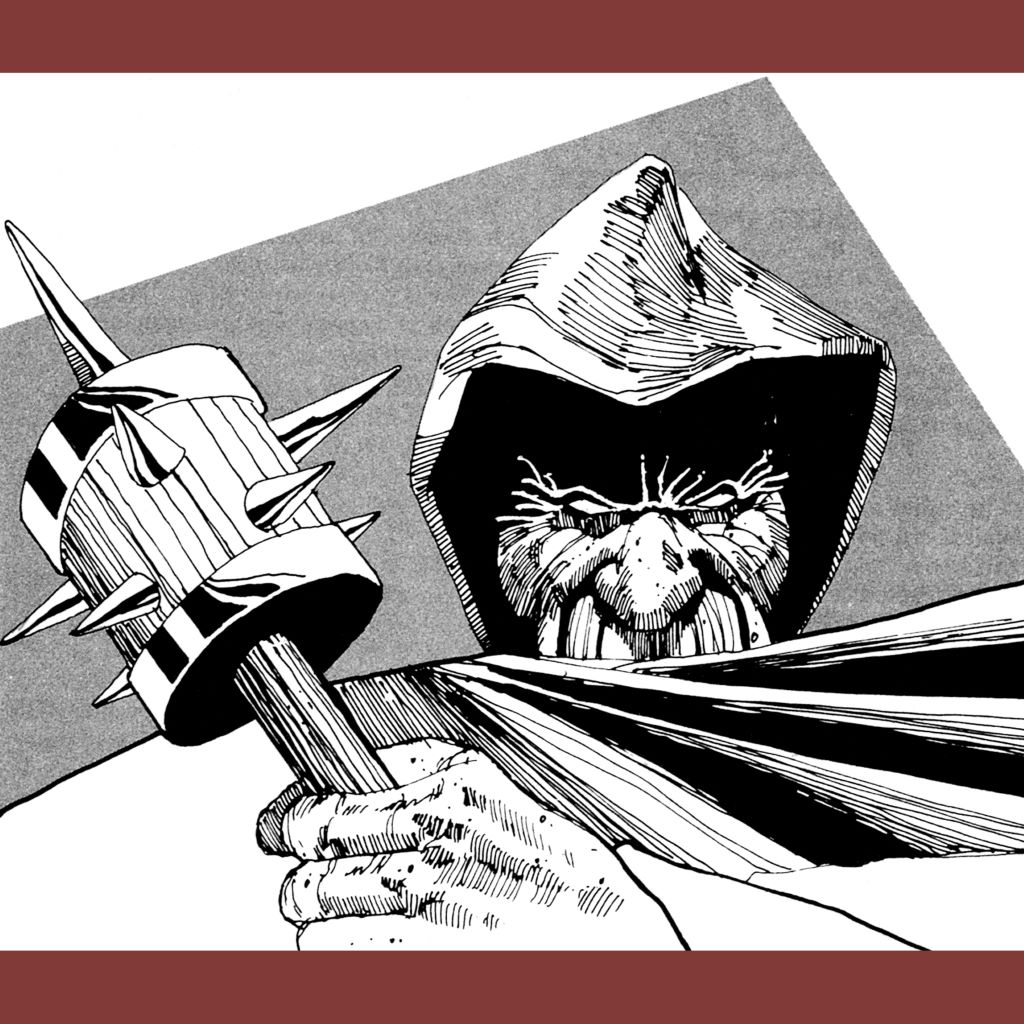
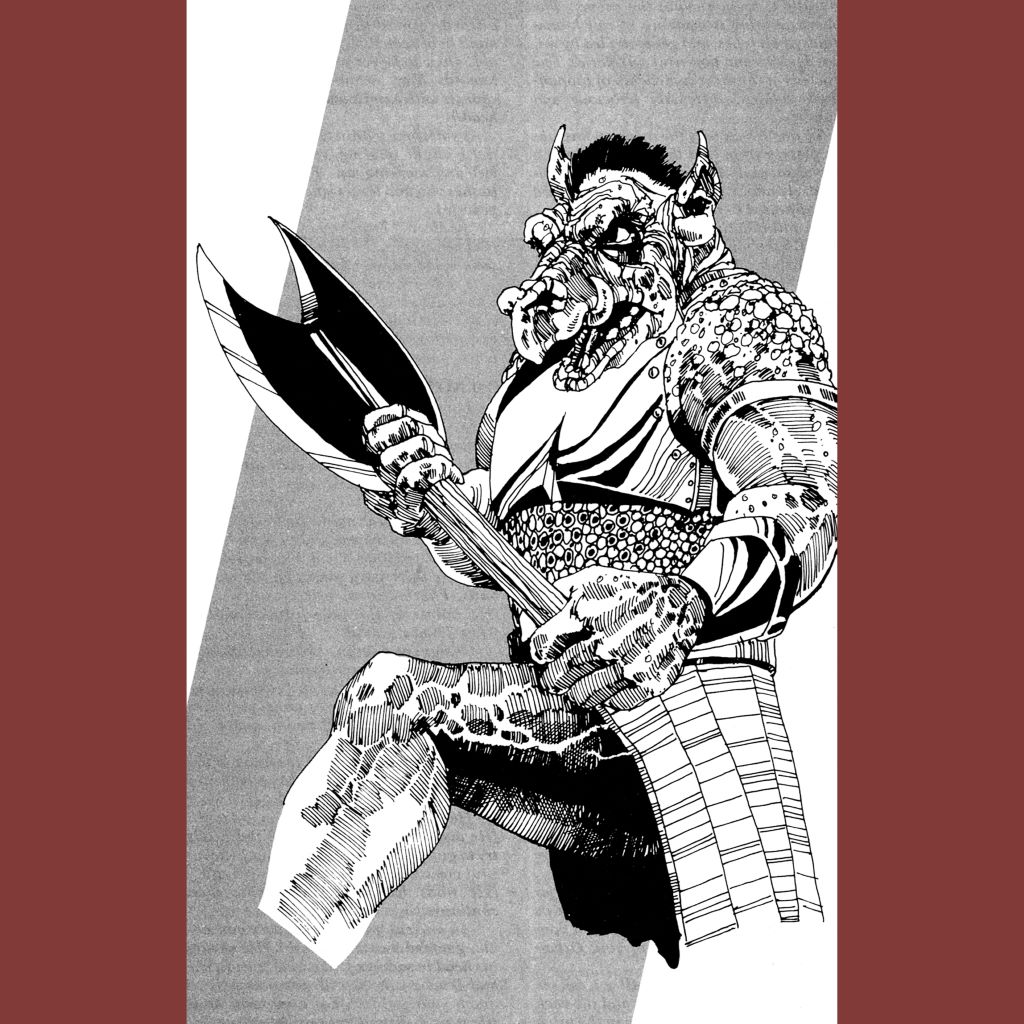
War of Darkness (1986) features a Frank Frazetta painting of Conan. Believe you me, the adventure under the cover does not live up to that bold promise. Interior art is by a bunch of folks with no clear credit. It’s all to the Role Aids standard, which is generally pretty good quality.
So, the plot. War is coming. Characters are part of the army. Some rube demon has usurped Orcus as lord of the undead and is trying to take over the world. Players are charged with seeking out a fortress that contains an altar to the new demon and destroying it in hopes of wounding him, or something. That altar also happens to be where the demon hid Orcus’ soul, so destroying it actually brings Orcus back to power and he quickly deals with the usurper. I might have wanted to find the solution where the war is ended and there are no demonic lords of the undead around, but that’s just me, I guess. The castle is fine, though it has the same problem with every Role Aids dungeon I’ve read in that the monster selection inevitably makes the place feel random and generic.
Not a bad module, really, but not terribly satisfying either. |
| |
|
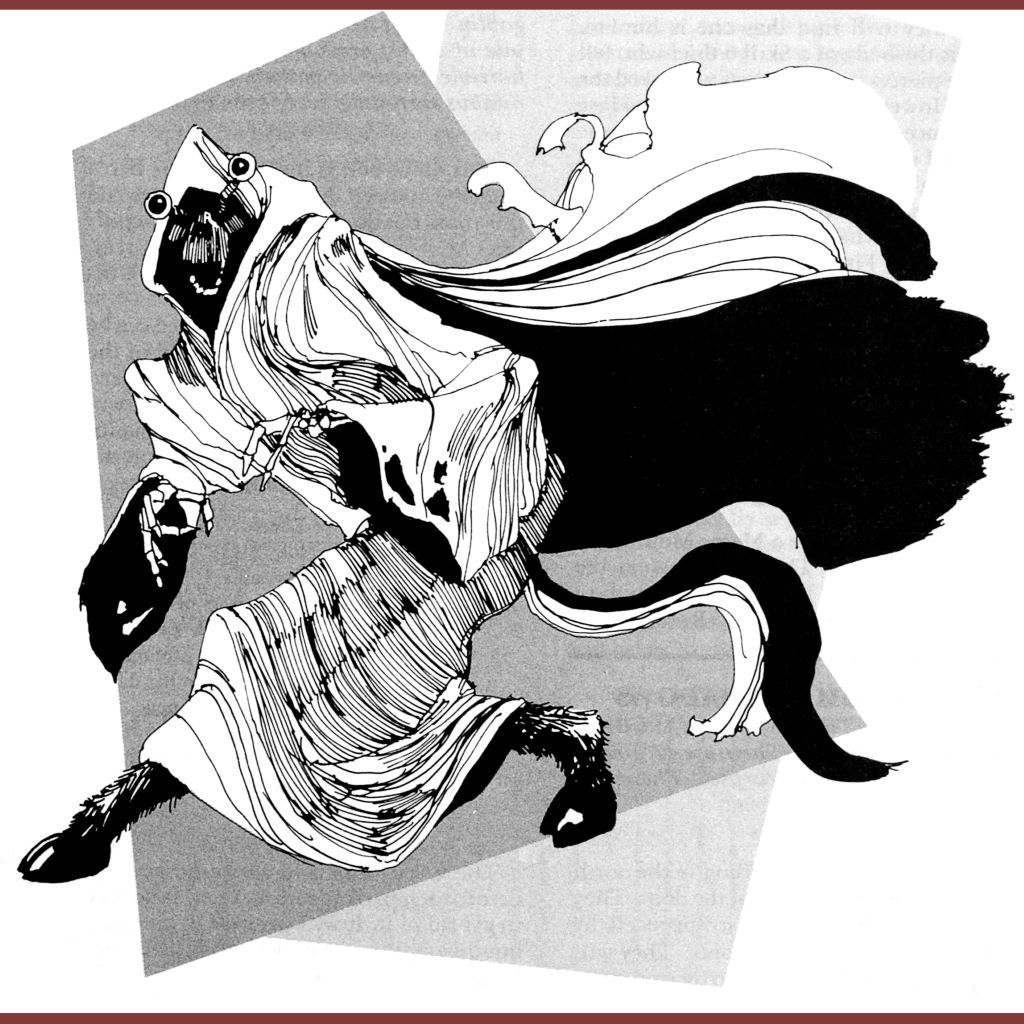
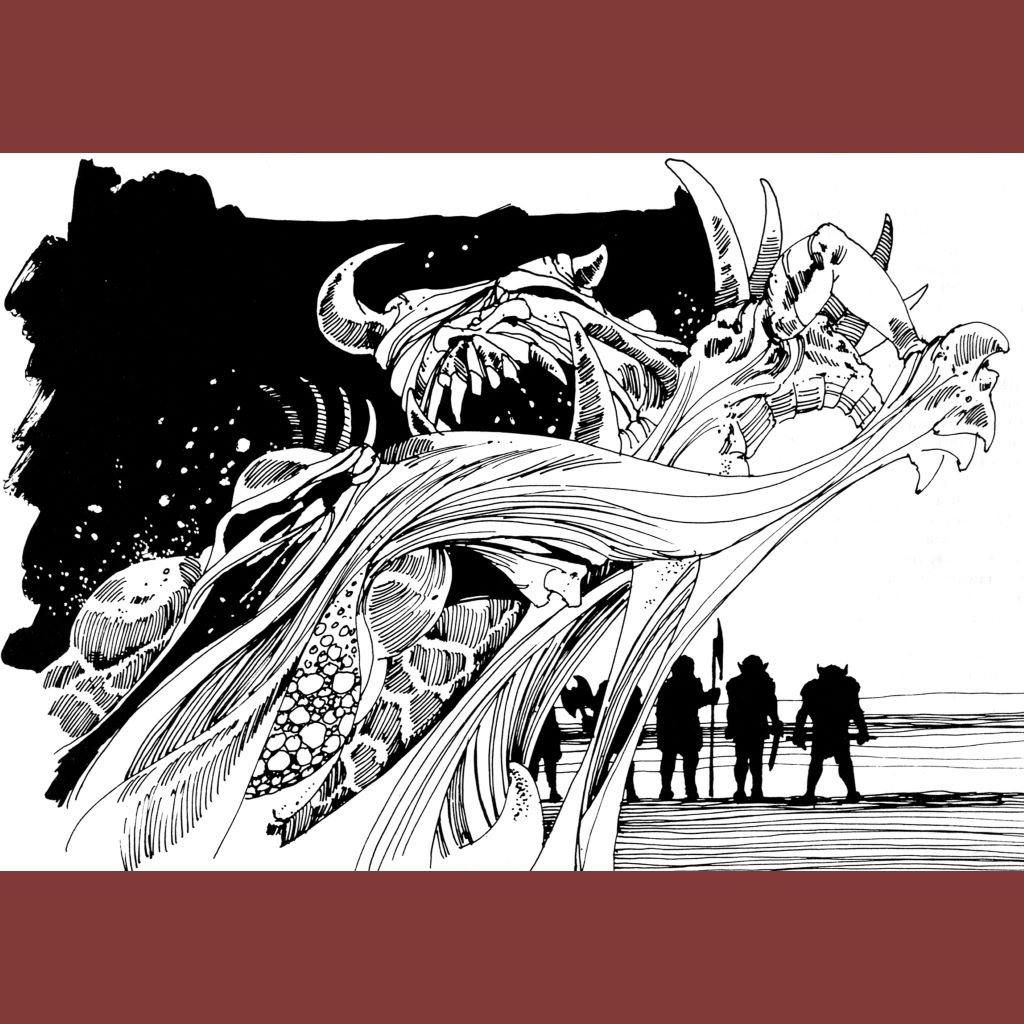
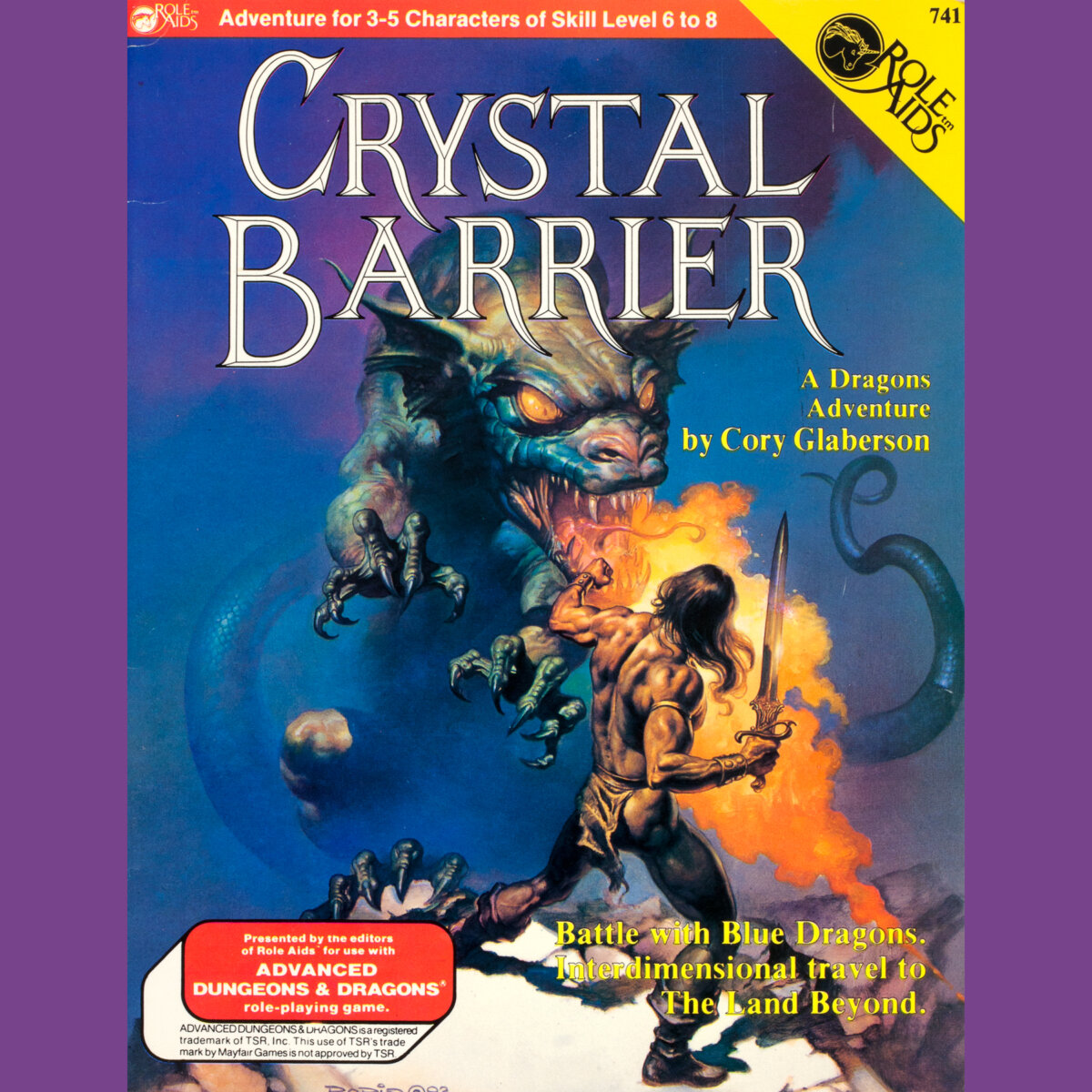
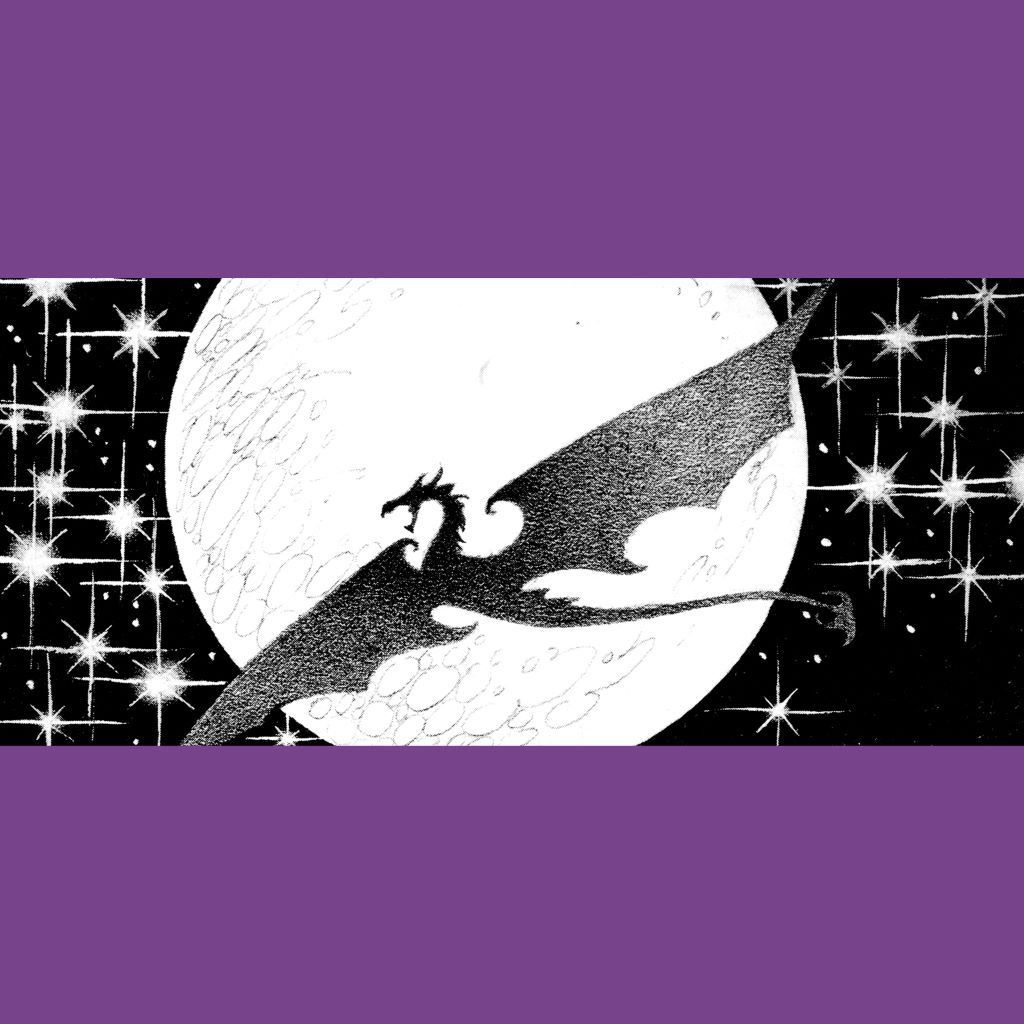
This is Crystal Barrier (1987), a module whose attempt at cleverness is admirable, but ultimately a failed experiment. Boris Vallejo on the cover again (a pretty good one, at that). Interior art by Todd Hamilton and Jeff Bush. I don’t want to say it is bad, because it is not, but it is definitely somewhat unconventional. It also recycles at least one interior piece from War of Darkness.
OK, plot. This links in to the civil war in the Dragonlands as laid out in the Dragons Role Aids sourcebook. Ostensibly, the players are looking to destroy a drug that the bad dragons are using against the good dragons. However, in doing so, they encounter the titular barrier and fall through it into another dimension where a Necromancer is fomenting the civil war by having captured the soul of a dragon lord. This feels like an inside-out Dragonlance already, but it gets even moreso: there is some light time travel involved and Fistandantilus-like, the big twist at the end is that the Necromancer is a future version of a player character’s mage. I like this in theory, but it all happens so fast it feels similar to when a show gets canceled and they try to wrap up another season of story in the finale (actually, thinking some more, it reminds me of how Millennium got a weak send-off after its cancelation as just another episode of The X-Files). It doesn’t satisfy. Also, what the heck happens if the mage dies on the way? And wouldn’t the Necromancer be worried about that?
The module is interesting in the way it applies different rules to the world beyond the crystal barrier, in a way that I think predates the way different planes work in Manual of the Planes, which came out around the same time. The encounters there tend to rely on large numbers of monsters, though, which is a drag. |
| |
|
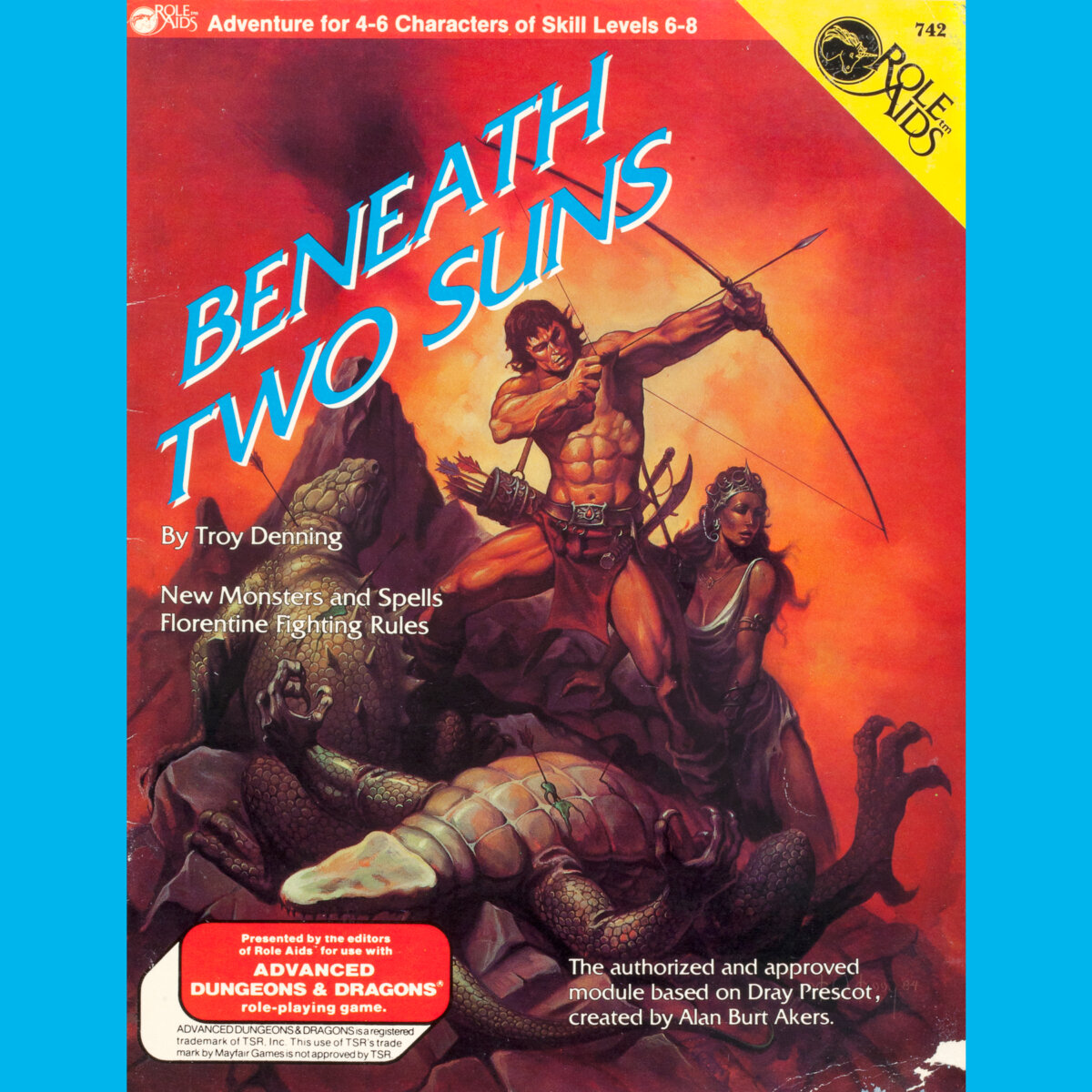
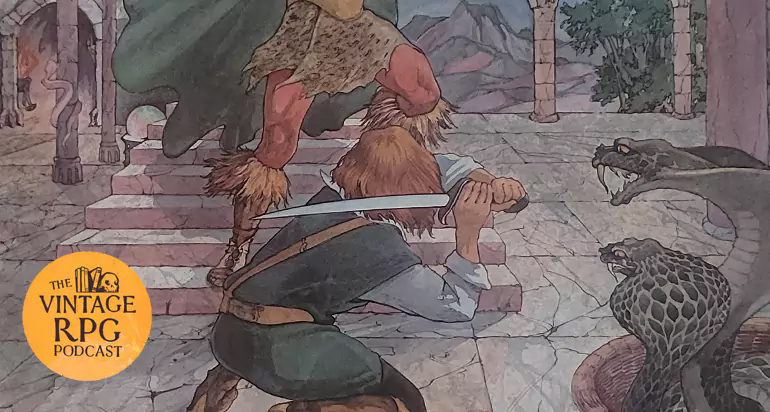
This is Beneath Two Suns. It could be the last Role Aids adventure module — it says 1986, but the catalog number is after Crystal Barrier, which is 1987, so your guess is as good as mine. Anyway, cover by Ken W. Kelly, originally from Seg the Bowman (1984) the thirty-second Dray Prescot novel by Alan Burt Akers.
A moment on Dray — he’s an earth guy who gets teleported to another planet (this happens a lot in a certain sort of genre fiction) that is sort of like Renaissance-era Florence and there are endless intrigues and beautiful women and deadly duels. In 25 years, Akers wrote 52 Prescot novels, then promptly died before finishing the 53rd, which would have definitively finished the series, which is fucking bonkers to me. Anyway, this isn’t really my sort of thing, though I can appreciate the appeal it has for fans.
It being not my thing makes it really hard to evaluate this adventure, as it is essentially a Dray Prescot simulation and oh-so-brief sourcebook for Zenicce. It assumes that the players are teleported just like Dray (you can even play as Dray — him and some folks I assume are also from the books are pre-gens). The plot involves the intrigues that surround two kidnapped princesses, one of which is Prescot’s love interest in the novels. Interestingly, the adventure isn’t concerned with preserving the canon of the fiction — it is totally content to let players fail and the princesses die. So, kind of cool, if this is your thing, I think. It is not my thing.
I do find it unreasonably funny that this is written by Troy Denning, who would go on to work on Dark Sun (and write the first batch of novels for the setting). So many suns! |
| |
|
A Portal to Adventure (1992) |
| |
|
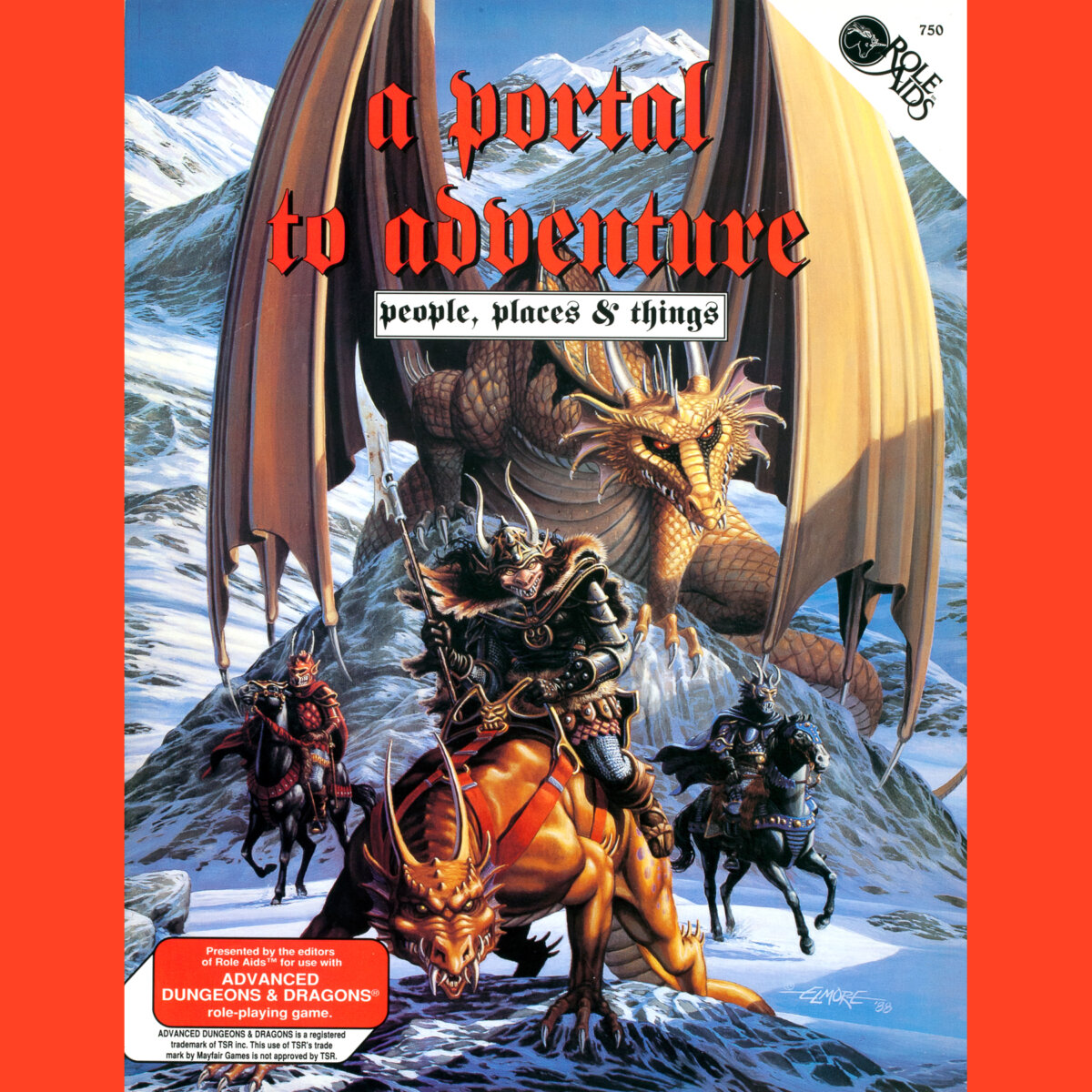
Is it still a knock-off if you hire one of the most iconic artists of the place you’re knocking off to do a cover for you? Larry Elmore actually did two Role Aids covers — the next featured on the first Demons box set (and I love it). Little ambivalent about this one, though it does seem to intentionally channel a lot of design work that references both Dragonlance and Forgotten Realms. Like it or not, I enjoy how the Ray Winninger era of Role Aids seems to be intentionally thumbing its nose at TSR in a way the earlier iteration was not.
Anyway, this is A Portal to Adventure (1992). It is more a toolbox for adventures rather than a formal adventure. Think the Task Force Citybooks, or TSR’s site books that would come out a little later on in the ‘90s (Castle Sites, etc). It’s a collection of NPCs, city sites, wilderness sites and an array of new magic items. I love love love books like this.
The NPCs are OK. They’re well realized, but NPCs are not what I would reach for when improvising an adventure. Maybe I have a natural affinity for whipping up NPCs on the fly? I dunno. YMMV. Likewise, the magic items are sturdy but mostly filling in logical gaps in the official D&D lists, for example: a ring of talking to animals, a staff that turns into a snake, a sword that is really good against trolls, and so on.
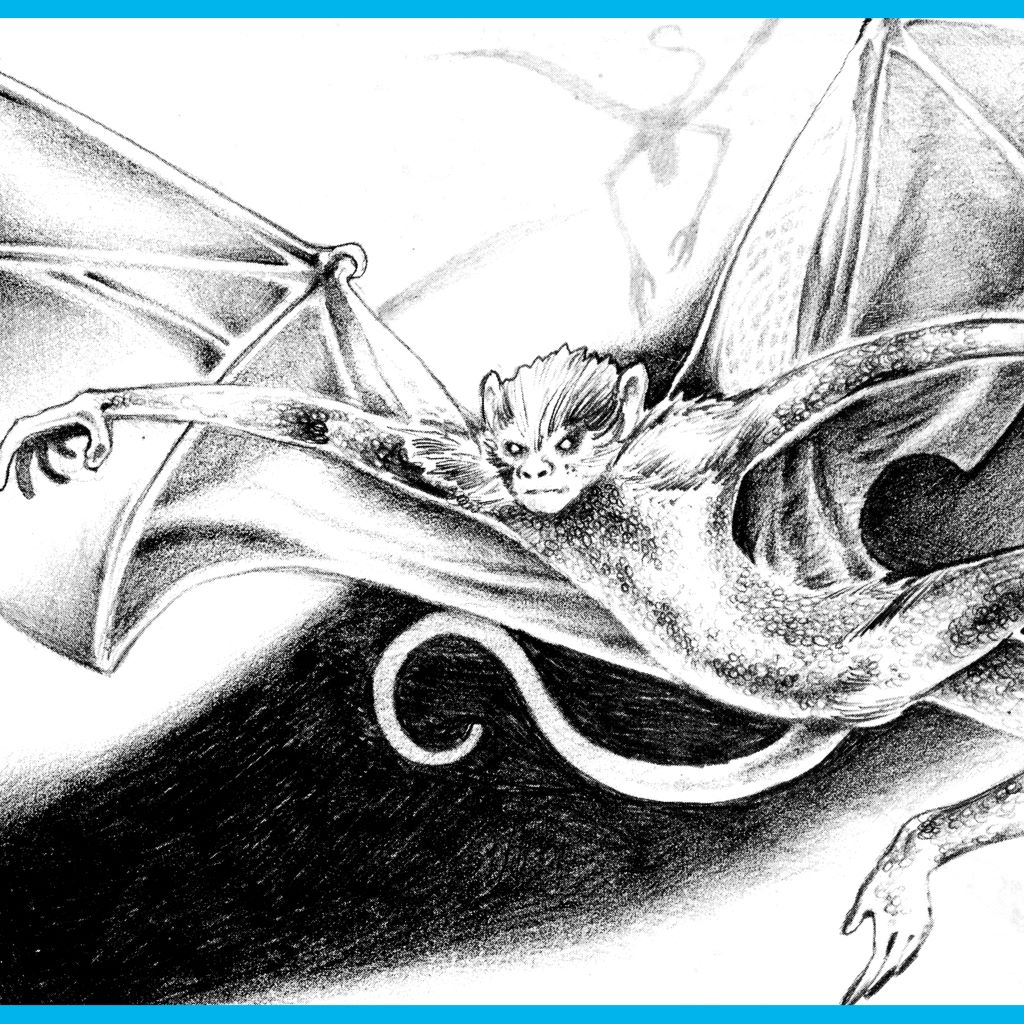
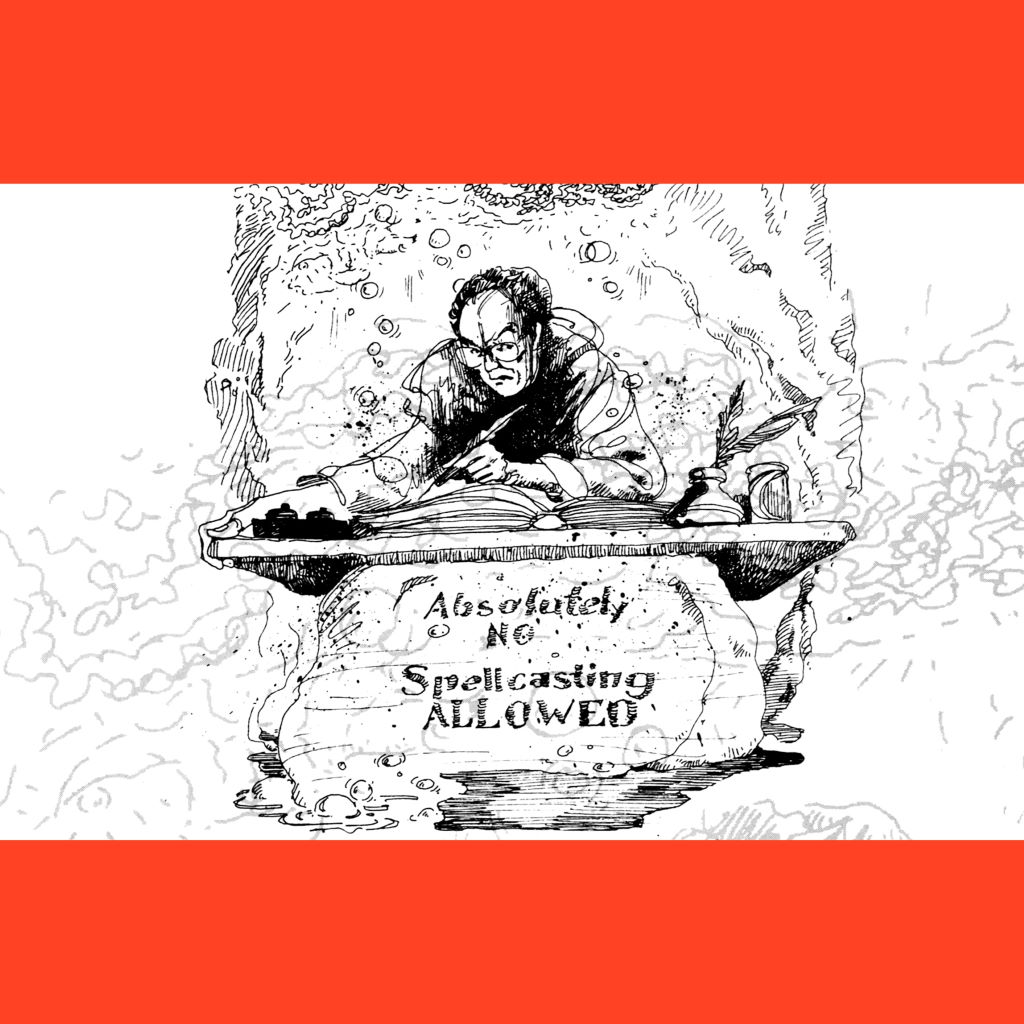
The sites are great, though, perfect to drop in anywhere in an ongoing game to provide material for a session or two (or more!). There’s a great derelict tower with a hidden treasure room, a pet shop with a sideline in bloodsports, a wizard’s abode in a hollowed out stalactite that hangs over an abyss. The ruined town is pretty great, too, as is the temple of bat worshipers. My favorite, though is the oracle in a broken hilltop that comes complete with a table of cryptic portents. I am going to steal a bunch of these for my game, no doubt about it. |
| |
|
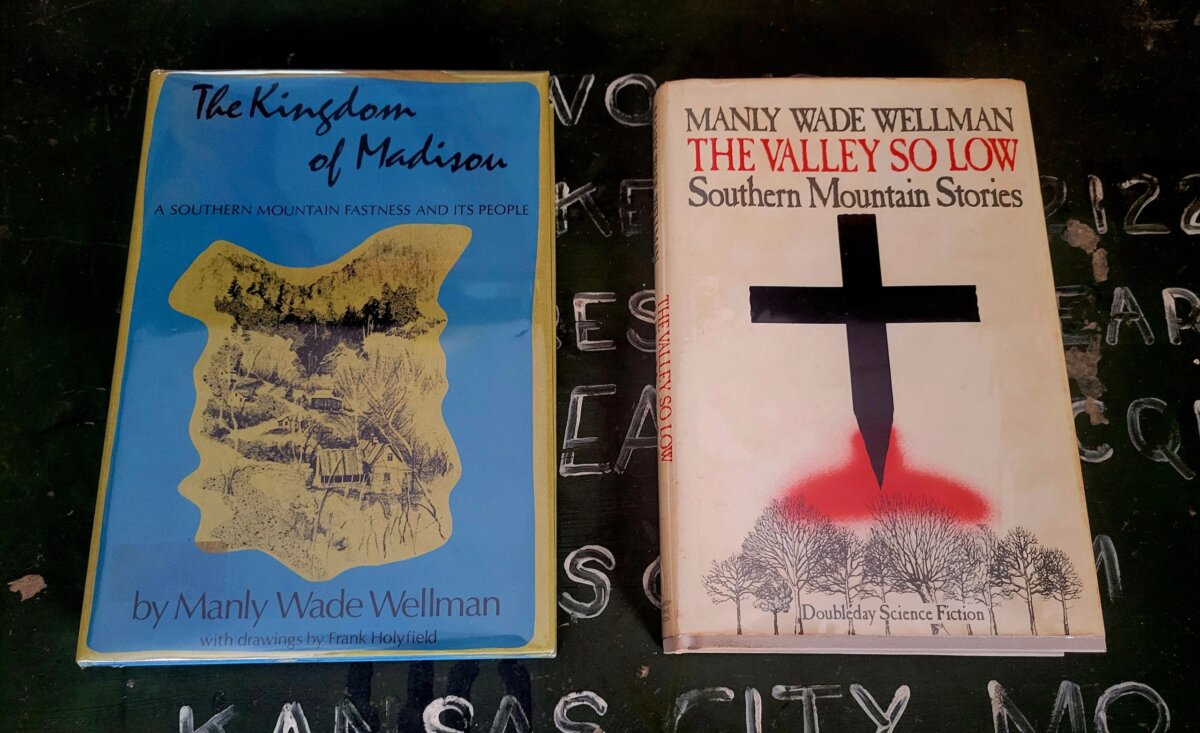
Spinning out of last week's posts, I found a couple more Manly Wade Wellman books of interest. Southern Mountain Stories (1987) is effectively his last book, published posthumously and edited by Karl Edward Wagner. It collects most of his later short stories (many involving his series characters, among the Silver John, John Thunstone and a couple I hadn't previously encountered). They feel quite different from the stories written in Wellman's early period, and also seem distinct from the '80s novels. They're a bit darker, less joyous. John himself is older and more careworn, particularly in "Nobody Ever Goes There," which is maybe sneaking into the lead as my favorite story featuring the balladeer.
The other book, The Kingdom of Madison (1973) is Wellman's ode to the North Carolina county in which he spent the majority of his life. He stresses that it is not a history, but rather a sort of collection of recollections. It represents a rare cross-over between my love of genre fiction and my love of idiosyncratic regional history. And damn, look at that graphic design aesthetic!
You may find it suspicious that I'm buying up hard to find Wellman material. Perhaps you think I may be up to something. And you may be right. Wellman fans, cross your fingers. |
| |
Vintage RPG
Copyright Stu Horvath, 2024, except when not
| |
Add some images to your gallery | |
|