|
|
Worthy of MST3k |
|
I'm particularly pleased with how this group of posts came out, so I'm reproducing them in full for y'all. |
|
|
| |
|
Pledge! Pledge! Pledge! Pledge!
|
| |
|
You may recall that I have a fill-in radio show on the legendary freeform station WFMU called Games People Play. My co-host Sara and I would very much like to get a regular spot in the schedule some day and, in order to do that, we need WFMU to continue to exist. The feds killed the station's $200k community service grant, so making ends meet just got that much harder for them.
Enter the WFMU October Hellraiser, where you can pledge to show your support for our show and the station generally. Any amount helps, but unholy cow, that "Jersey" Devil t-shirt is well worth the 50 clams. There are a bunch of rewards available too, but the coolest one is undying appreciation. Well, no, maybe the coolest one is the devil t-shirt, actually. Anyway, pledge if you got some extra bucks! |
| |
|
I have a twisted fondness for Theatre of the Mind Enterprise’s Call of Cthulhu publications. I got my first, Pursuit to Kadath, at NecronomiCon back in like ’93 and it's absolutely terrible but also exactly the sort of fan-made material I love to see in the world. Regular, enthusiastic RPG players made it and, for better or worse, it shows. It took me a while to pick up the rest, though, because they tend to be expensive and it’s hard to justify spending a lot of money on schlock, even if it is schlock with heart.
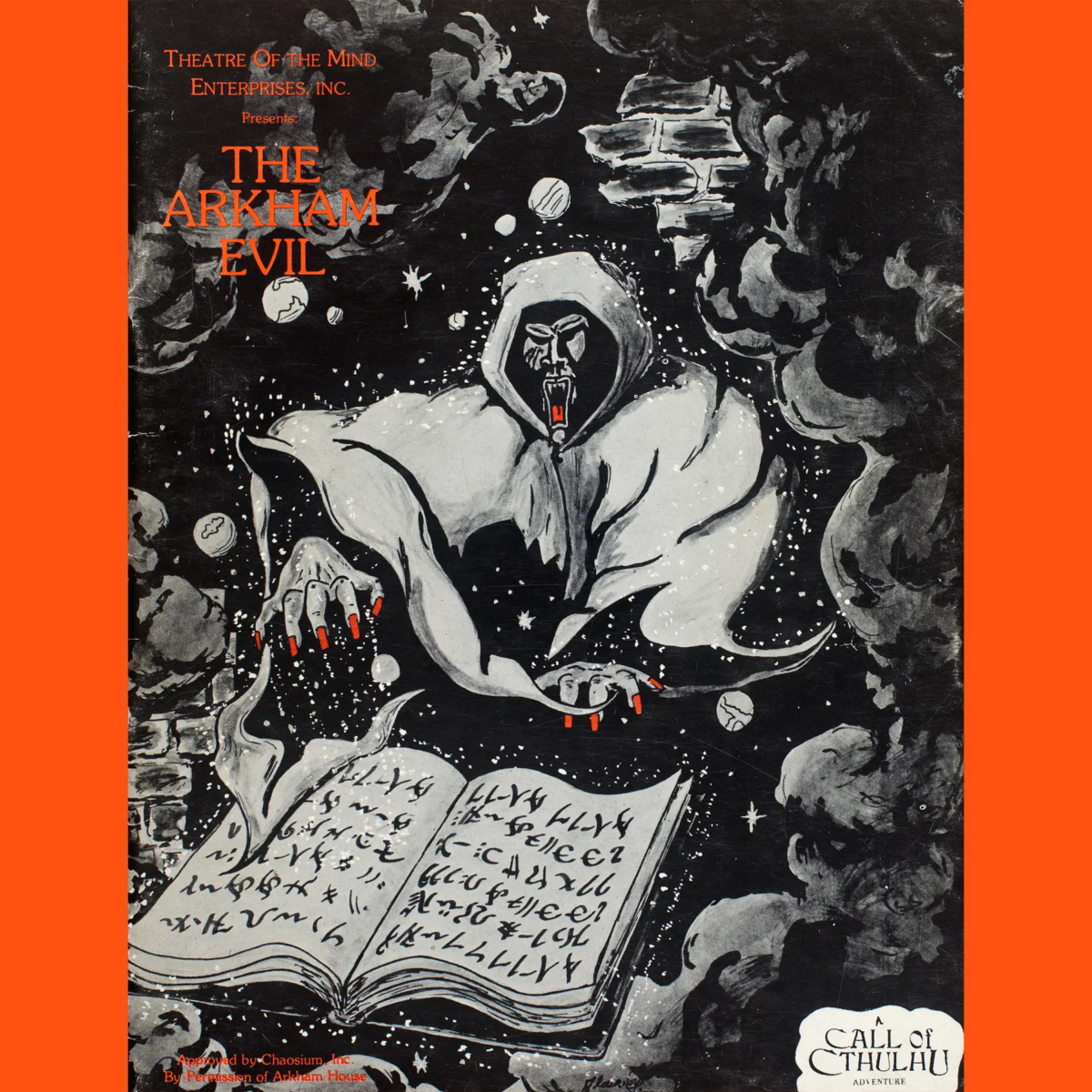
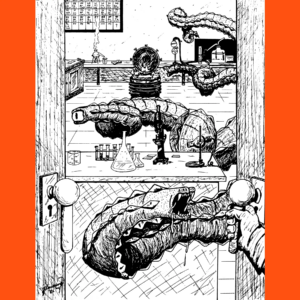
This is Arkham Evil (1983), the first of TOME’s licensed Call of Cthulhu books. It’s terrible. It’s a three-part scenario that…doesn’t really want the players involved? The first part takes place in 1919 amid a conflict between a mining company, Pinkertons and resurgent Molly Maguires. There’s a spooky cave discovered and the players are there to investigate it. They can get into all sorts of trouble, but actually intersecting with the larger plot is nearly impossible. Which is by design, because if they do somehow find out what is really going on, they stand a good chance of stopping it, and thus nullifying the following two scenarios.
The second part involves retrieving asteroid bits in Arizona before a serpent person, a French sorcerer or a German baron accompanied by a battalion of WWI veterans can get them. This one seems…particularly bad, as the players will also have to invent radiation containment technology? Assuming they don’t all die from radiation poisoning, they have to go back to Arkham in the third part and write a paper about the experience, which is, from my understanding, what academics do. They also have to solve a series of occult murders and I guess at some point the whole plot is revealed but the book is so terribly organized that I really couldn’t tell you what that is. Woof.
Cool cover though. |
| |
|
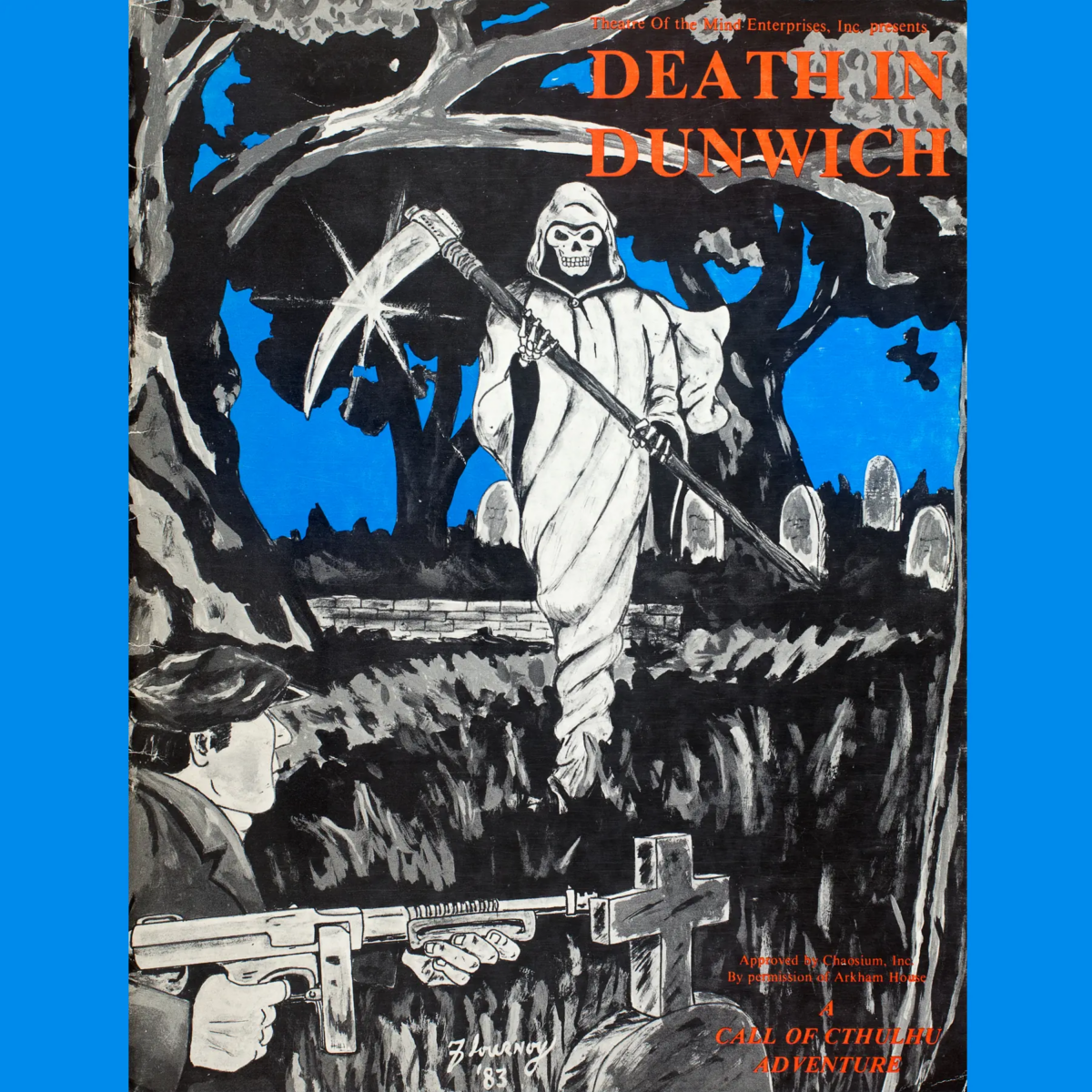
Hahaha oh my god. This is Death in Dunwich (1983) and wow.
OK, so, let’s get the good out of the way. I like the cover, another great example of the naive folk art of early RPGs. I should be clear though that, whilst the organization and editing of the book prevents me from being 100% certain about, well, anything really, I am fairly confident no grim reaper appears within. There is a zombie with a scythe, though, which I feel is a bit of false advertising. And there is also an unadvertised pet attack gorilla, which is also the last of the good things in the book.
So, there is this rich old guy. And he wants to own more paintings by the old masters. He makes friends with a sorcerer who is part of an evil brotherhood of sorcerers who are locked in an age-old struggle against a brotherhood of good sorcerers. This struggle is detailed at length, and has absolutely no bearing on anything else in the story. This sorcerer digs up the corpses of old masters, resurrects them a la The Case of Charles Dexter Ward and makes them crank out new work, which he sells to the rich old guy. And, you know, I was against this as absolutely preposterous while I was reading it, but now summarizing it, I feel that a pretty good commentary on being a creative person in late-stage capitalism is coalescing.
Anyway, the rich old guy lives in Dunwich for some reason. A lot of space is devoted to describing Dunwich (in fact, this is the first time Dunwich is described in game terms, ever!) but there is no further connection between the plot and the setting. Well, other than the fact that after a certain point, everything is dependent on finding one single, easily missed clue, so wandering around Dunwich gives the players something to do until they find it. Weirdly, no one in town wants to talk about that time an invisible monster killed a whole bunch of people.
Oh, and the bad guy can only be killed with diamond bullets? Is that a thing? And, if the players kill him early on, all the resurrected artists turn to dust off screen, so it is extremely possible the scenario could wrap up with the players not knowing anything about what was really going on. Which is not the way mysteries are supposed to work. |
| |
|
Whispers from the Abyss (1984)
|
| |
|
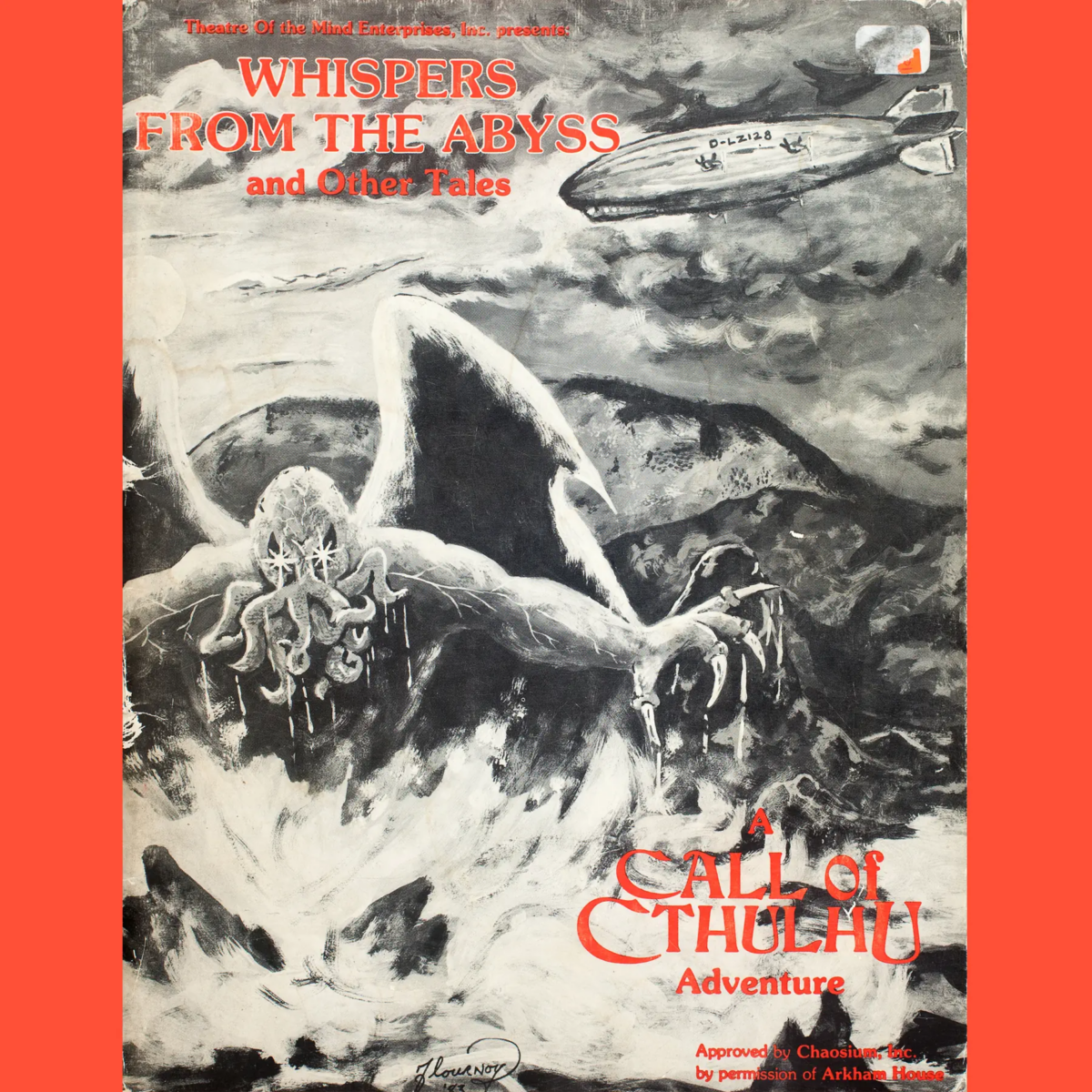
Again, we have an excellent folk artsy cover on Whispers from the Abyss (1984). Again, this is about the best the book has to offer.
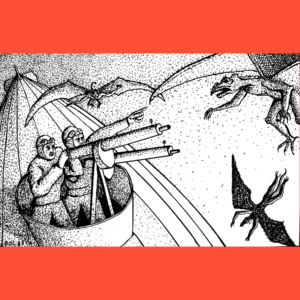
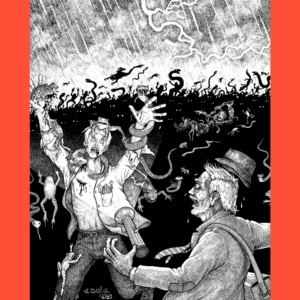
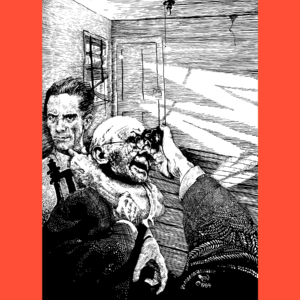
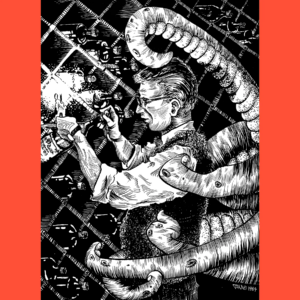
For some reason, despite this being a later production than the two previous books, it is somehow more amateurish. The text is set in a monospace font that is punishing to read and the art, with the exception of the amazing amphibian attack illustration, seems even more low rent somehow. Add this to the continuing issue of poor organization and a seeming hostility to clear summaries and we’ve got all the ingredients for a truly baffling read.
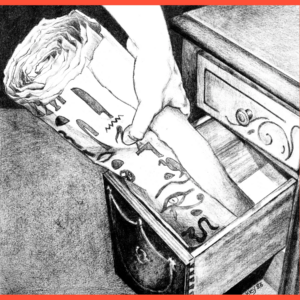
The first scenario…I simply don’t understand what is going on. Players are trying to retrieve a scroll of Egyptian magic from the crew of a zeppelin. That has both a bunch of eagles and a bunch of byakhee secreted aboard? And the eagles are big enough to wear saddles so the villains can escape by flying them? Very little explanation is given for any of this and, frankly, the less I know, the better. I read the sentence that explains there are saddles for the eagles at least five times and I am still not sure that the author realizes Tolkien-esque eagles big enough for riding don’t actually exist in the real world?
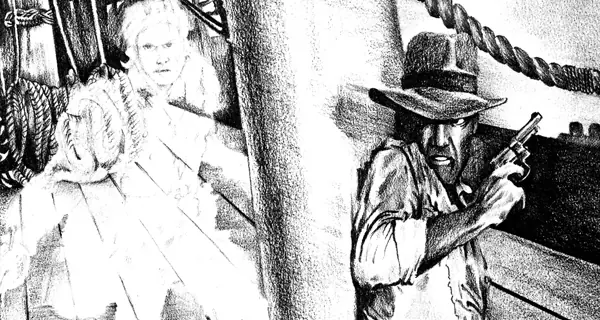
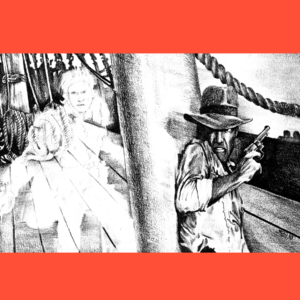
The second adventure, preposterously, also involves a ride on a zeppelin. I kind of gave up reading that one because it also involves a cursed diamond and a character named Feldspar and I couldn’t bear to find out whether more characters were named after minerals. Judging from one of the illustrations, there is also a ghost ship and Indiana Jones shows up.
The third scenario, which lends its title to the book, is about an archaeological dig investigating the disappearance of the Roanoke colony. This one manages to reduce a genuine spooky real-world mystery to the most boring solution possible: the colony was wiped out by an entity called the Croaton that can encourage swamp creatures to swarm and eat people. Ooo. The horror. |
| |
|
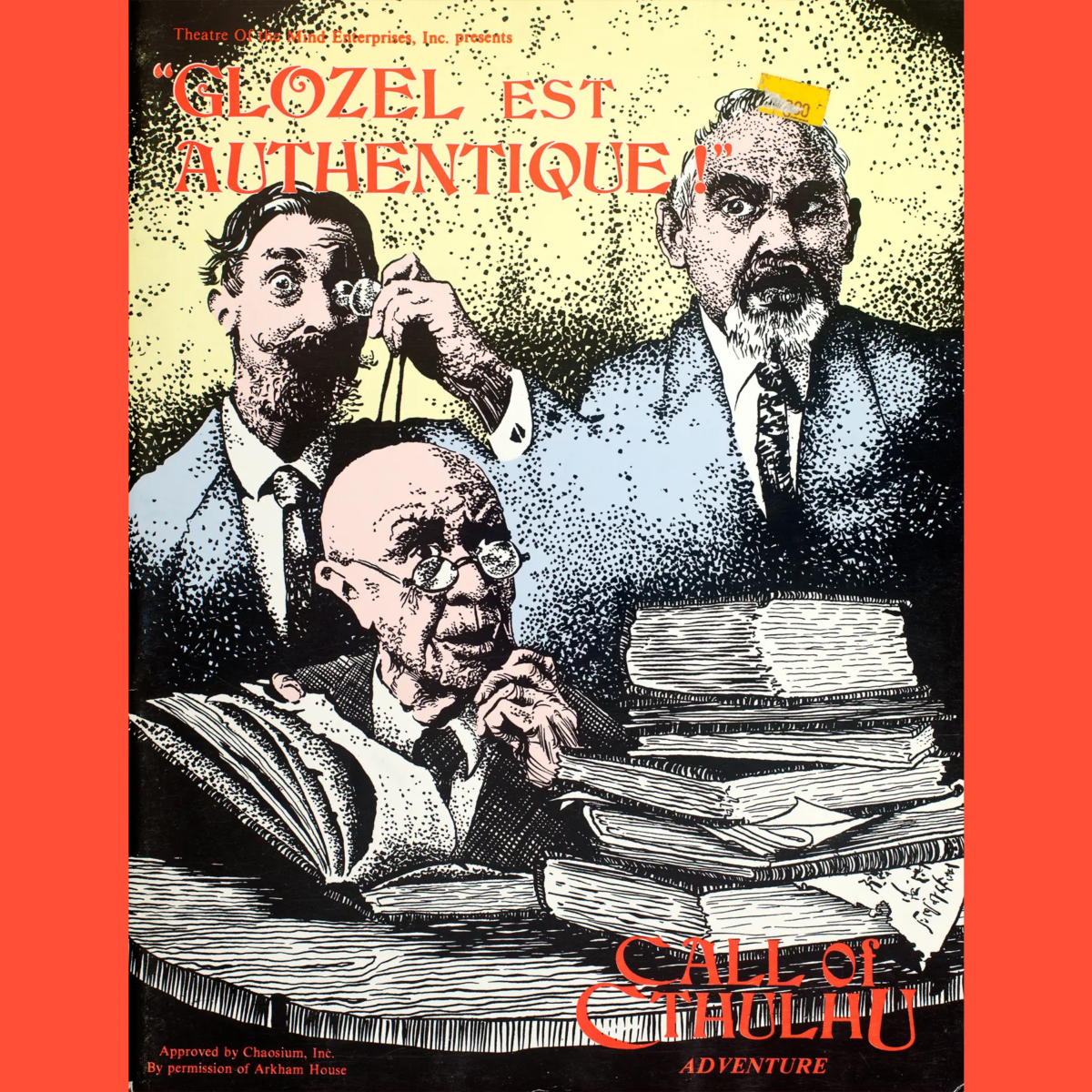
There are some noteworthy production upgrades in Glozel est Authentique! (1984). Full color cover, for one (though it is rather less fun than the other three we’ve tackled this week). The art throughout it vastly better, the layout more professional. I dig the cream-colored paper. The font is monospaced again, though, and hard on the eyes. I daresay the scenarios aren’t as hostile to comprehension as in the previous books, but with clarity comes…I don’t want to call it disappointment, because that would imply I had something higher than dismal expectations at this point. “Rueful confirmation” maybe does the trick.
The first scenario takes the genuinely interesting archaeological sorta-hoax in Glozel, France as its starting point. In the real world, this was a series of “tombs” that were accidentally discovered under a field in which a bizarre collection of artifacts was found. My understanding is that some of the artifacts were genuine, but that the sites were “enhanced” with other items both historical and forged, and that the upshot now is that no one has a clue what’s legit and what isn’t. The scenario takes the position that it all est authentique, but the attached revelation is sort of astoundingly boring, namely that the site was an ancient Phoenician trading post that was abandoned; the artifacts were an attempt by locals to tempt the merchants back through sympathetic magic. The real threat here is a totally unrelated conspiracy involving a surviving clutch of Knights Templars who tried to discredit the dig in order to preserve their privacy for nefarious cult stuff and who are now very annoyed that they accidentally attracted more publicity for the site.
As dreary as that sounds, I prefer it to the second scenario, “Secrets of the Kremlin.” Gonna skip right to the reveal on this one and save us all some suffering. The secrets are that Josef Stalin has a copy of the Necronomicon and also has a pet Dark Young hidden in the Kremlin. |
| |
|
The Octogon of Chaos (1986)
|
| |
|
That’s all the Call of Cthulhu stuff TOME produced. I already covered Pursuit to Kadath which, back in 2017, I seem to have enjoyed it more than I probably would if I revisit it now. In flailing around for something to round out the week with, though, I learned that TOME produced a book for Stormbringer. Interesting! It is, to my knowledge, the only third-party licensed product for Stormbringer.
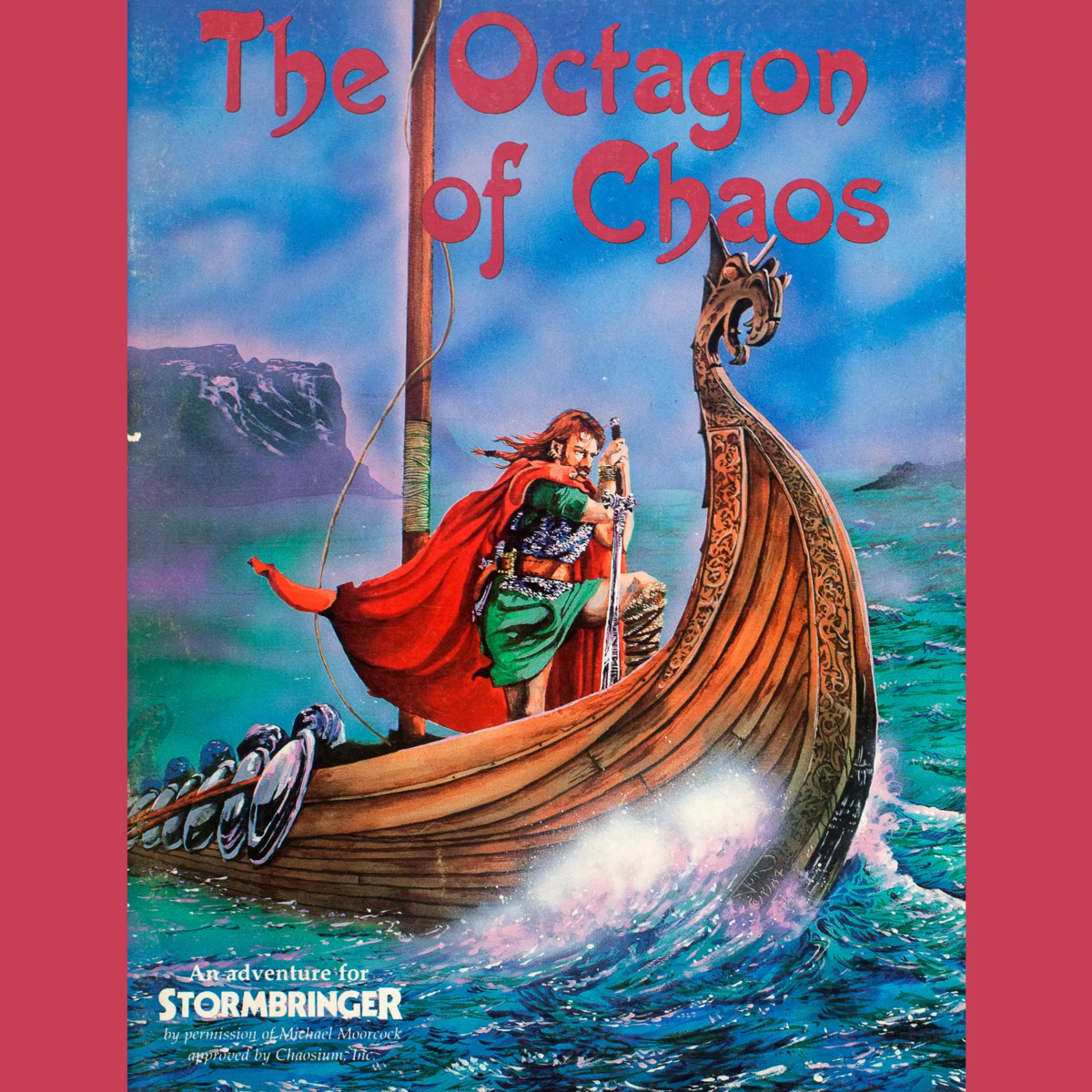
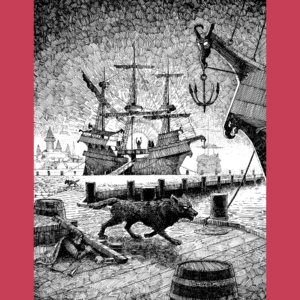
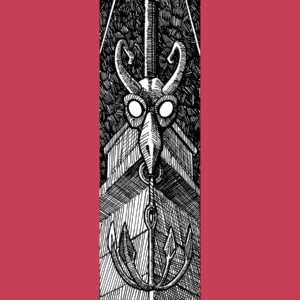
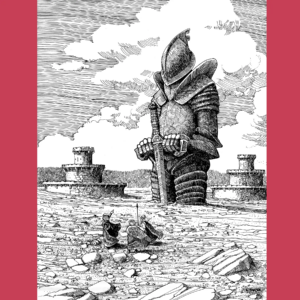
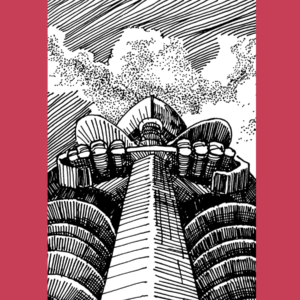
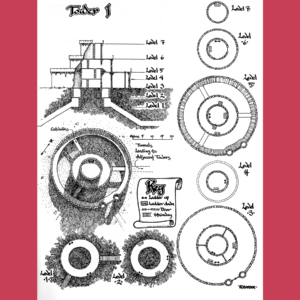
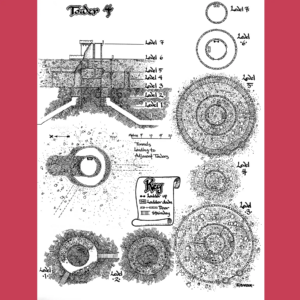
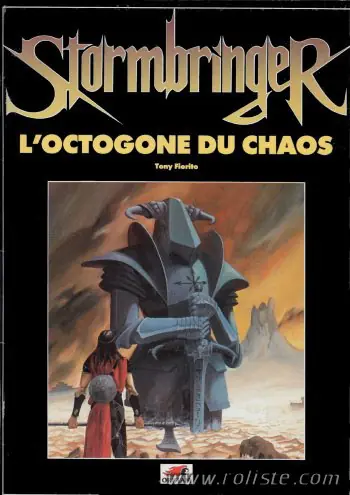
It’s called The Octogon of Chaos (1986) and it has nothing to do with mixed martial arts. I am a little surprised by how entirely TOME upped their game between Glozel and this. The art is pretty tip-top and the maps fantastic, both delivered by Rick Barber. I don’t love the cover by Joe O’Niel, but that’s OK, we can pretend the amazing cover from the French edition is on there instead. The whole thing is even organized pretty well. They do misspell the lord of Chaos’ name as Mabelrode; it’s supposed to be Mabelode; at least, I think it is. This seems to be a common mistake among Moorcock fans (Mabelode is the titular King of Swords in the Corum series) and honestly, changing spellings is apt for a lord of Chaos.
Anyway, the adventure is mostly a forgettable race of a journey to reach the crown of Mabelode before a rival sorcerer of Pan-Tang does, with a tight timetable and bunch of rather dull hazards. If players lose the race, the really good part of the book is looted and empty. If they win, they have limited time to explore. Both these outcomes do a disservice to the centerpiece of the adventure.
Which, of course, is the titular Octagon, formed by eight towers filled with strange and dangerous sights. The surround the massive statue/temple of Mabelode, buried up to the knees in hardened lava flow. The whole place nails a very specific otherworldly feel I expect from Stormbringer locales touched by Chaos. Framing aside, this stands with the best of the Chaosium-produced material for the game. |
| |
|
(I don't own this, but it's worth sharing because dang, what a cover! The other French TOME covers are worth checking out as well.) |
| |
|
Next Week: Mixed Horrors!
|
| |
Vintage RPG
Copyright Stu Horvath, 2025, except when not
| |
|