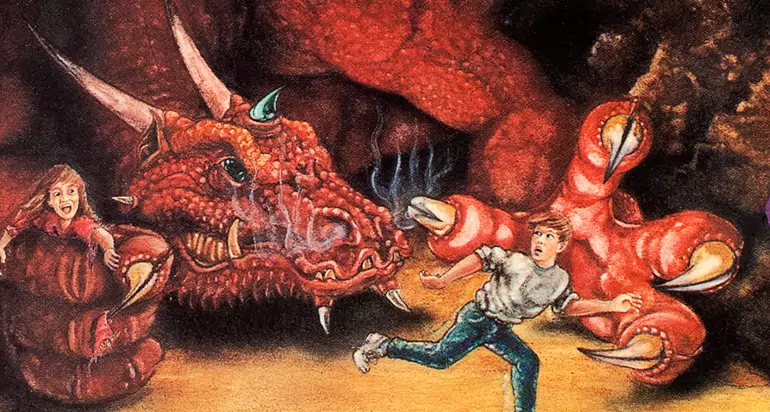
LOL. So, I thought I had all the major anti-D&D religious tracts that floated around from the ‘70s through the ‘90s (with the exception of the original Pat Pulling pamphlet, which seems vanishingly rare), but then Ed Park showed me A Christian Response to Dungeons and Dragons (1987). The subtitle is “The Catechism of the New Age,” which, I wish, and then on the back the hype copy is titled, “They want our children. They want our future.” Which may as well be the tag line for like, a Body Snatchers movie.
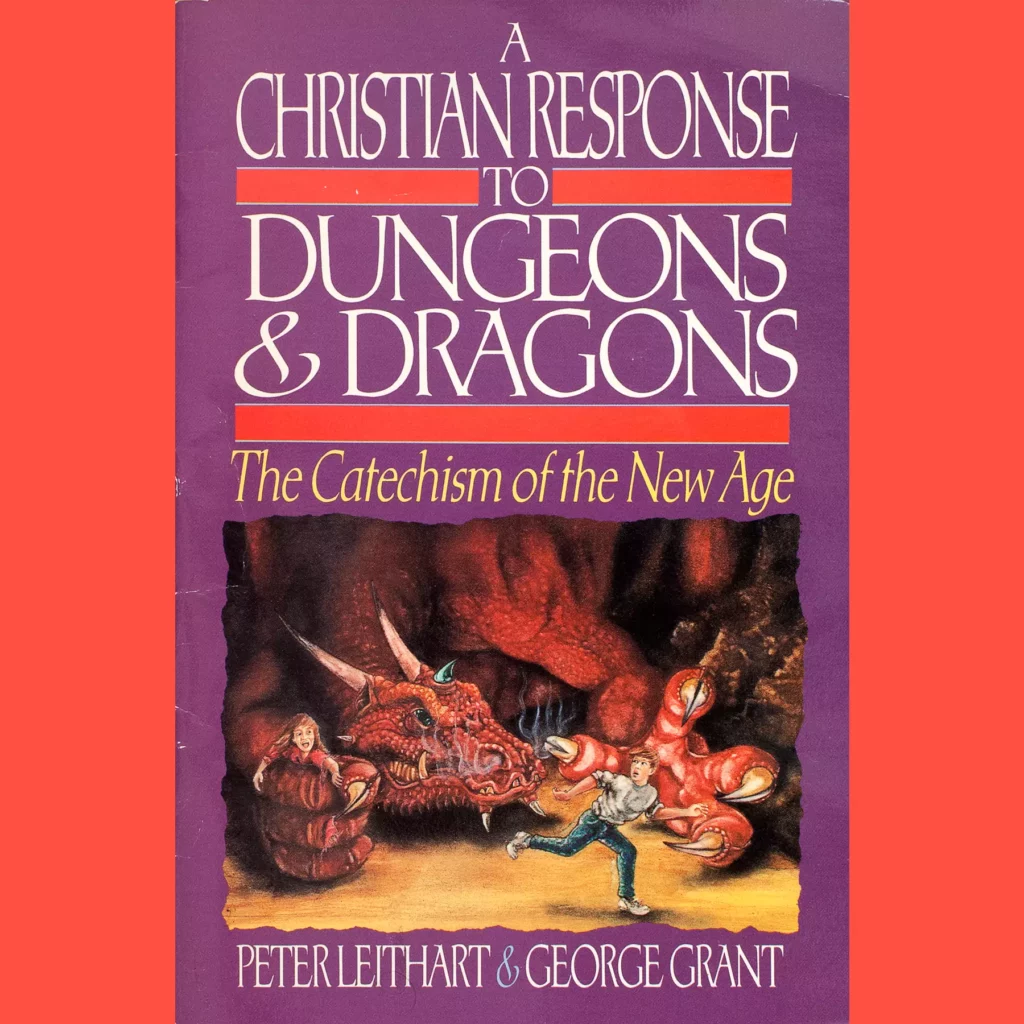
I have to say, if I saw this in ‘87, it might have made me nervous. While ultimately the authors seem somewhat exhausted, there is some rigor in the argument here, ten years or so into the panic, that is perhaps a little troubling. They seem aware of RPGs beyond D&D, for one, and have a working knowledge of how to play, a major flaw in most other tracts of this kind. They also lack the shrill panic of Pulling. But for all their attempts to better package their concern, before long they eventually claim that D&D in a primer for occult practice, which is a deeply stupid thing to say.
I find this stuff fascinating because it displays such a profound lack of imagination. By design — the authors actually argue that the imagination encouraged by RPGs puts us in the roles of those who would rebel against God. “Since Descartes, modern man has retreated from the bright light of God’s creation into the dark world of his own mind and imagination,” they say.
I hope it drives them nuts at how completely they lost the argument.

This is a really interesting argument. I have given some thought to whether it’s problematic that we so gleefully take on the role of people doing objectively bad things.
Honestly, they start off strong and well-reasoned. But they don’t end that way. Of course, too, by ’87, a lot of people were asking similar questions and the hobby was changing without the need for religious zealotry.
The scholar Joseph Laycock argues that an underlying reason the anti-D&D Christians were so vehement was because they were aware that being playful and imaginative in cooperatively constructing RPG worlds might lead players to realize that the Christian worldview was also socially constructed and could be altered or replaced with something more appealing. Like, taking on the role of a cleric praying to imaginary gods might lead you to question the reality of the Christian god, and playing at being an elf or a dwarf might lead you to experiment with other lifestyles. They wanted to keep people’s view of reality locked down. That quote about God’s world vs the world of imagination would seem to fit Laycock’s argument.
https://www.ucpress.edu/books/dangerous-games/paper
I keep meaning to pick that book up! This was the final nudge, I should have it next week.
If your prime argument is “Descartes was bad”, your problem is not D&D nor rpgs — Your problem is that you are a nostalgic from the 16th century!!