March 27, 2026 View Online
Whoops
All the Worlds' Monsters?
Every last one! Plus: Basic Roleplaying, then and now. Plus plus: Everything is a proper orange now rather than that odd salmon color.
This Week's Posts
BRPMonstersI1
All the Worlds’ Monsters (1977)
Read on the Site

I was initially going to do something else Chaosium related this week, but after writing Friday’s post, I realized I’ve never posted about some key early Chaosium products somehow. So, I’m going to fix that.

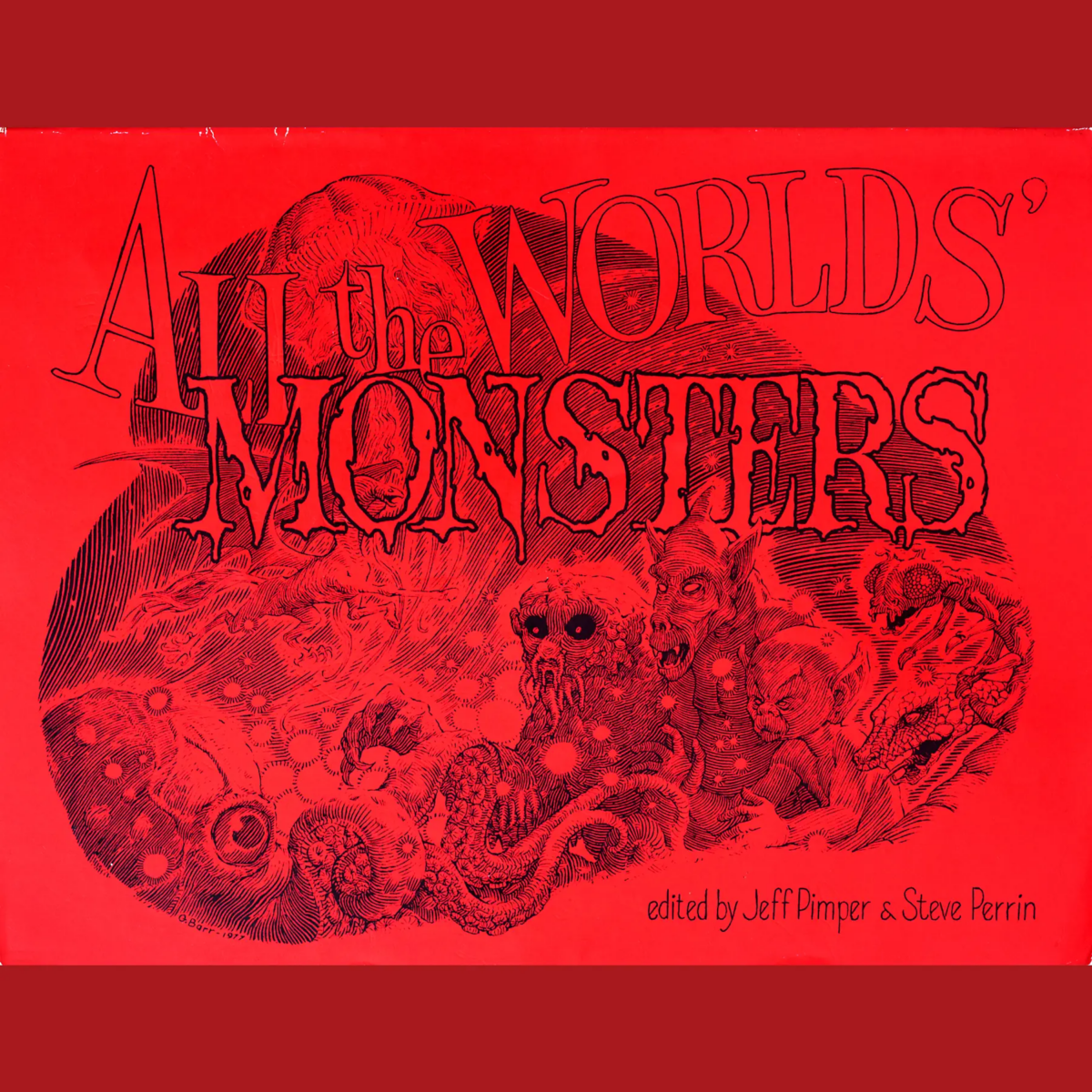
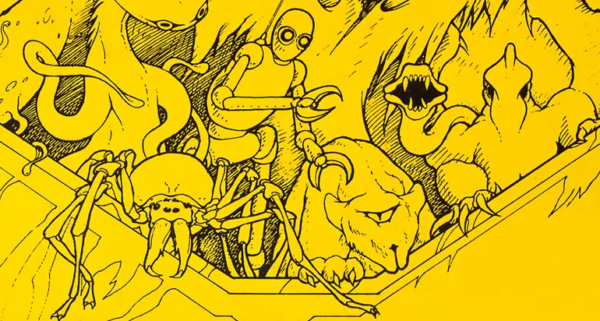
This is All the Worlds’ Monsters (1977 originally, this is the 1979 third printing), a book that I mistakenly believed for a long time was the first monster book for RPGs. That honor actually belongs to The Book of Monsters (at least as far as I currently know). Still, I reckon TSR was annoyed that, thanks to printing delays, Chaosium’s monster book made it to shelves before the Monster Manual. Adding insult to injury, the very first edition was released as 3-hole-punched loose-leaf pages, beating the Monstrous Compendium to its format by twelve years.

The book, as stated in the introduction, was smartly conceived by Jeff Pimper and Steve Perrin as an endless book collecting all the monsters created for D&D, Tunnels & Trolls and Arduin. It quickly became apparent that such an exhaustive goal was pure folly, but identifying the notion that players would want a never-ending stream of monsters, especially so early in the hobby’s history, is pretty savvy.

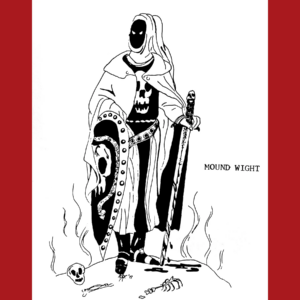
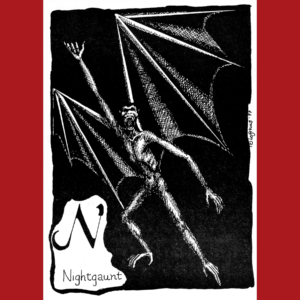
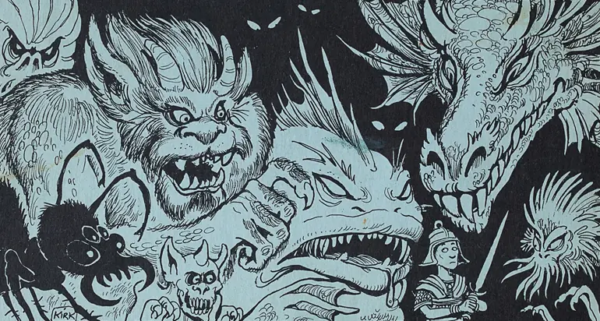
The execution here is…uh…a little lacking. The very best part of the book is the cover, by George Barr channeling a bit of Virgil Finlay maybe; that’s a lot of lovable creeps on there. Most of the monsters, which were primarily player-submitted, are ill-conceived and silly. The text is set in a monospaced typewriter font which is hard on the eyes, with pages printed horizontally which might not seem that bad but is pretty hostile when you try to use the book. The art (by Luise Perrine, Chris Lofthus, Cora Healy, Carol Rode and J. Steven Reichmuth, with no clear credits beyond signatures) is amateurish though endearing.

So, as a resource for serious play? Not the best. As an artifact of the enthusiasm of the early days of the hobby? A precious artifact.

BRPMonstersI2
BRPMonstersI5
BRPMonstersI4
BRPMonstersI3
Photo
All the Worlds’ Monsters, Volume Two (1977)
Less important for the monsters than it is the alternate combat system.
Read more...
 
Photo
All the Worlds’ Monsters, Volume III (1980)
Oh, hey, more monsters.
Read more...
 
Photo
Basic Role-Playing (1981)
The first serious attempt at a universal system.
Read more...
 
Photo
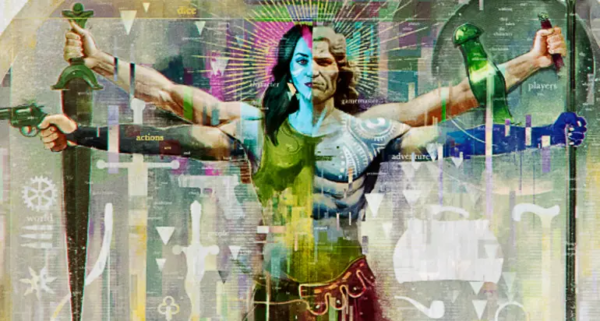
Basic Roleplaying (2023)
BRP emerges in its ultimate form.
Read more...
 
Podcast
Photo
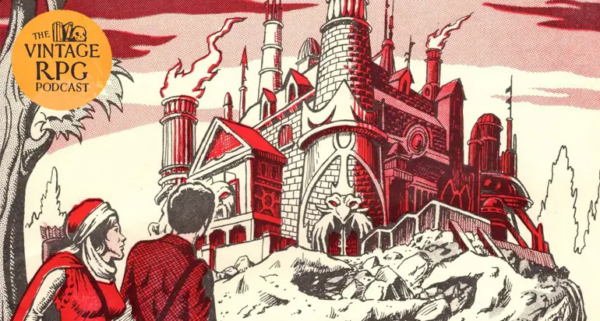
Castle Thrax
Of stock lists and ancient history.
Listen
 
The Past's View of the Future

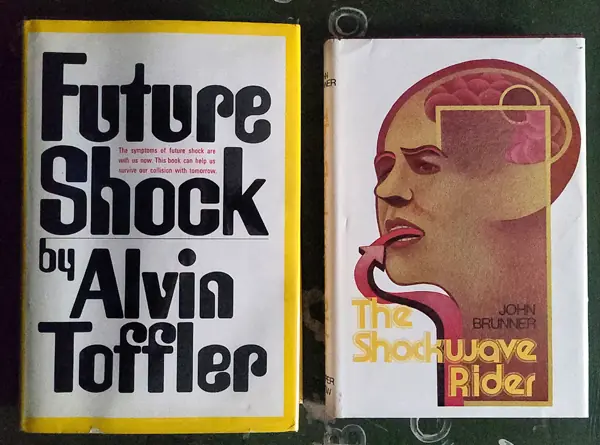
Last Friday night, I watched Future Shock (1972), the short documentary based on Alvin Toffler's 1970 book. When the film was over, I immediately bought the book, and only partly on the strength of its font game.

The doc features a resignedly doomful Orson Welles as the narrator, who rapidly walks us through all the ways human society, culture, science and relationships are changing, and how our hopelessly simple neolithic minds can't keep up with the pace. I found this to be disorientingly interesting, as many of the issues that plague us today are presented by Welles in the film as either accelerating or emerging for the first time. But I have difficulty squaring the idea of a relentless pace of change happening in a world from six years before I was born. That world naturally seems simpler and slower than the present, probably by orders of magnitude. Hell, I think the '90s had a rather leisurely pace. 

It reminds me of the way music has sped up over the years. First wave punk rock never sounded as fast and furious to my ear as the stuff that was coming out when I was in high school, and Collaps makes the '90s bands sound like they were napping. The thing is, I can throw on a new song by Collaps ("I Think We're Fucked," which I'd classify as "mid-tempo Collaps") and compare it to something older (here, try "Warriors" by Blitz) and hear the difference. I can't, however, pop back into 1972 for a vibe check, except through this documentary, which I can't take entirely seriously. But then again, it also seems so prescient. And my thinking loops again.

I'm looking forward to skimming the book and maybe sorting this out. I also picked up The Shockwave Rider (1975) by John Brunner (also featuring a pretty swell font), which was recommended to me for being inspired by Future Shock. It sounds like a precursor to cyberpunk, where people in a dystopic future live in fear of their digital data being used to upend their real lives. Seems...familiar.

2026-03-27 09.21.26-2
Next Week: Toys!
Join the Patreon!
tumblr  instagram 
Unsubscribe   |   Manage your subscription   |   View online
Vintage RPG

Copyright Stu Horvath, 2026, except when not