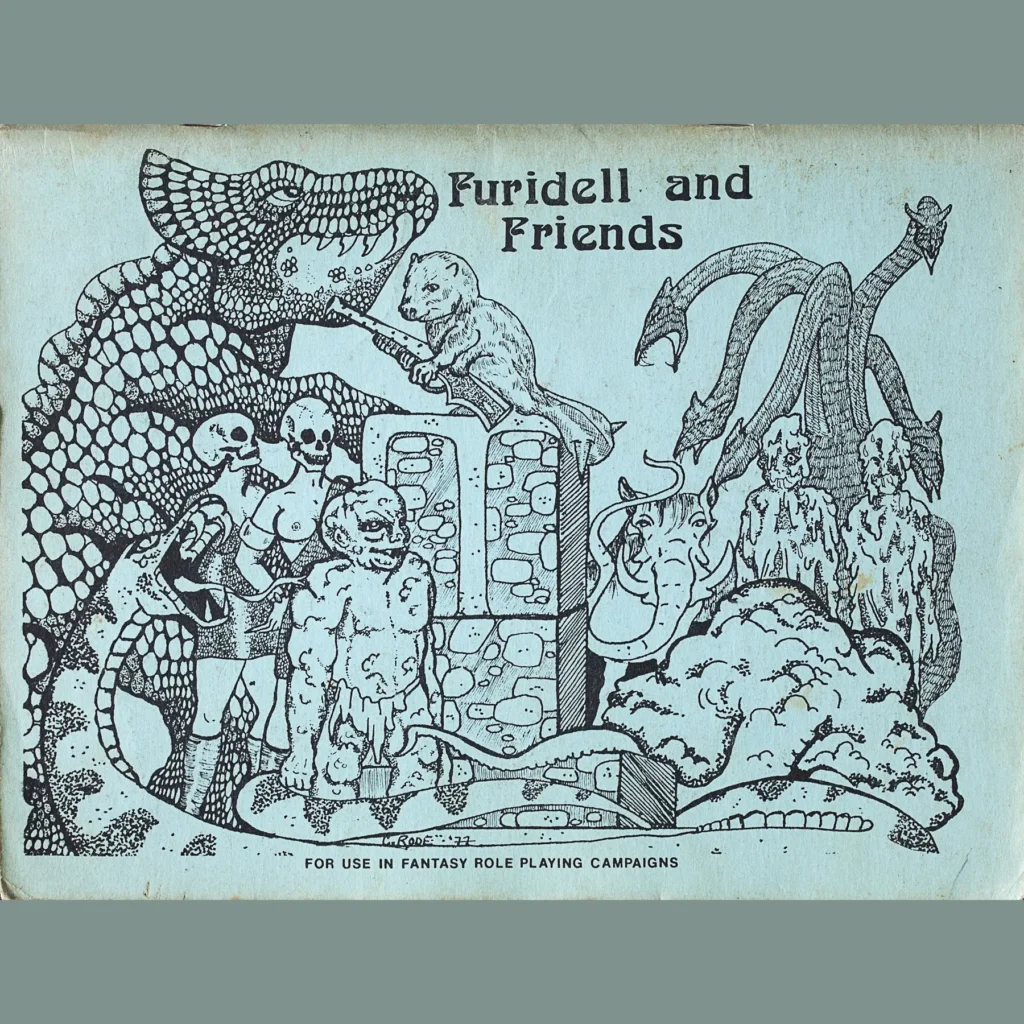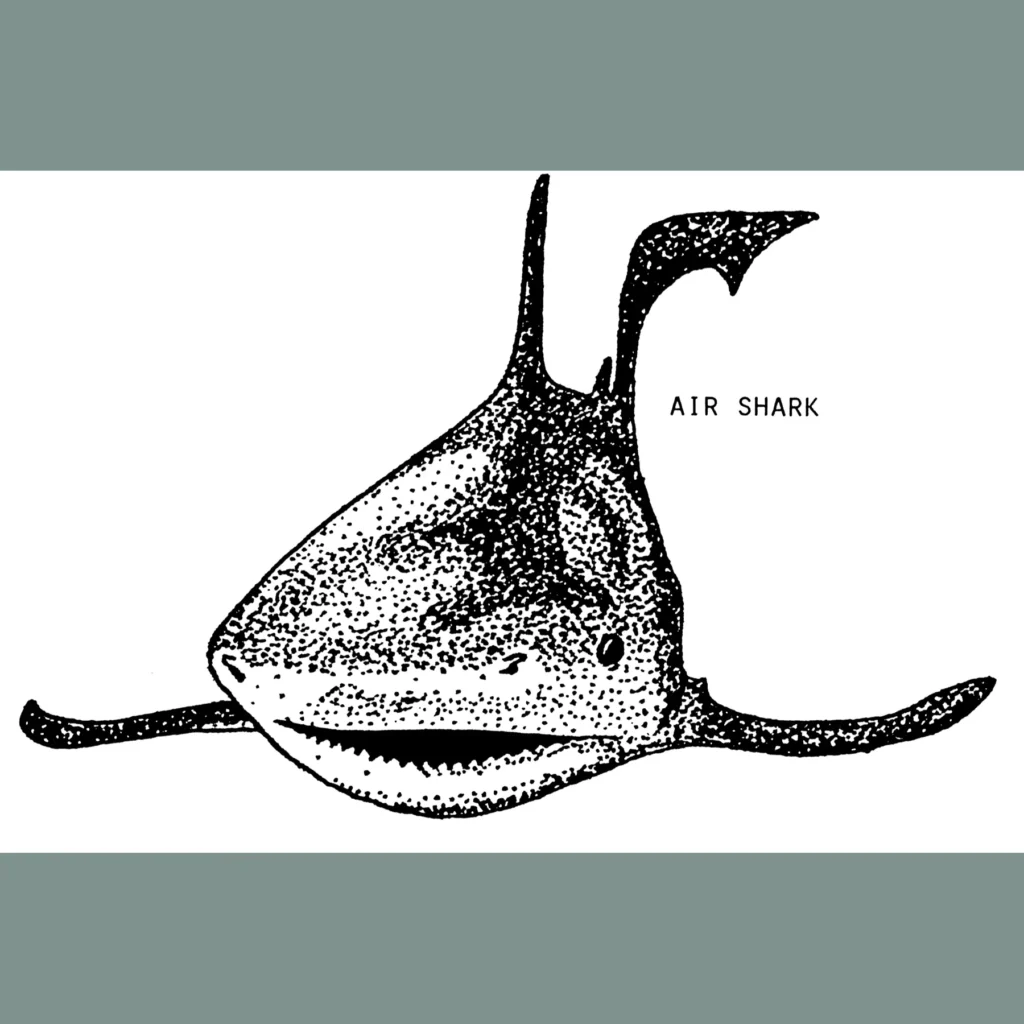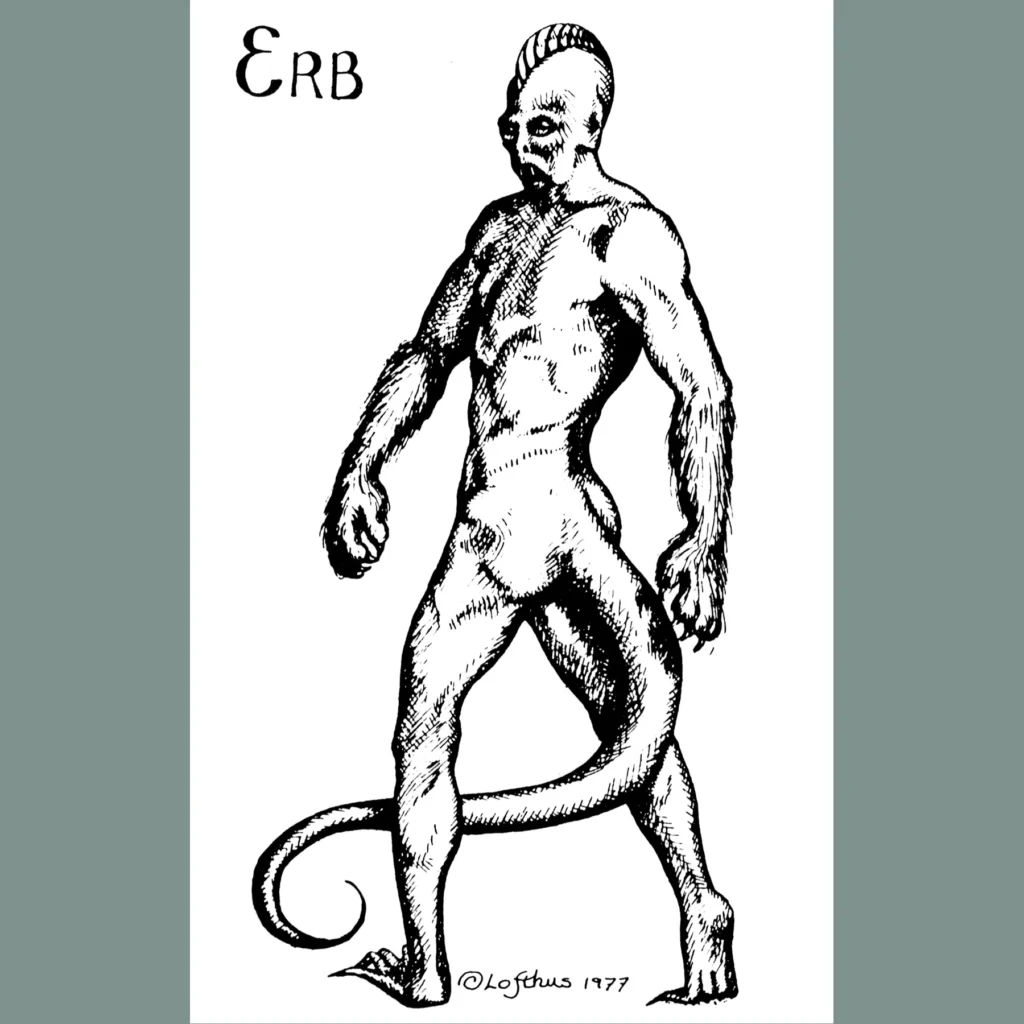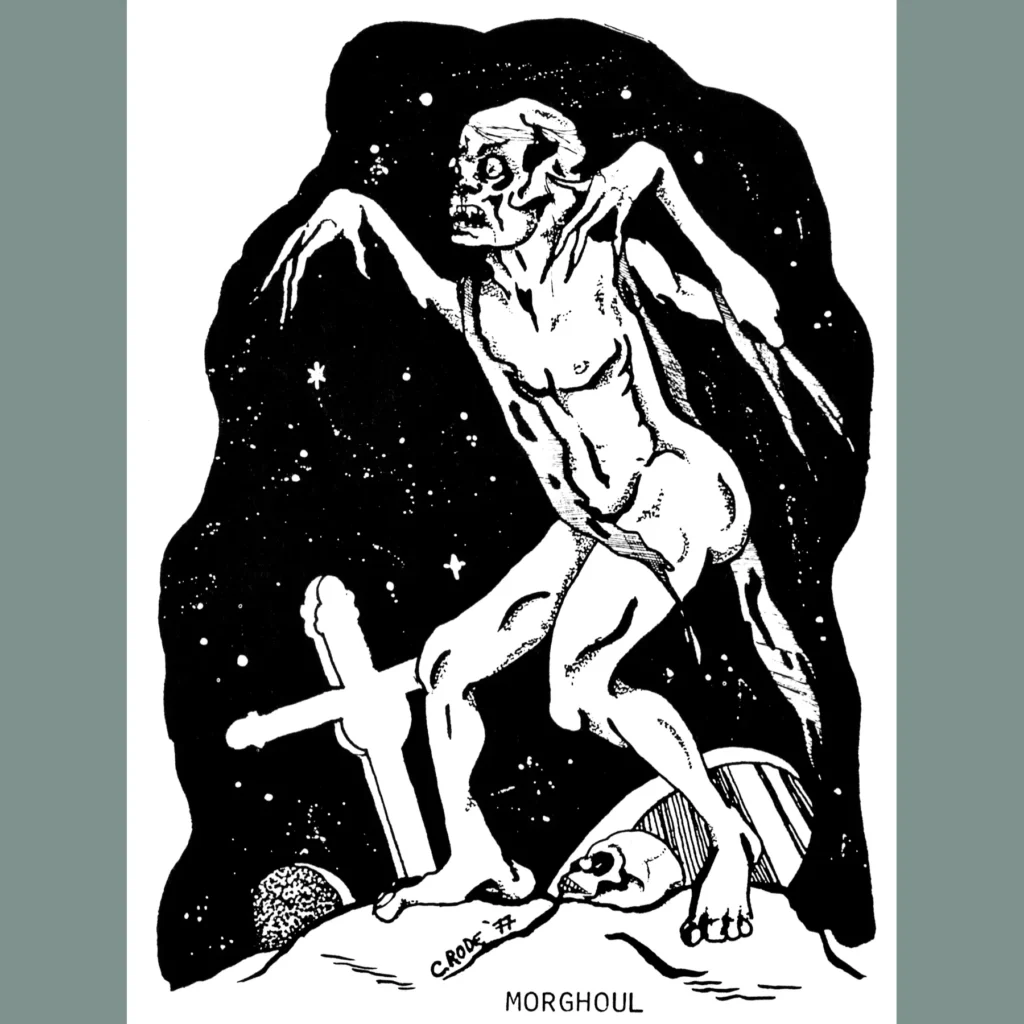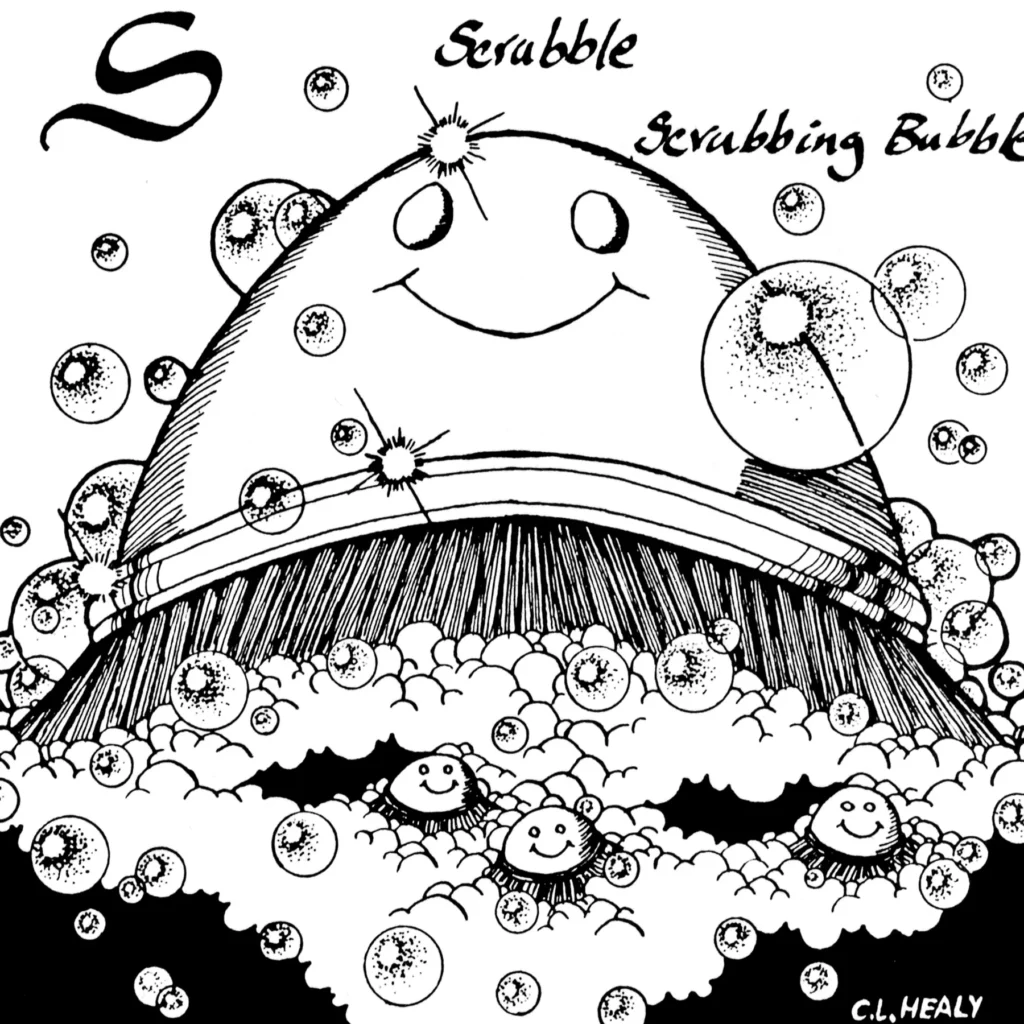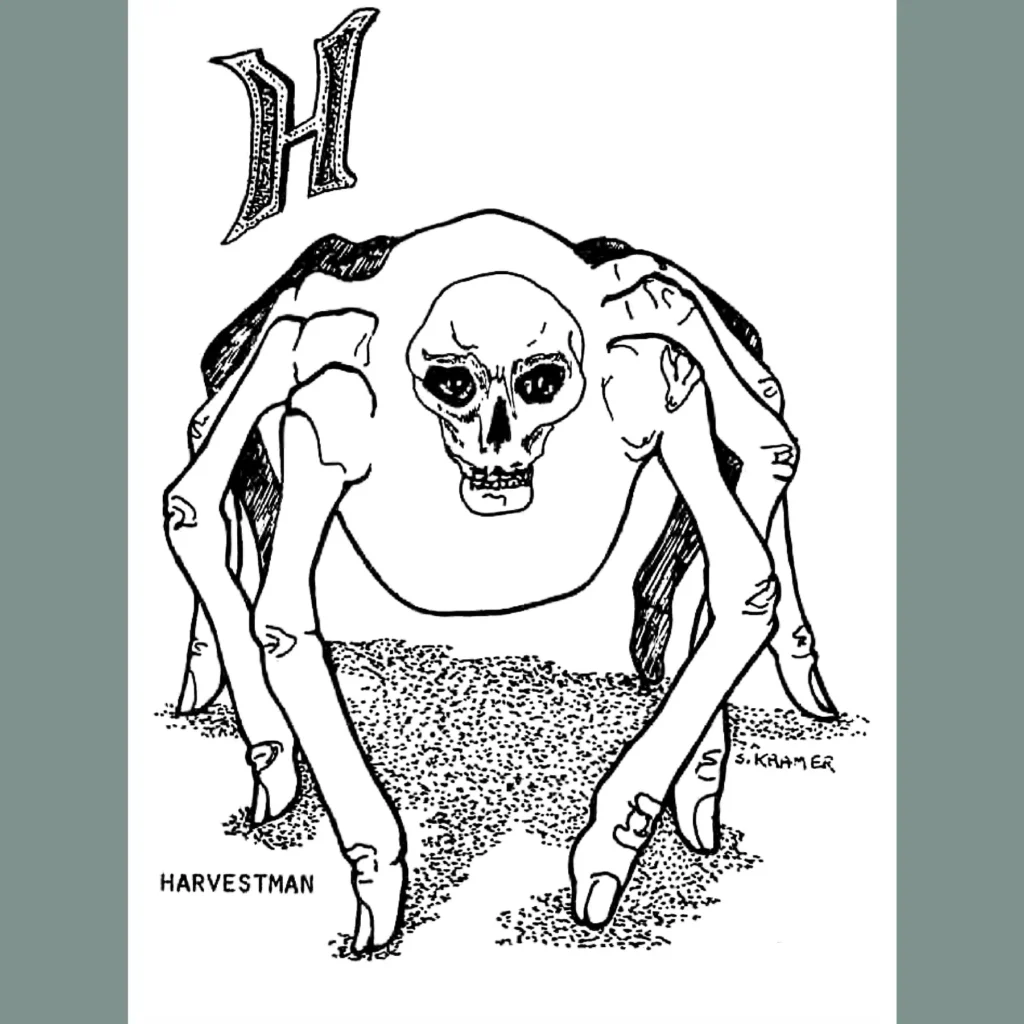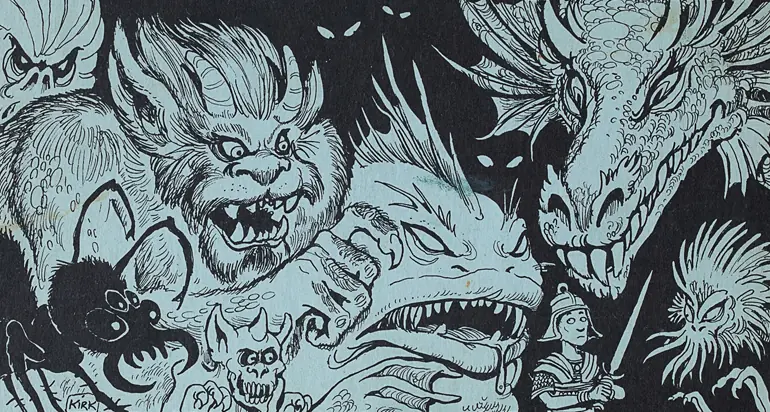
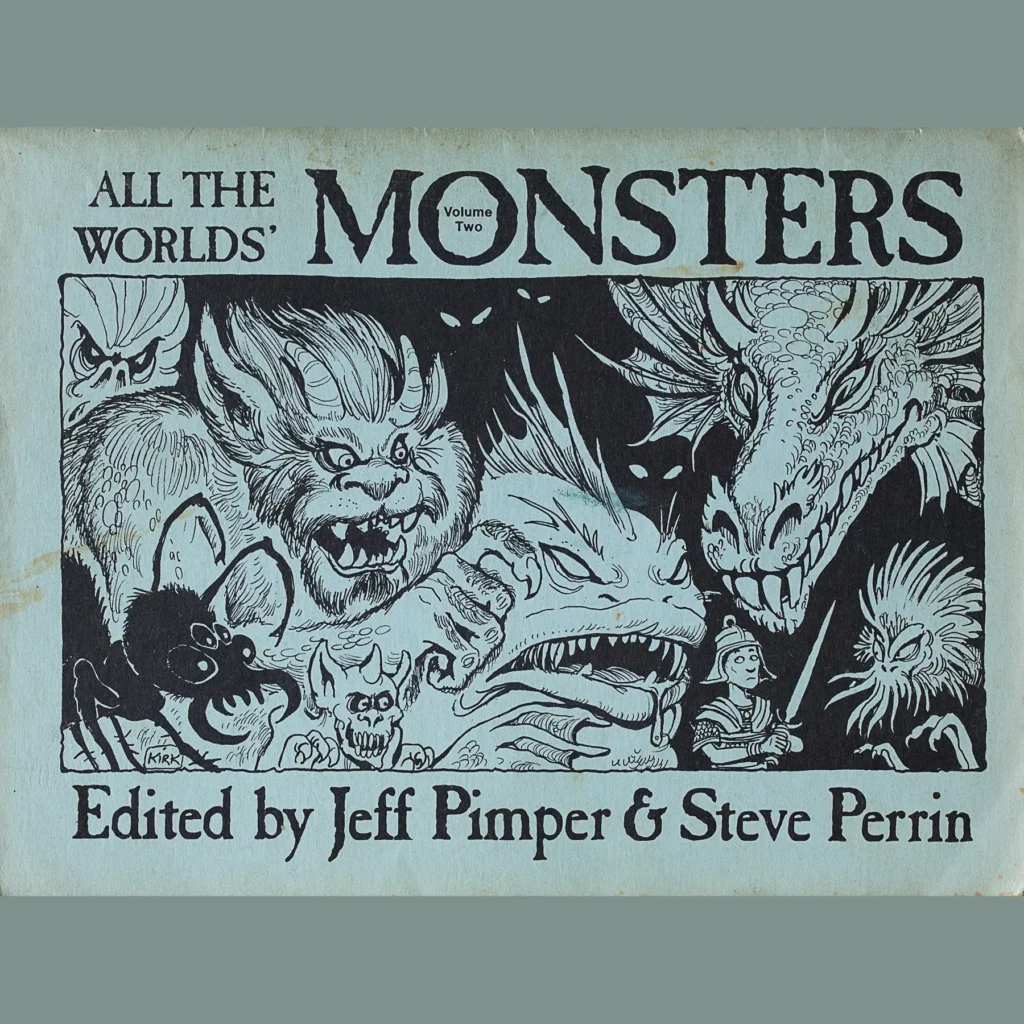
All the Worlds’ Monsters, Volume Two (1977, reprinted 1979) sticks to the formula established by its predecessor, for the most part. The first monster listed is an Air Shark. Which I suppose pairs nicely with the Air Squid from Volume One, while giving you a pretty good sense of the level of creativity going on here (not a dig, really, I love this stuff but it is clearly, joyously amateur). And just because it’s amateur doesn’t mean it isn’t horrific — check out that Harvestman illustration, it’ll haunt your nightmares. The art pool is the same (though it’s cool to see how they’ve improved their chops in such a short time), with Sherry Kramer joining Luise Perrine, Chris Lofthus, Cora Healy, Carol Rode and J. Steven Reichmuth. The cover is by the amazing Tim Kirk, who is probably best known for his Tolkien illustrations (look up “The Well in Moria” for representative a taste).
The reason to own this, beyond having more monsters, is the inclusion of the Perrin Conventions in the back of the book. This was a set of rules Perrin wrote (and previously published in Alarums & Excursions) that were designed in part as a reaction to D&D’s weirdly long one-minute combat rounds. Gygax’s rounds were abstractions of combat, he envisioned a single role encompassing the end result of a series of attacks, parries and dodges (think about this in terms of wargames, where you’re resolving combat between units made up of many individual troops, with some hitting, some missing, some dying in a single roll of the dice). I am confident that next to no one actually thinks of one-on-one combat in RPGs in this way, at least not reflexively. Perrin’s mode (born of years of actual sparring in the Society for Creative Anachronism) seeks to align the mechanics with the motion (and, I think, the way folks naturally think RPG combat should work): one die roll for every swing or shot. This reduces the time of a round to ten seconds.
It’s clever and well-reasoned, but still a fairly unwieldy system. But it’s what Perrin showed to Greg Stafford as part of the pitch to make an RPG to play in Stafford’s world of Glorantha. It would eventually become the foundation for RuneQuest!