|
|
That Old Black Magic |
|
This week is a bit of a departure, looking at grimoires, magical practice and monsters. I'm rather pleased with it, so I am reprinting the writing in full (though not all the images, for those you should go to the site, and they are definitely worth it). There is some decidedly Not Safe For Work material here, so continue with caution! And, because y'all are the best, you get the secret, special Saturday bonus post here in its entirety a whole day ahead of time! |
|
|
| |
|
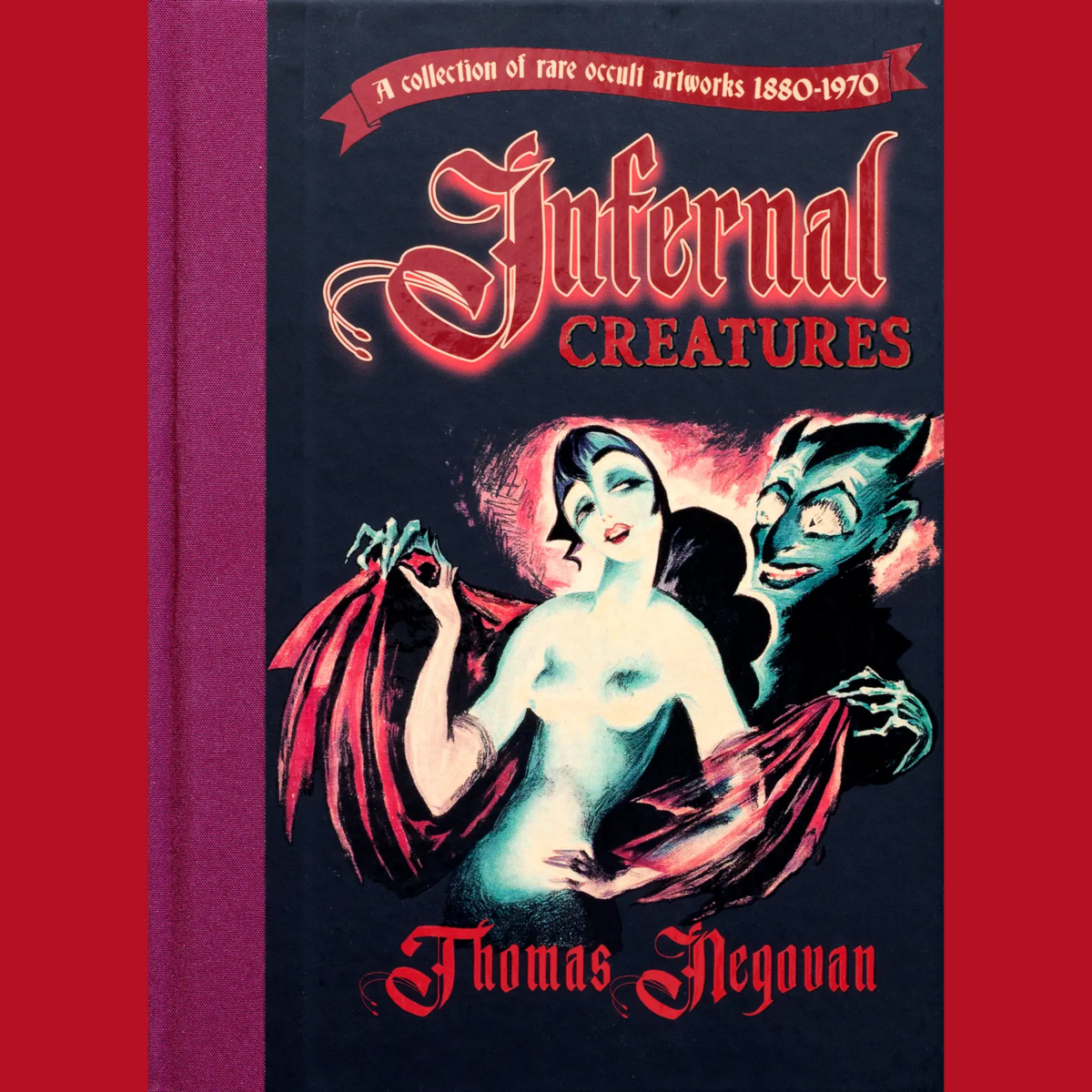
Infernal Creatures (2019)
|
| |
|
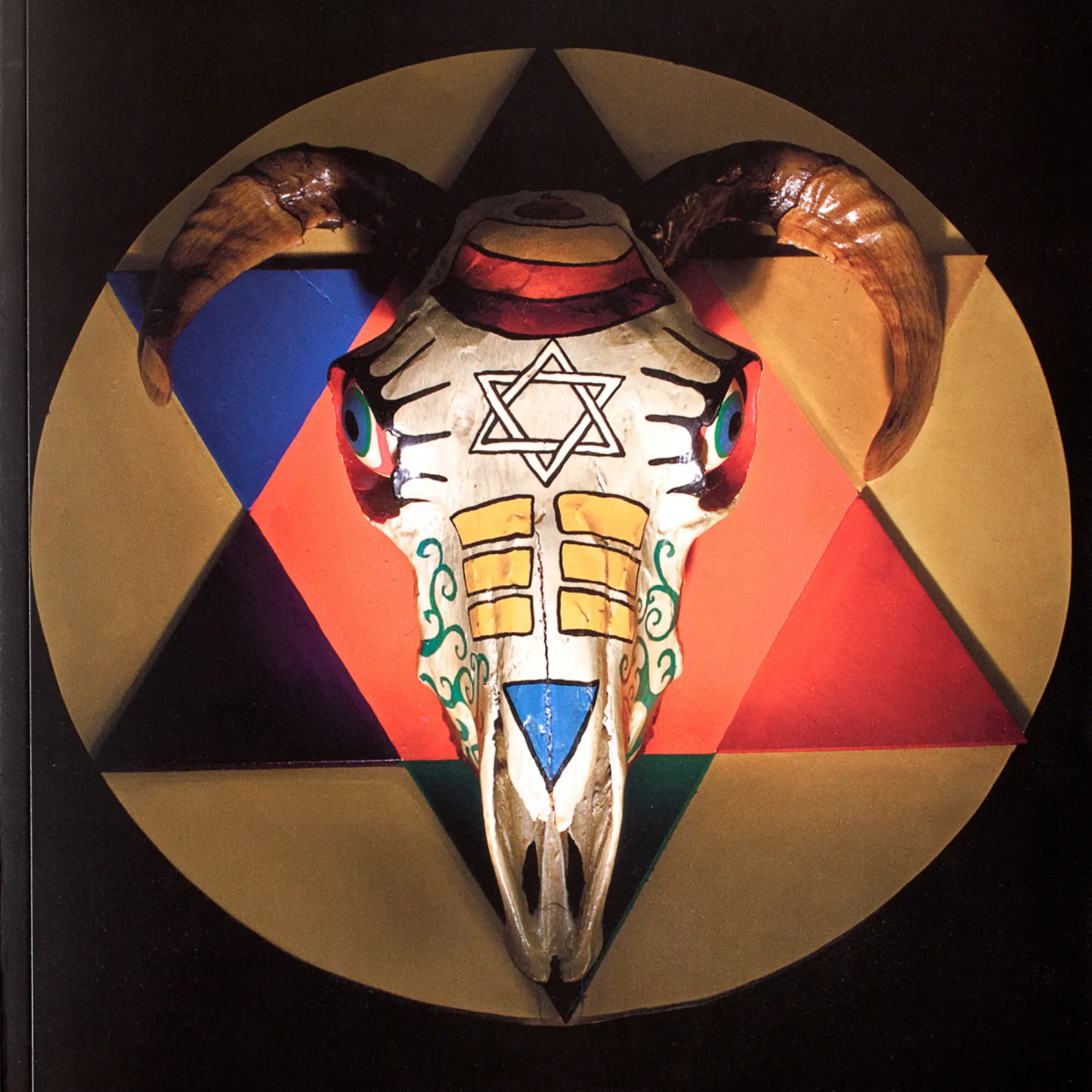
Infernal Creatures (2019) is, as the cover says, “A collection of rare occult artworks, 1880-1970,” drawn from the Century Guild collection in Los Angeles, which specializes in Symbolist and Art Nouveau works. It does indeed contain many images I’ve never seen before. Carlos Schwabe’s work is a particularly eye-opening discovery.
I’m a little hung up on that abstract though. Occult artworks. What does that mean, exactly? To be sure, devils and demons are all over the pages of Infernal Creatures, but does that automatically make it a collection of occult art, just because it portrays things popularly associated with the occult? Because the vast majority of the work in this book is commercial in nature — advertisements, movie posters, political cartoons. Certainly not hidden, certainly not the product of magickal operations or thinking. The closest, I think, is Schwabe, whose work as a Symbolist is pregnant with potential meaning in a way similar to the tarot. They’re also fairly terrifying.
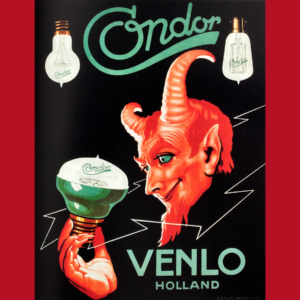
So, I got to thinking, what is occult art, really? And I think Infernal Creatures presents the public face of it, the occult as filtered through the popular imagination. That’s valid and often beautiful, even if it means sometimes using Lucifer to sell light bulbs (or demons to populate Monster Manual pages, or undead popes to front heavy metal bands). But I want to dig deeper… |
| |
|
Of Shadows (2016) is more of what I think of when I see the words “occult art.” It’s a collaboration between photographer Sara Hannant and Simon Costin, director of the Museum of Witchcraft and Magic. The book presents photographs of 100 items from the museum’s collection, accompanied by text that gives a glimpse of a variety of historical magickal practices and folk traditions, but also the history of the museum as well as its founder, Cecil Williamson. It’s a fascinating, welcoming primer.
Many of these items are handmade and nearly all saw use. Most of the tools of the trade are here — pendulums, wands, crystal balls. A surprising number of objects are the magic, talismans for good luck (the people of Britain seem compelled to stick things in their chimneys or brick them up in their walls) or cursed objects meant to bring harm (these are almost always unsettling in a way that is unburdened by horror film conventions, like that horrible jealousy shoe). There are commercial items, but they’re few and far between and see their nature reconfigured in their new context (I love the inclusion of Bratzillaz House of Witchez dolls as a one of a handful of representatives of modern attitudes towards witches).
Hannant’s photography is dark and rich. Shot uniformly on black, the moody lighting seems to capture the secret heart of the items, even if it obscures some of the details. In this way, it is very literally occult art. The overall effect is heightening, or perhaps a shaking off of the mundane — as it often the case with objects that were handled and used over many years, they seem imbued with a quiet power. Whether or not that power is magickal is, I suppose, up to the viewer. |
| |
|
Art of the Grimoire (2023)
|
| |
|
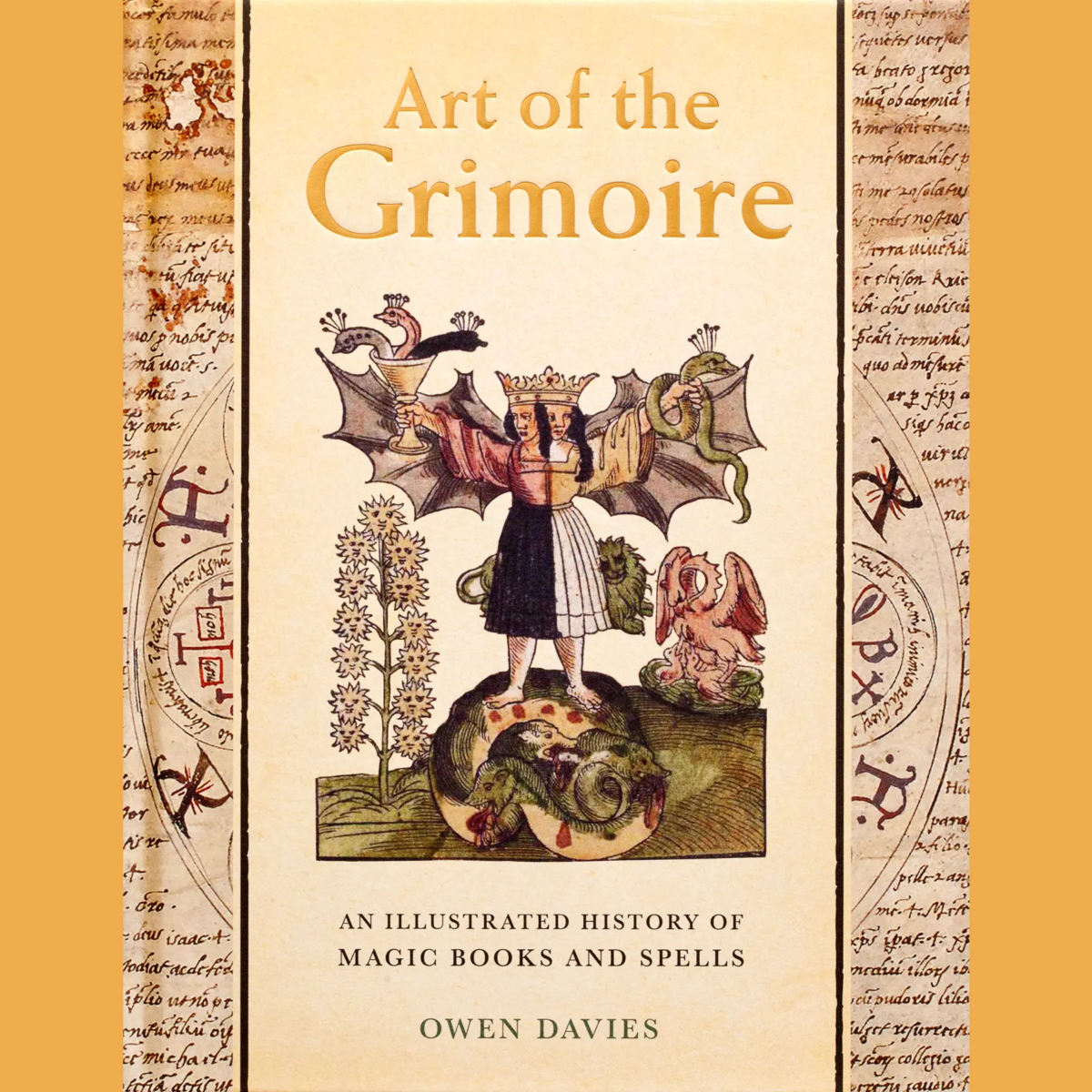
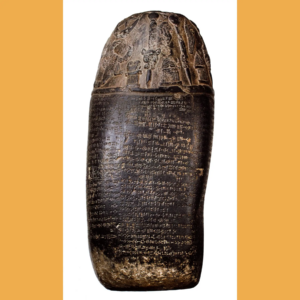
Art of the Grimoire (2023) moves us from implements of the art to the books containing the wisdom of the art. “Book” is doing a lot of work as a term here. We have traditional books, of course, but also scrolls, carved stones, clay tablets, etched lead, bamboo slips, bones, bark pages in a press and an online sigil generator. Even the traditional books often look strange, tattered, obscure or fashioned of unusual materials, at least, until the 19th and 20th century, when cheap printing replaced the previously hand-written books of secrets. Already, though, we have enough material to reconfigure our concept of what a “spellbook” looks like. I particularly like the spells carved on the skull.
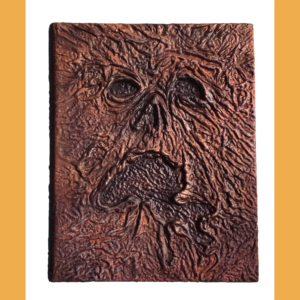
There is an interesting aesthetic through-line in these books of magic, regardless of their era or region of origin. The text (when written, almost always dark brown ink on light brown paper) is always cramped. Space is at a premium (makes sense for hand-written books that you’re not going to have 500-page tomes). Illustrations, figures, sigils and diagrams crowd into the words, and are in turn filled with their own words. Even if these were all written in 20th century English it would be a challenge to comprehend. Most of the grimoires are just pages and pages of this compact script. It’s beautiful, in its sinewy way, but it is far removed from the Hollywood spellbook. Two of those are included — Willow’s, from Willow, and the Tom Sullivan-designed Necronomicon from Evil Dead, both of which are emblematic of a kind of obvious, user-friendly magic. They want to be used, for good or ill, and strive to make that use as simple as possible. Not so for actual historical grimoires, in which the magick is kept within the process and the secrets are kept deeply obscure. |
| |
|
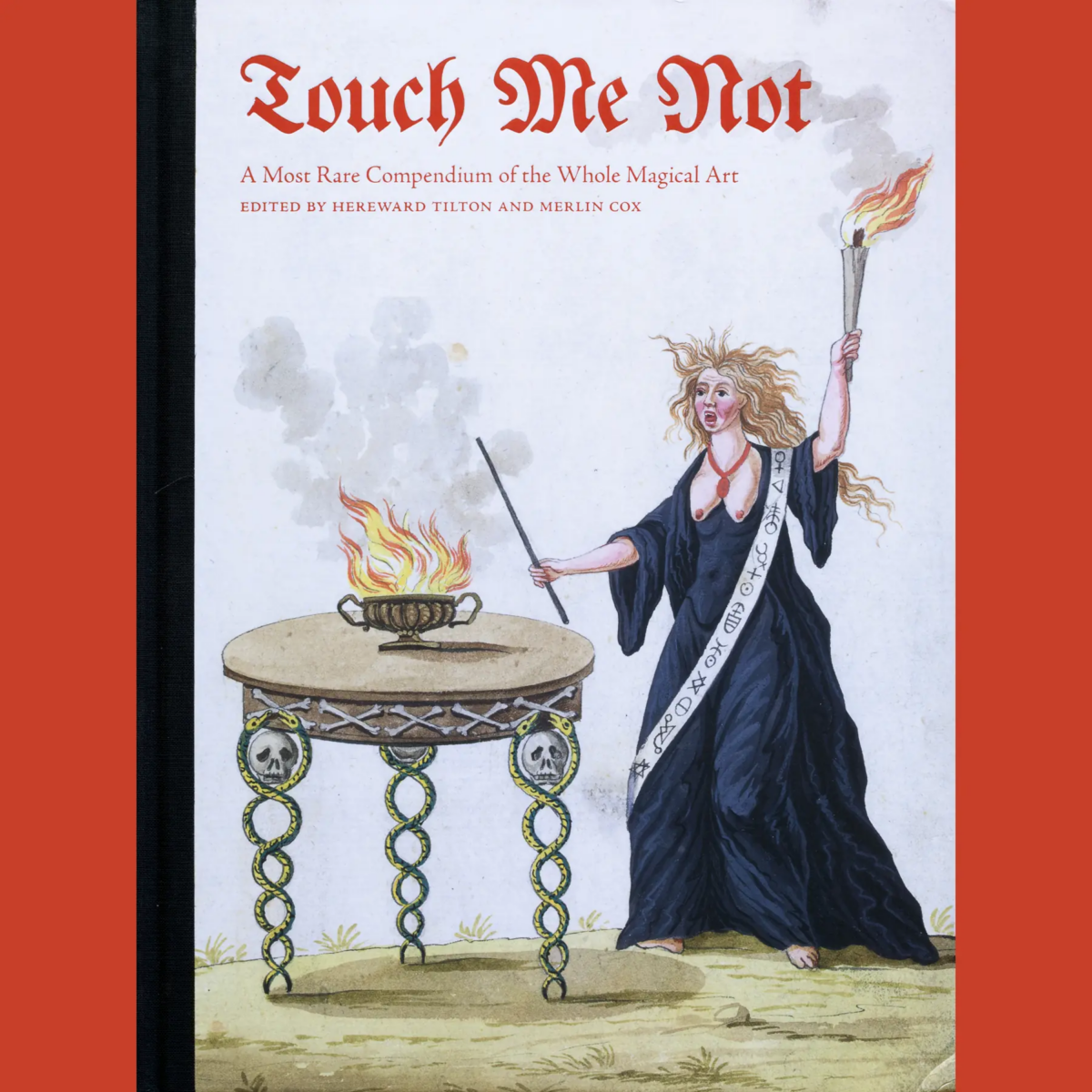
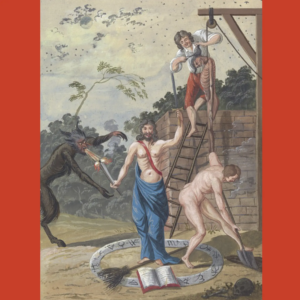
I think the gap between grimoires as they are (small books, cramped writing, few illustrations, cryptic prose) and as the popular imagination envisions them (large books, lurid illustrations, succinct and menacing prose) is amusing, and doubly so since the recent discovery of A Most Rare Compendium of the Whole Magical Art (circa 1795) and the publication of it as gorgeous facsimile, Touch Me Not (2019).
Despite existing for a couple of centuries, this grimoire is a fairly unknown one. There is only one hand-made copy in existence and it has been sitting on a shelf in the Wellcome Library in London since 1929 and no one knows much about where it was before that. It hasn’t contributed to the popular understanding of what a grimoire is, and yet, somehow, it is the perfect incarnation of the horror film spellbook.
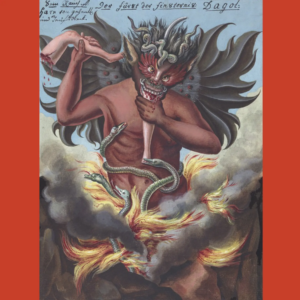
This thing is gnarly. The illustrations are the most fucked up shit, the kind of stuff you always knew was inside a book of black magic. Weird ass demons, weird ass demon penises. Horrible dooms. Dudes messing with corpses. All these illustrations are luscious watercolors of uncommon quality and truly nightmarish details. The brain that was like “Oh, sure, let me paint this impossibly beautiful portrait of Asmodeus chowing down on human legs” was either twisted, or extremely high. Evidence, as it happens, points to the latter, as this is apparently the first mention in print in Europe of a plant bearing DMT with the intent of using it to induce an altered state.
The book is basically a manual for treasure hunting. This was a thing at the time, and persisted quite a while — in Dracula, for instance, our favorite vampire uses black magic to evoke blue flames that reveal hidden treasures. It’s harder for non-vampires. You gotta get your tools and your psychoactive substances and you need to get really high and naked in the middle of nowhere and then look at the pictures in the book until, I dunno, one of them starts talking to you and shows you some treasure, or drags you to hell. Either/or.
And that’s basically it. Keen-eyed occultists will see something is off — if this is the “Whole Magical Art,” why is it a tiny fraction of the Cornelius Agrippa’s page count? Most European grimoires have clear lineages, pulling from and re-collating old texts but most of this stuff seems new. A lot of it seems entirely made up. It’s also so horrific, I can’t imagine a necromancer wanting to use it — imagine if your book about auto repair only had illustrations of people getting mangled while repairing cars. Not really conducive to the work. On the other hand, if you’re already rich, publicly devout and like seeing pictures of weird devil dicks and desperate peasants meeting bad ends, this is maybe the book for you (it also proves, maybe, that the heavy metal impulse to revel in transgressive art for the sake of it is at least three centuries old). Bonus if you’re into magic mushrooms (for real, the true purpose of the book seems to be the delivery of recipes for mind-altering substances).
Whatever the true intent behind the book, it has a flare for the dramatic that other grimoires should embrace. To wit: “You who have come into the possession of this very rare book, whoever you may be — remember that it is called Touch Me Not. Meddling in this art never goes unpunished.” |
| |
|
The History of Four-Footed Beasts and Serpents and Insects (1967)
|
| |
|
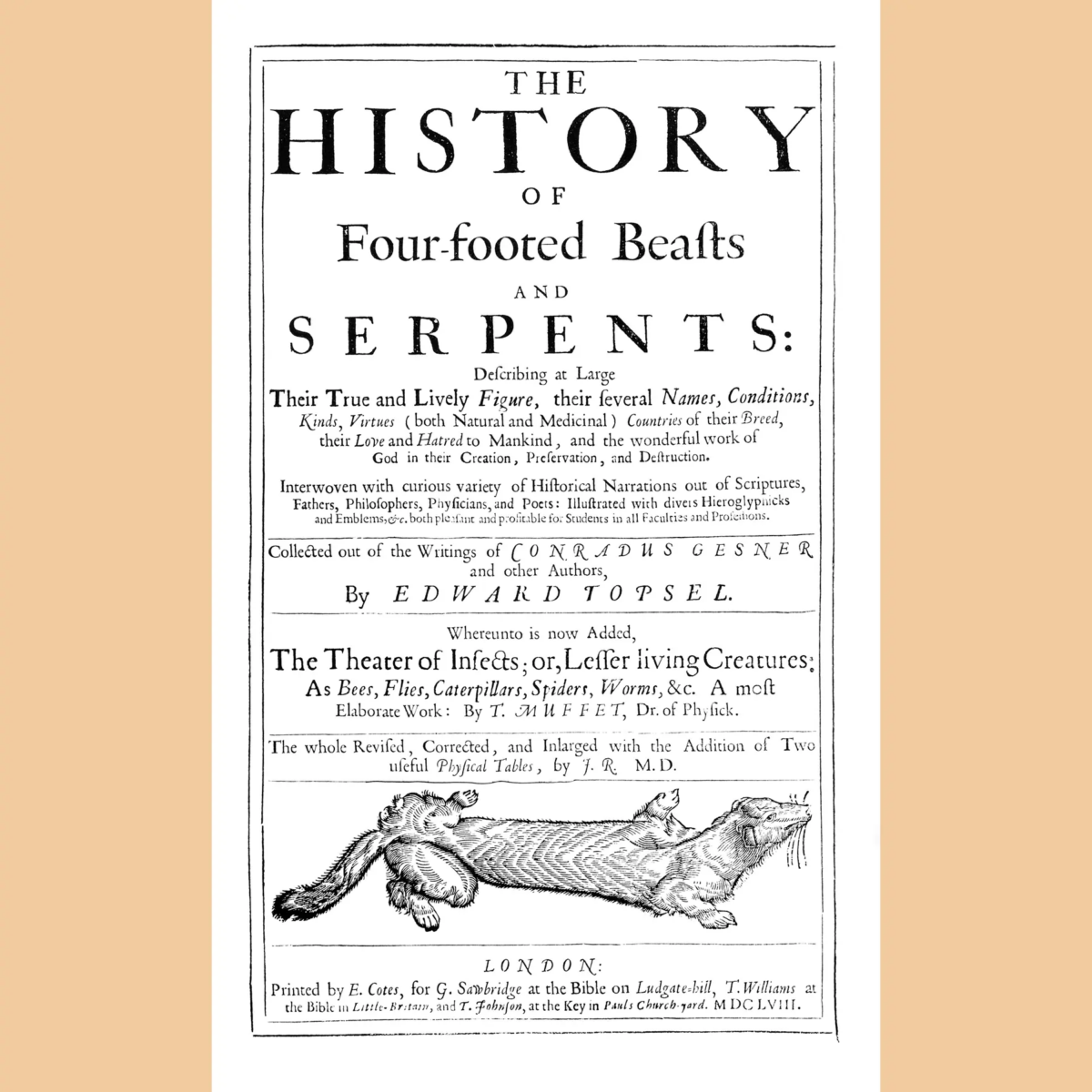
Not a grimoire, and honestly, how could I top Touch Me Not? But, like that book, this is a facsimile of a much older book. When I bought it, actually, I didn’t really know how seriously the word “facsimile” was being deployed, but this is indeed a 1-to-1 recreation of some very hefty books written in Elizabethan English. Which books? That requires some explaining that likely no one will care about but me, but now I don’t have a character limit now, so I can indulge.
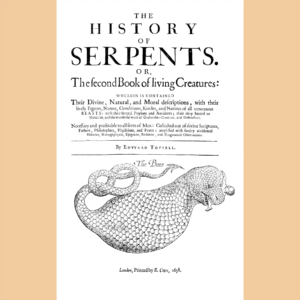
Edward Topsell published The History of Four-Footed Beasts in 1607 and followed it with The History of Serpents in 1608. After Topsell’s death in 1625, these two volumes were combined and published as, you guessed it, The History of Four-Footed Beasts and Serpents, in 1658. This is a facsimile of that tome…sort of. For whatever reason, De Capo split Beasts and Serpents into two separate volumes, added a third volume by an entirely different author (The Theater of Insects, by Thomas Muffet) and titled the facsimile The History of Four-Footed Beasts and Serpents and Insects (1967). It is, well, Topsell’s bits are, essentially a translation and expansion of a portion of Conrad Gessner’s bird-obsessed Historiae Animalium (1551), which is basically a rework of Aristotle’s book of the same name from the fourth century BCE. All three are massive attempts to catalog the animal kingdom that also accidentally sweep up some legendary beasts along the way. It's worth noting that Topsell himself was a bit of a ding-dong who is often simultaneously dismissive and incredibly credulous.
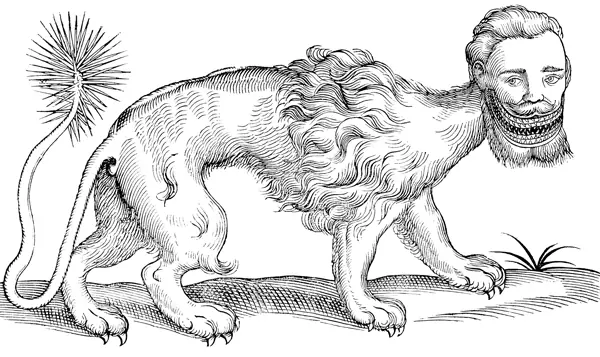
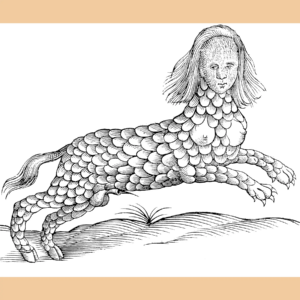
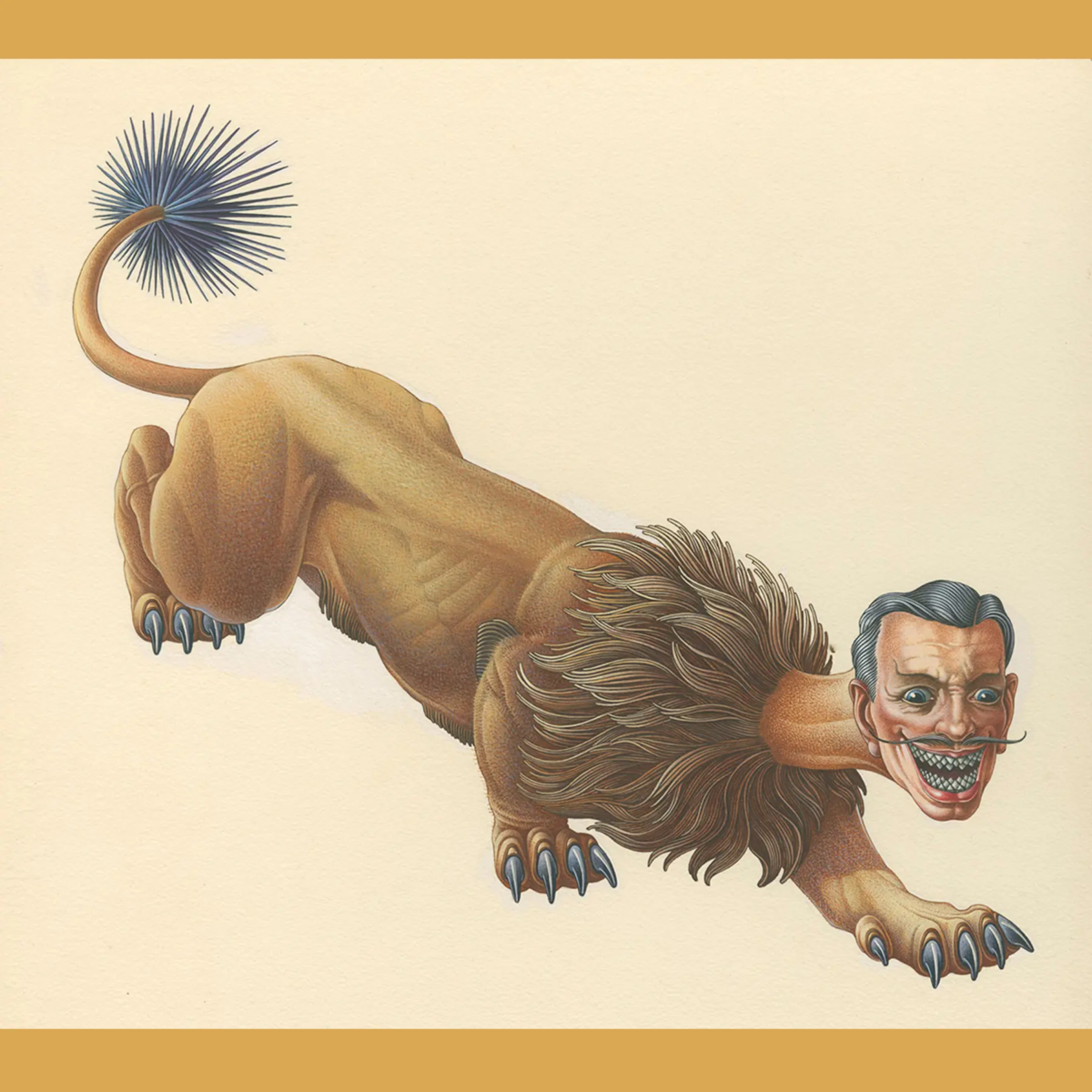
This book is, to my knowledge, the first instance of my favorite manticore illustration, and one of the longest entries on the creature anywhere in pre-modern English (no telling where the illustration is from; Topsell used many of Gessner’s, who also lifted from other sources). The Su is here, as is Lamia and the Gulon and the Libyan Gorgon and a very mean looking beaver. Probably dozens more — the book is 586 densely packed pages. The serpents volume, predictably, is as interested in dragons as it is snakes (and dear god, even real snakes look monstrous in Topsell’s lens — check out that hideous boa!). This is real foundational monster stuff — Gary Gygax almost certainly had either this or an abridged version called An Elizabethan Zoo that had been floating around since 1926, which would in part explain why the D&D Gorgon is not a snake lady.
For the true monster aficionado. There are POD versions available now, but they actually cost about as much as this De Capo edition, and this one is pretty nice. Seeing the manticore in full A4 glory is **chef’s kiss** |
| |
|
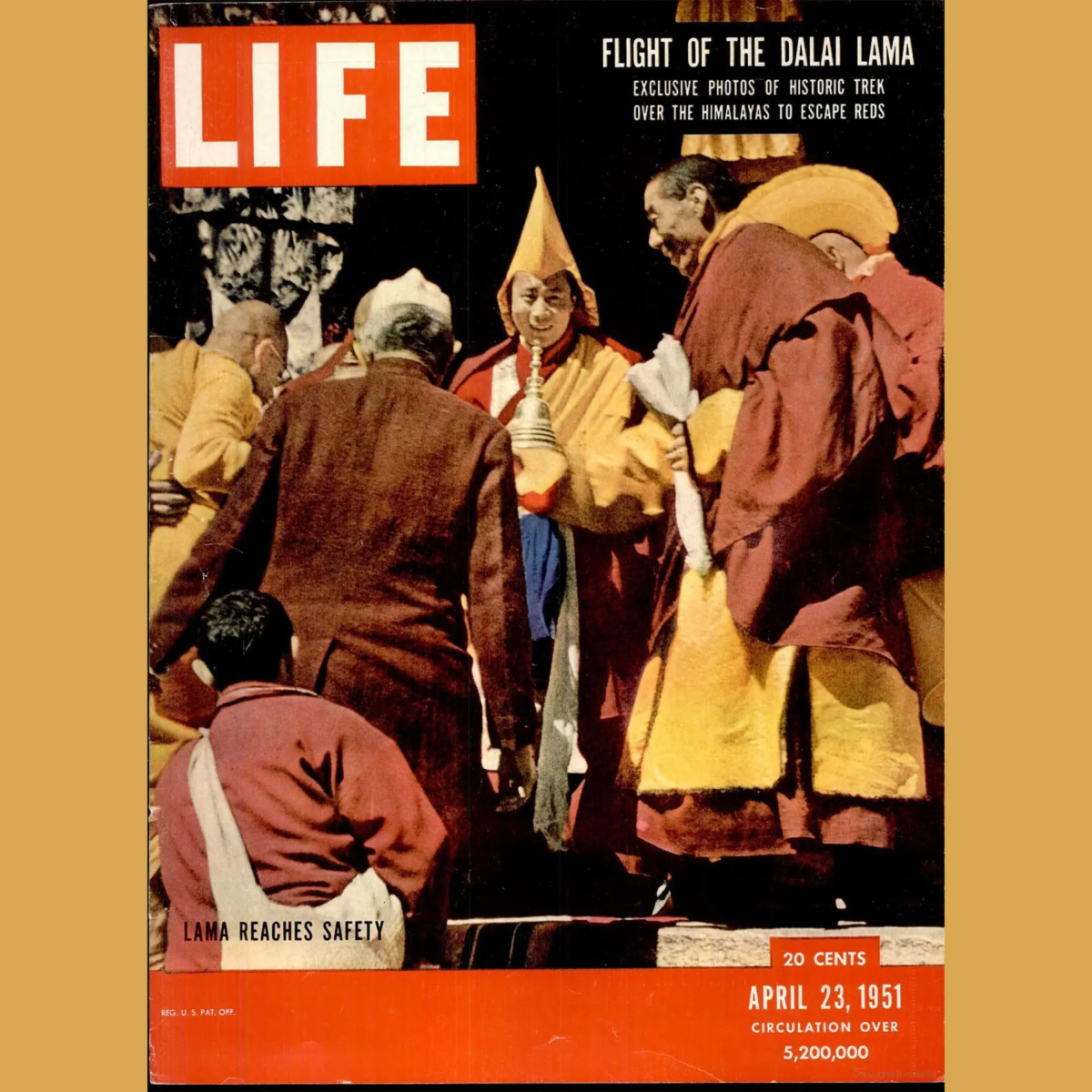
LIFE Magazine (April 23, 1951)
|
| |
|
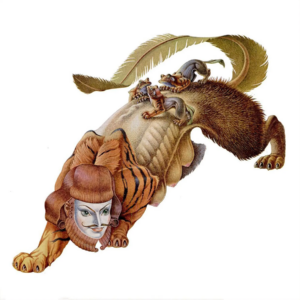
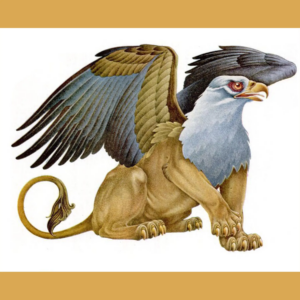
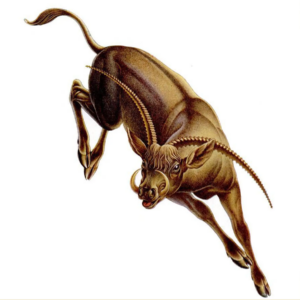
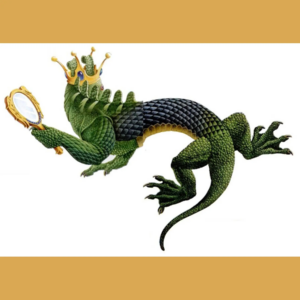
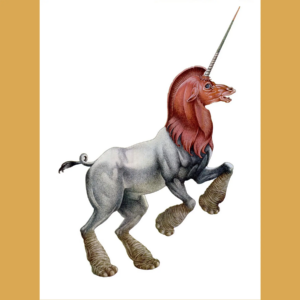
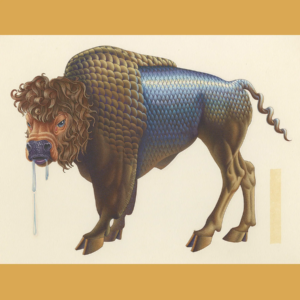
Bonus post! I’ve been sitting on the April 23, 1951 issue of LIFE Magazine for a couple of years and there’s really no better time than now to show it off. What’s so special about it? A four-page filler story titled “Mythical Monsters: These Beasts Existed Only in Man’s Imagination,” which shares the basic details of seven creatures — Su, Griffon, Yale, Basilisk, Gorgon, Manticore and Unicorn — all illustrated by Rudolf Freund.
I saw this for the first time at the Rockwell Museum, as part of the Enchanted exhibit — they had the magazine in a case, and also the original manticore piece, which resides in their permanent collection! They’re incredibly striking. Freund is a technical master and makes some intriguing design choices that gesture at the real-life animals the legends were garbling up. And they have a little bit of the mid-century modern aesthetic about them too, which is a novelty. Really beautiful work. |
| |
|
Monsters Aliens and Holes in the Ground is getting a second printing as we speak. Down, Down, Down, my analects on the concept of the fantasy dungeon, will be out next year some time (cover reveal soon, hopefully!). This past summer, I finished the first draft of Monstrous Descents, my analysis of the origins and influence of D&D's Monster Manual. Now I'm on to my fourth book (!), a history of Goodman Games for the company's 25th anniversary.
Joe talks a little bit about it in last night's What's New With Goodman Games (at around 01:06:00) which was cool to hear. You'll be able to check out a small sidebar from the book in Goodman's 2026 Free RPG Day offering, too (which I am writing today!).
I also know what my fifth book is probably gonna be too, but I can't talk about that yet... |
| |
Vintage RPG
Copyright Stu Horvath, 2025, except when not
| |
|