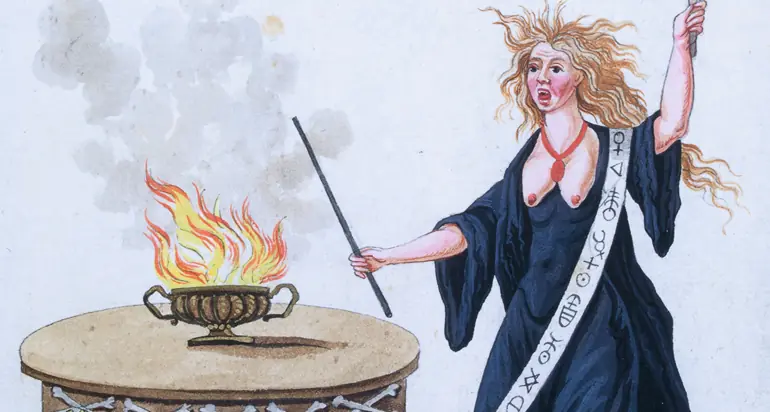
I think the gap between grimoires as they are (small books, cramped writing, few illustrations, cryptic prose) and as the popular imagination envisions them (large books, lurid illustrations, succinct and menacing prose) is amusing, and doubly so since the recent discovery of A Most Rare Compendium of the Whole Magical Art (circa 1795) and the publication of it as gorgeous facsimile, Touch Me Not (2019). Despite existing for a couple of centuries, this grimoire is a fairly unknown one. There is only one hand-made copy in existence and it has been sitting on a shelf in the Wellcome Library in London since 1929 and no one knows much about where it was before that. It hasn’t contributed to the popular understanding of what a grimoire is, and yet, somehow, it is the perfect incarnation of the horror film spellbook.
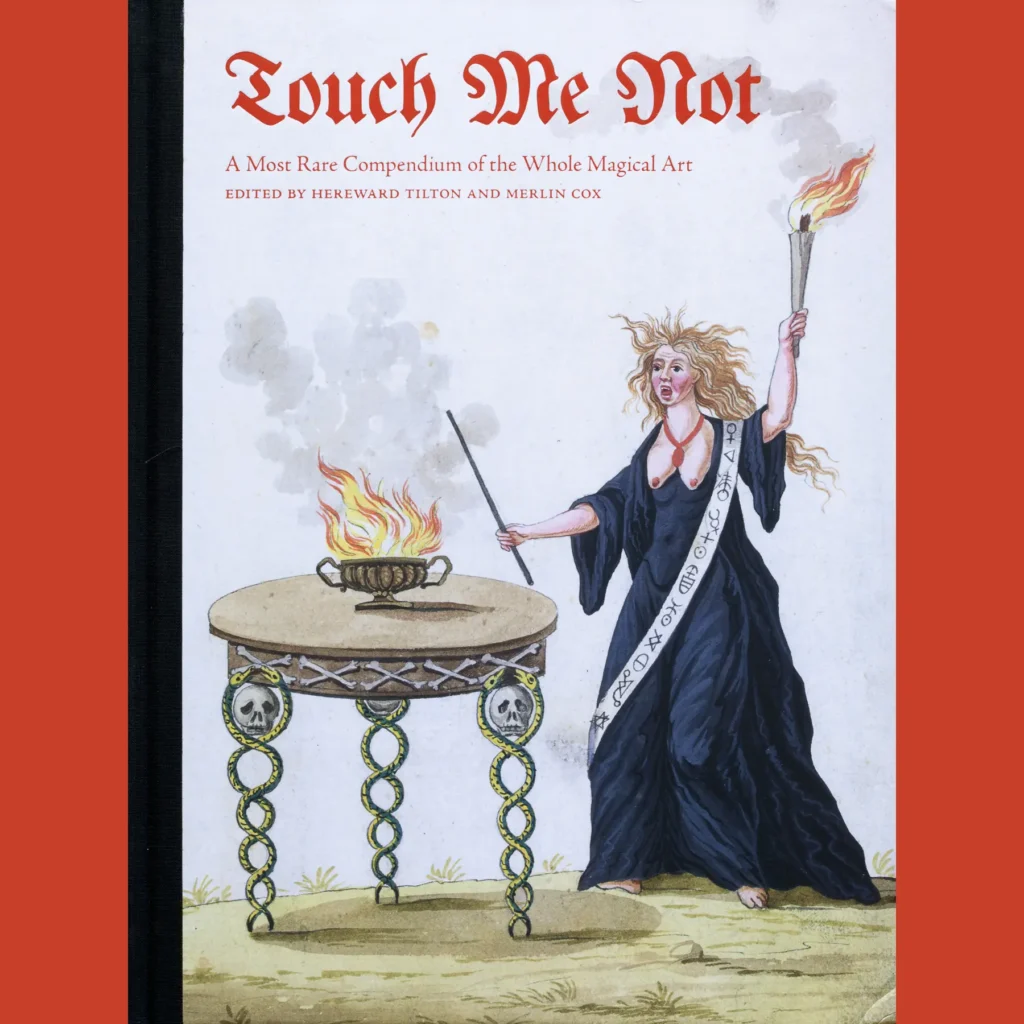
This thing is gnarly. The illustrations are the most fucked up shit, the kind of stuff you always knew was inside a book of black magic. Weird ass demons, weird ass demon penises. Horrible dooms. Dudes messing with corpses. All these illustrations are luscious watercolors of uncommon quality and truly nightmarish details. The brain that was like “Oh, sure, let me paint this impossibly beautiful portrait of Asmodeus chowing down on human legs” was either twisted, or extremely high. Evidence, as it happens, points to the latter, as this is apparently the first mention in print in Europe of a plant bearing DMT with the intent of using it to induce an altered state.
The book is basically a manual for treasure hunting. This was a thing at the time, and persisted quite a while — in Dracula, for instance, our favorite vampire uses black magic to evoke blue flames that reveal hidden treasures. It’s harder for non-vampires. You gotta get your tools and your psychoactive substances and you need to get really high and naked in the middle of nowhere and then look at the pictures in the book until, I dunno, one of them starts talking to you and shows you some treasure, or drags you to hell. Either/or.
And that’s basically it. Keen-eyed occultists will see something is off — if this is the “Whole Magical Art,” why is it a tiny fraction of the Cornelius Agrippa’s page count? Most European grimoires have clear lineages, pulling from and re-collating old texts but most of this stuff seems new. A lot of it seems entirely made up. It’s also so horrific, I can’t imagine a necromancer wanting to use it — imagine if your book about auto repair only had illustrations of people getting mangled while repairing cars. Not really conducive to the work. On the other hand, if you’re already rich, publicly devout and like seeing pictures of weird devil dicks and desperate peasants meeting bad ends, this is maybe the book for you (it also proves, maybe, that the heavy metal impulse to revel in transgressive art for the sake of it is at least three centuries old). Bonus if you’re into magic mushrooms (for real, the true purpose of the book seems to be the delivery of recipes for mind-altering substances).
Whatever the true intent behind the book, it has a flare for the dramatic that other grimoires should embrace. To wit: “You who have come into the possession of this very rare book, whoever you may be — remember that it is called Touch Me Not. Meddling in this art never goes unpunished.”
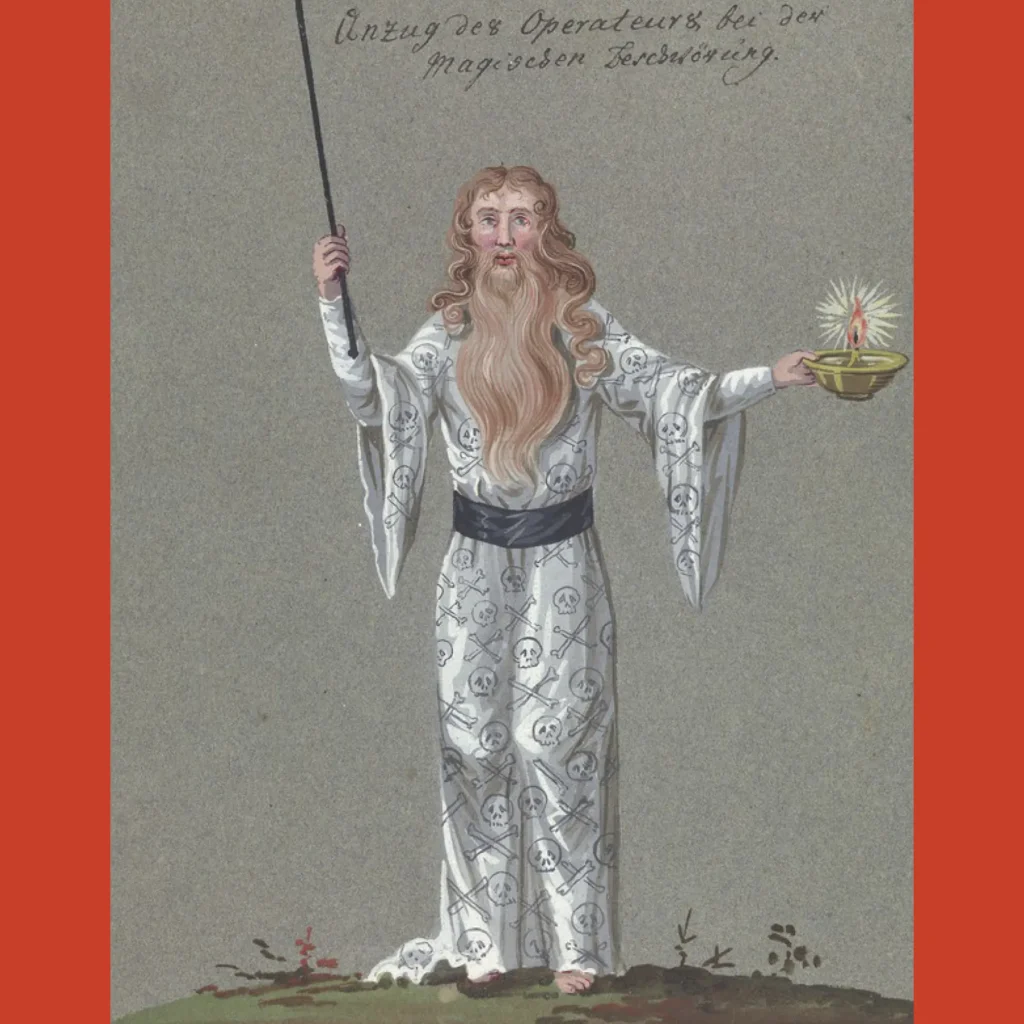
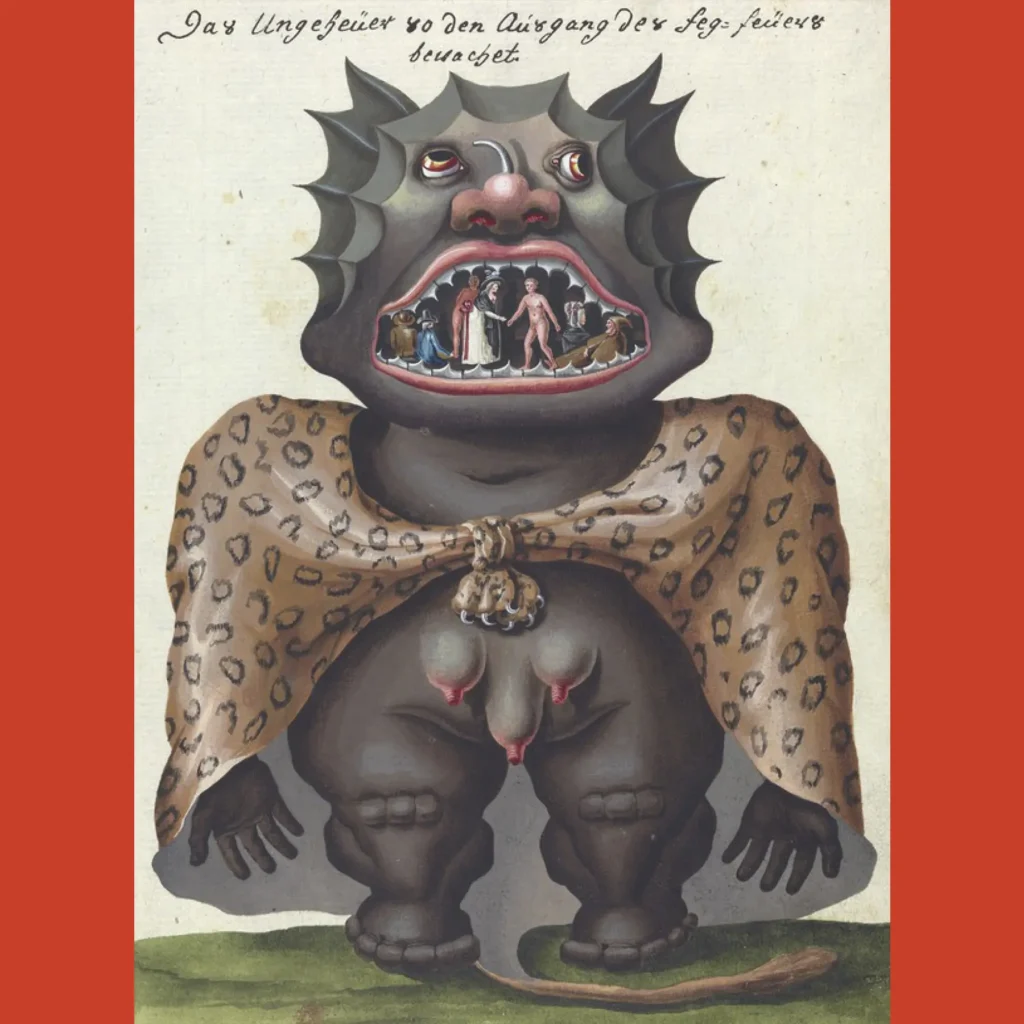
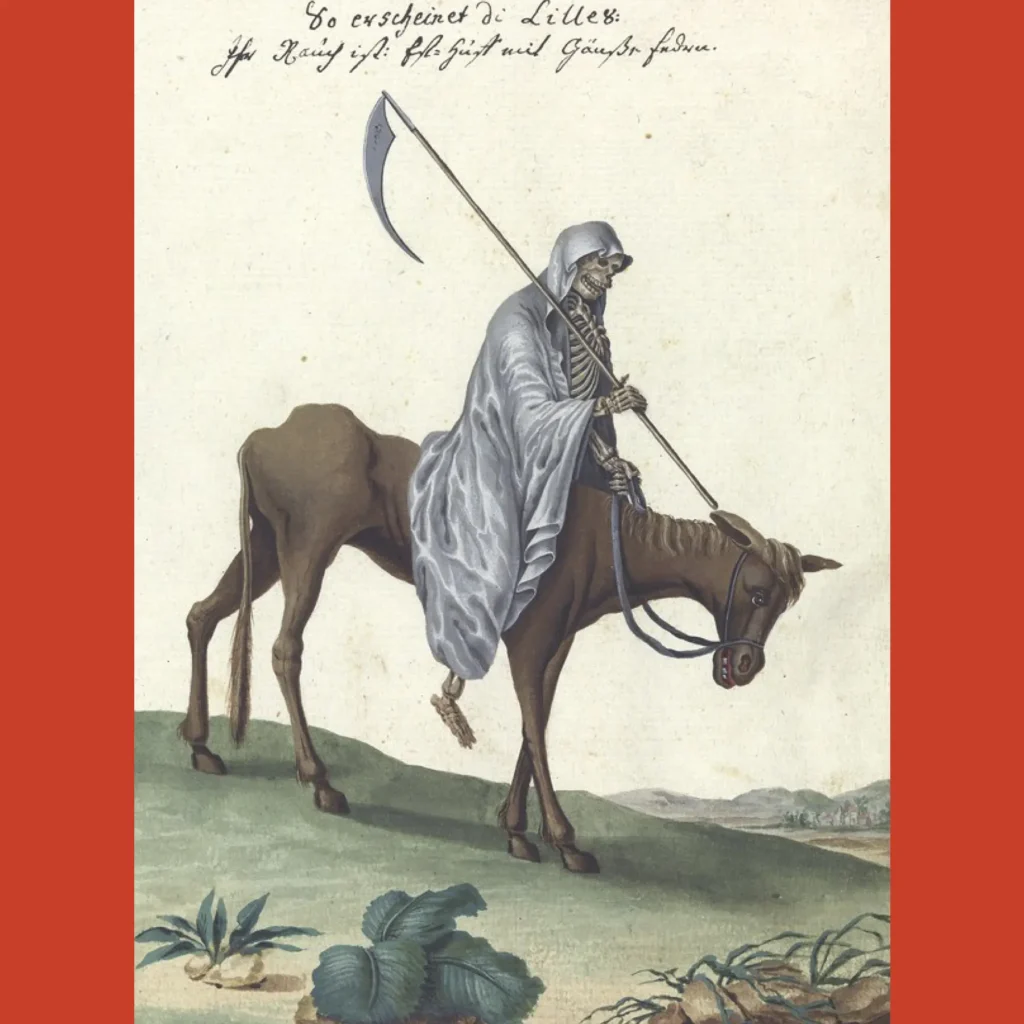
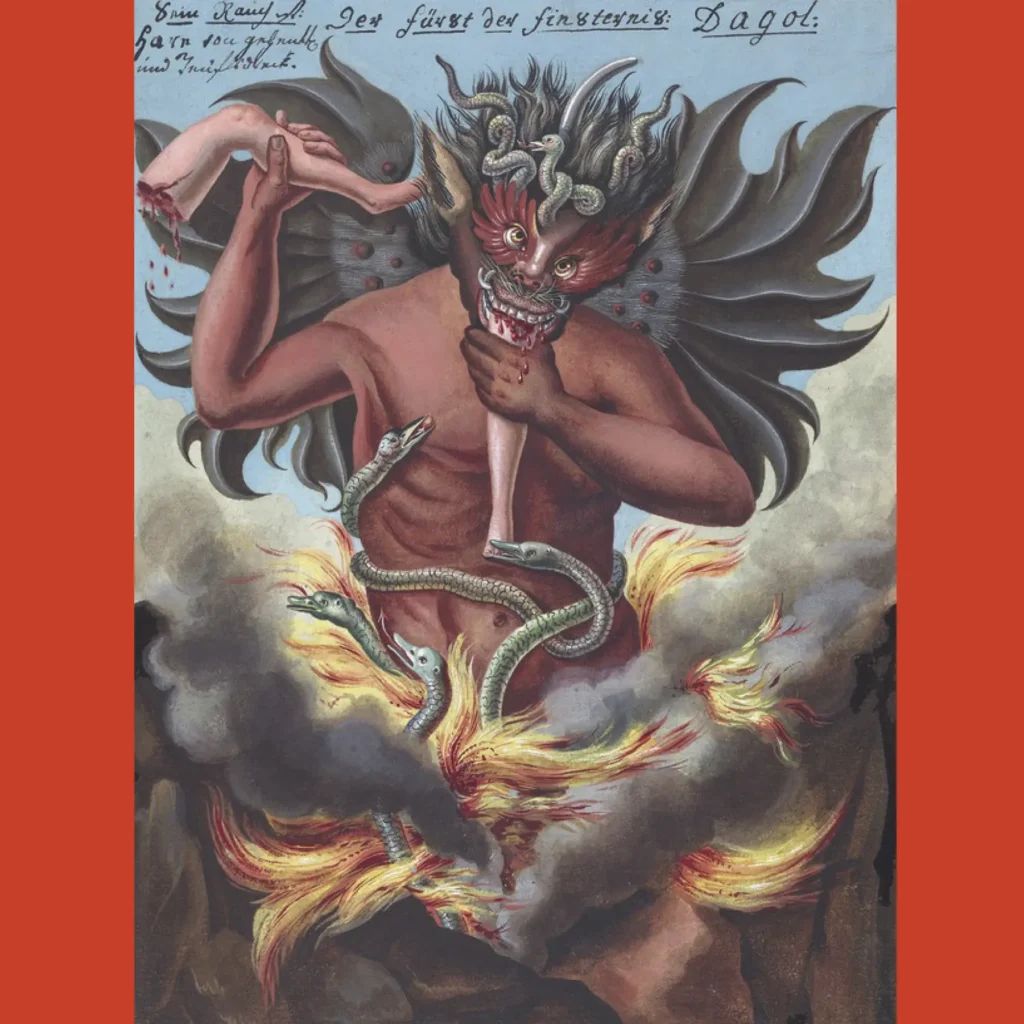
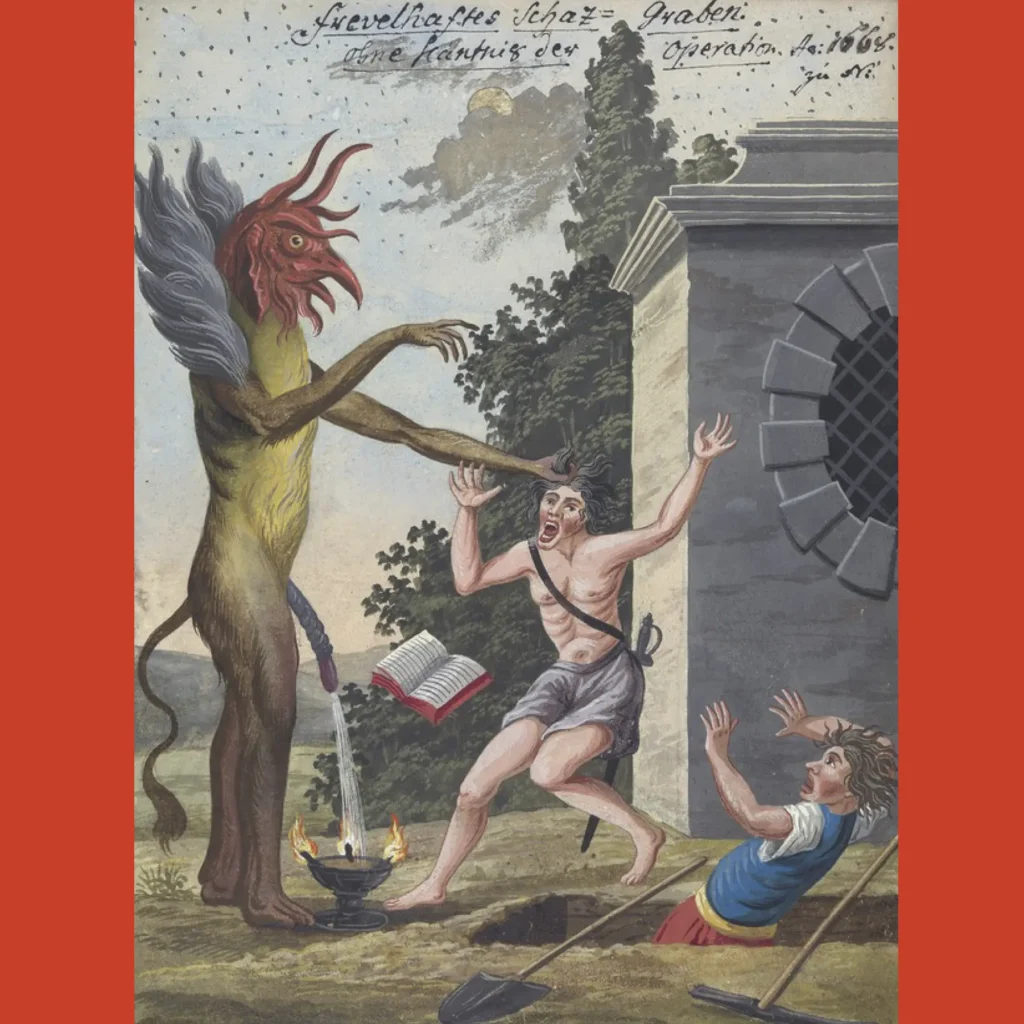
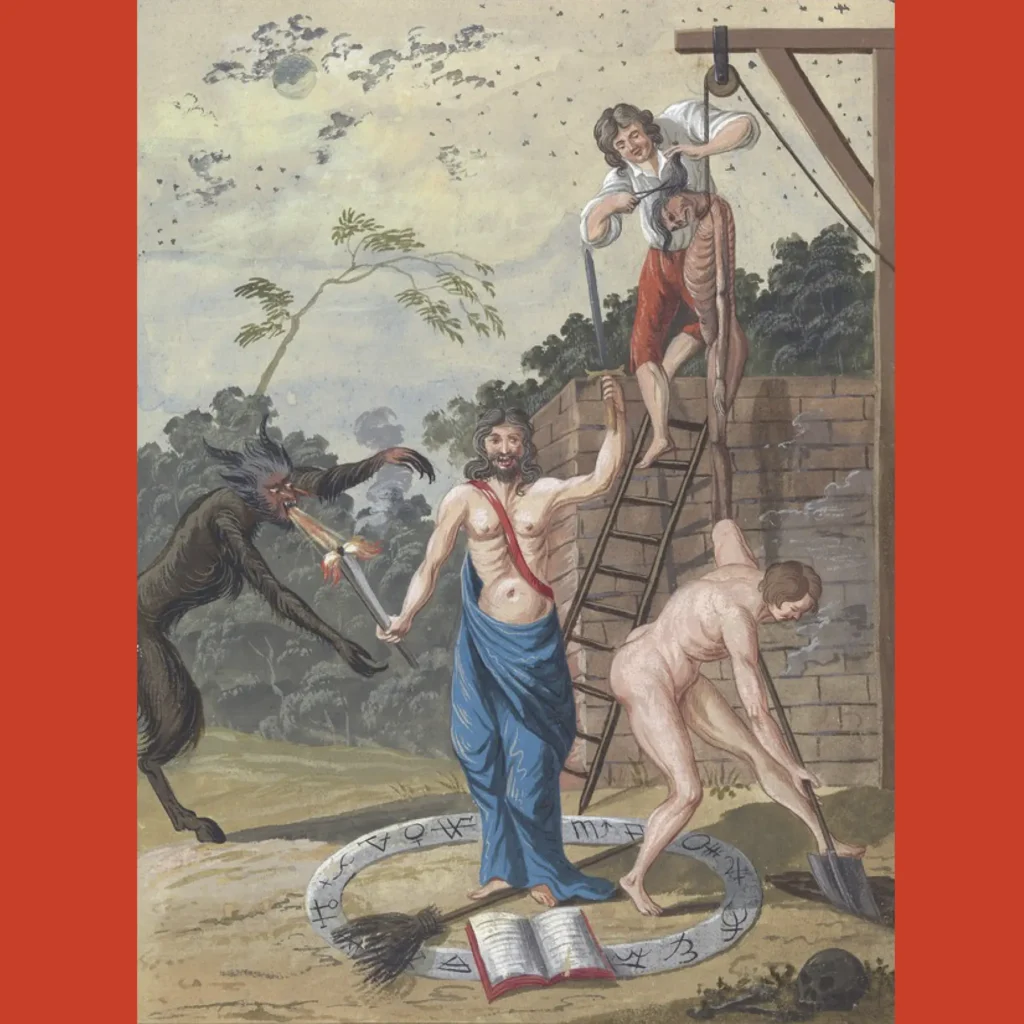
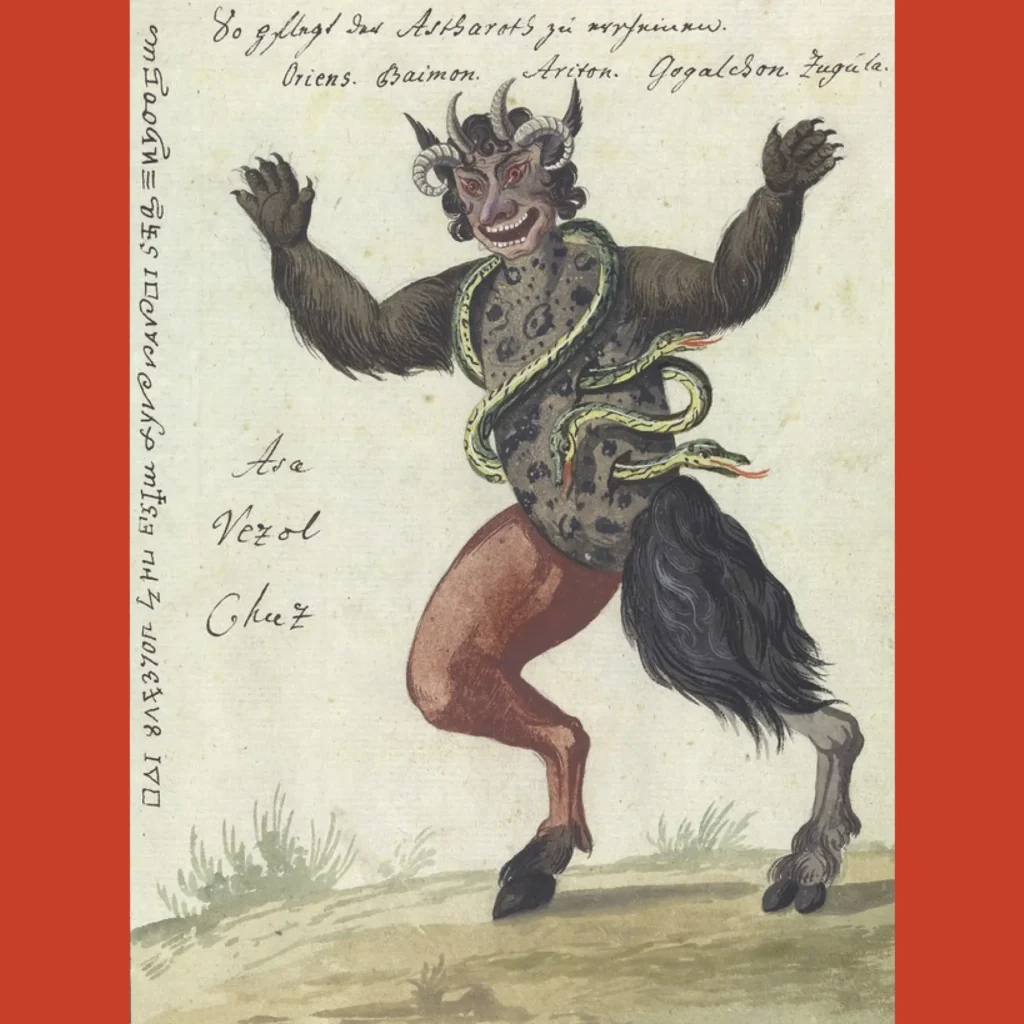
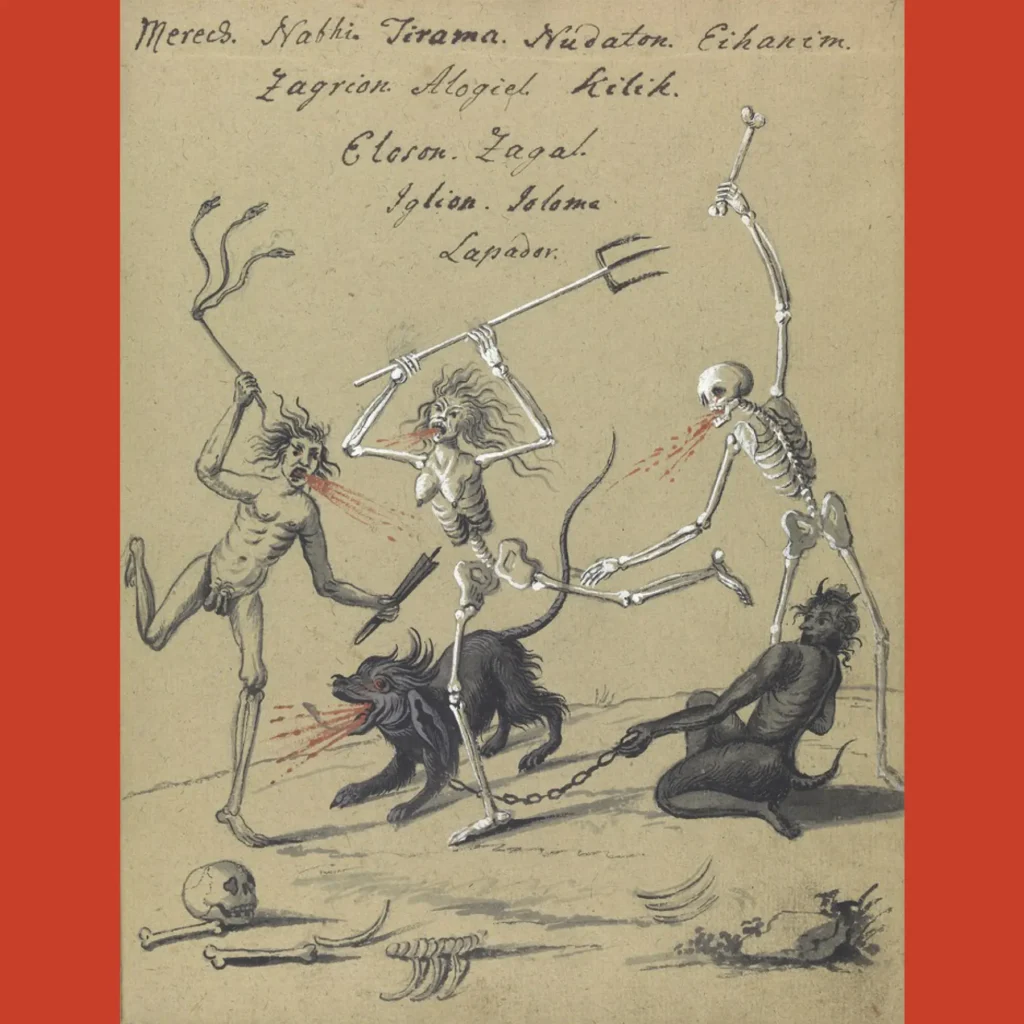
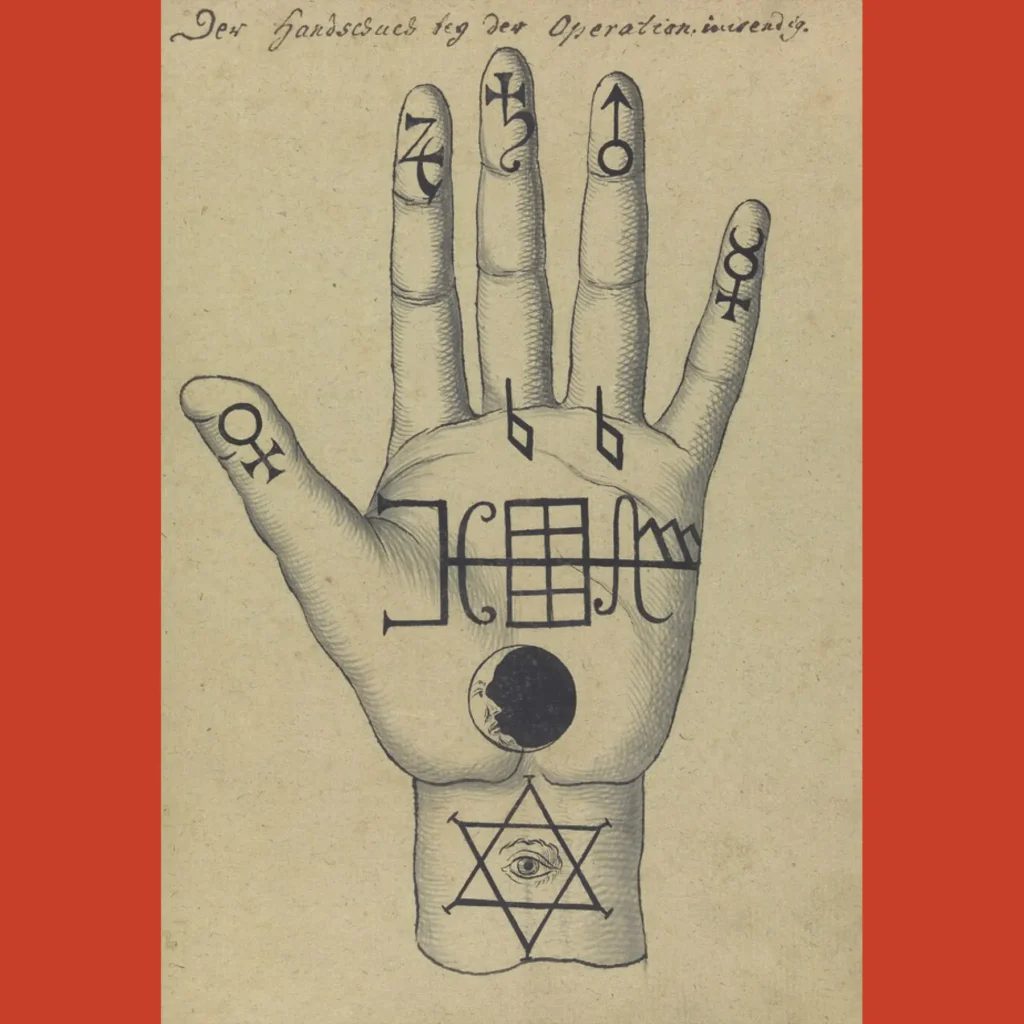

This art is wonderful and sick all at once. This is the one I’ll be hunting of all the wonderful tomes shown this week.
You gotta believe at least one of these pics has ended up as the cover for someone’s Dungeon Synth album.