|
|
The Dawn of a New Age |
|
We've looked at David Larkin's famous fantasy books before (Gnomes, etc.), but this week I found a more obscure one that brings greater context to his career. Plus, four books that uh, seem strongly inspired by the spirit of Larkin's editorial approach. |
|
|
| |
|
As the year comes to a close, I'd like to ask you to consider joining the Vintage RPG Patreon. If you dig my work, well, there is going to be quite a lot of it next year with five books in progress (the dungeon analects Down, Down, Down; the monster book, Monstrous Descents; my "mystery crawl" for Old-School Essentials, Erehwesle; 25 Years of Goodman Games; and one more I can't yet reveal). The best way to find out more about these projects is to get my monthly patron newsletter. The mystery crawl play test is also coming back in a month or two, and we're currently in a phase where player input is going to really help shape the project.
In short, the Patreon is a way to get more of this stuff if this stuff is what you desire! It also helps fund, fuel and otherwise sustain my work (and my house, where I gotta replace my windows, and I got a leak in my roof, eesh).
And if you can't join the Patreon (no judgement, it's tough out there!) you should definitely join the Discord at the very least. It's a relaxed, fun, supportive community that I am extremely grateful for - it'd be rad to see you there. |
| |
|
I am loathe to suggest people spend money on Amazon, but the deluxe edition of Monsters, Aliens, and Holes in the Ground is just $45 at the moment. It will, at least as of today, arrive before Christmas. That's a lower price than the regular version! (Not that you can get the original very easily at the moment since the second printing won't be in distro until 12/16 at the earliest; I suspect Amazon's steep discount on the deluxe will disappear when the regular edition restocks).
MIT Press is also doing a 15% off sale via Bookshop.org through Monday. My books are both backordered there, but there are lots of other cool books to check out! |
| |
|
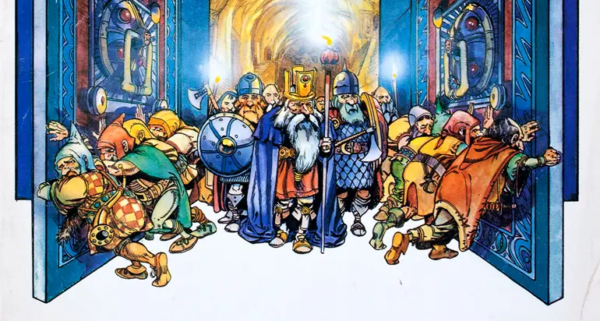
The missing link! I’ve found the missing link! I’ve been fascinated by David Larkin’s editorial work in the ’70s pretty much since I realized that he was behind the majority of white-covered art books that hit shelves during that time, but it is hard to find a definitive list of books that he produced — “editor” isn’t reliably credited in the usual databases, and in the case of a book like Gnomes, with clear author and illustrator credit, no one is going to flag that as a “David Larkin” book.
I still don’t have a full accounting of his books, but I am pretty sure the art series started with Magritte, in 1972. From there, through 1975, he produced a number of books featuring 19th and turn of the century artists like Arthur Rackham, the Pre-Raphaelites and Carl Larsson. In 1976, Gnomes came out, and Larkin’s books suddenly showcased contemporary artists like Alan Lee, Sulamith Wülfing and even Salvador Dali, who was still alive at the time, and featured an increasing focus on fantasy. Lacking any evidence, I’ve had to just accept that Gnomes was a “Eureka!” moment for Larkin, but I’ve always suspected there was a pivot point.
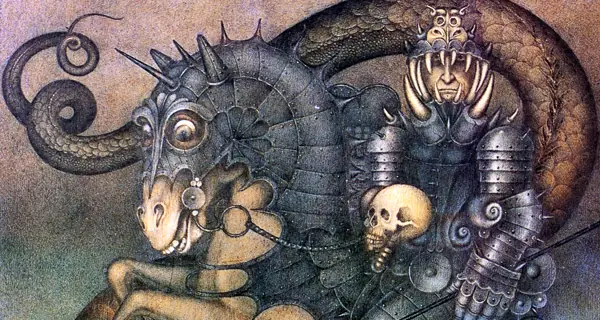
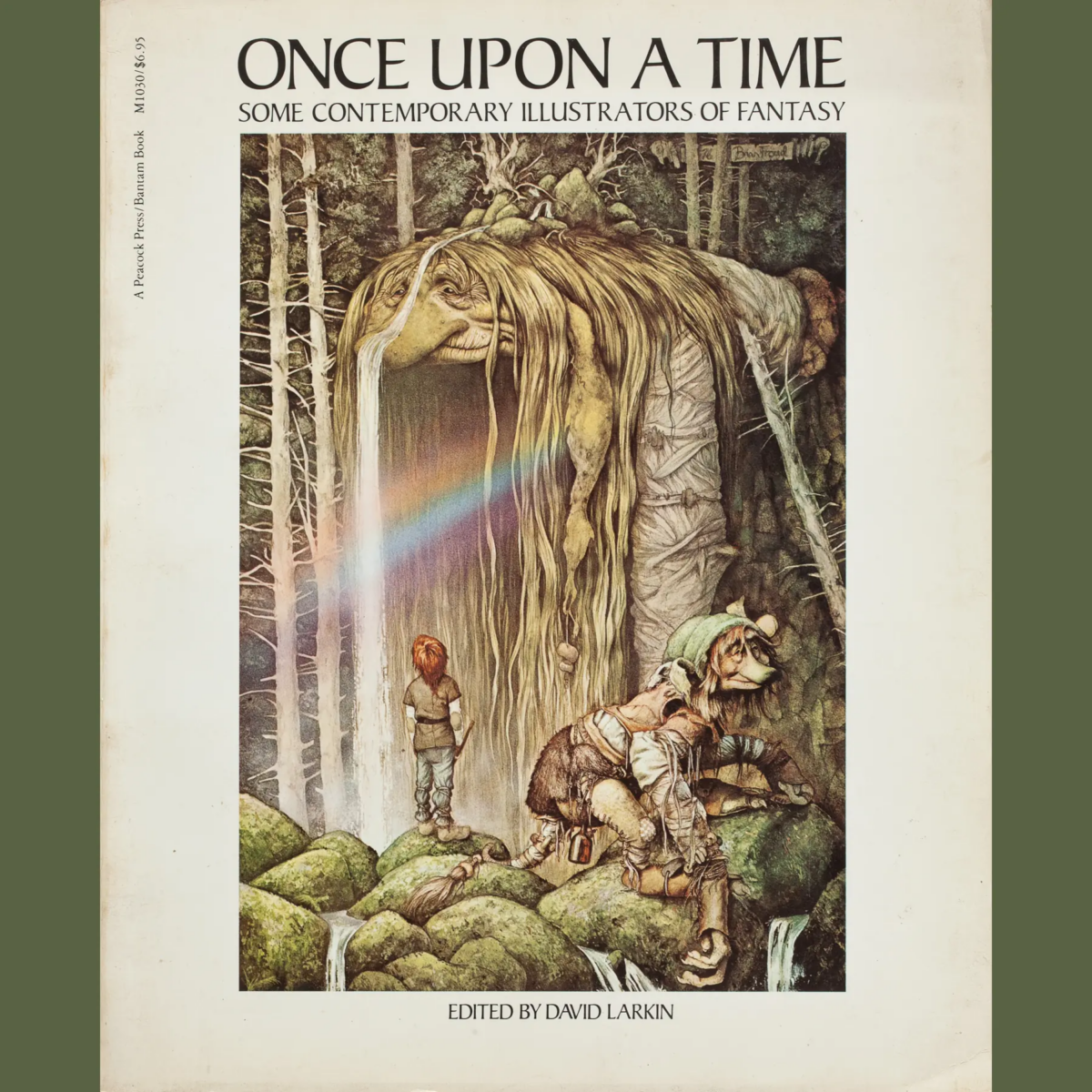
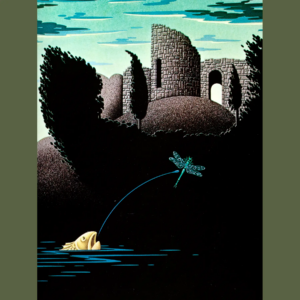
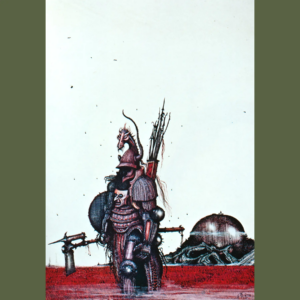
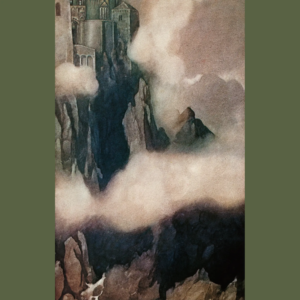
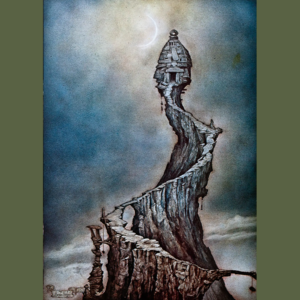
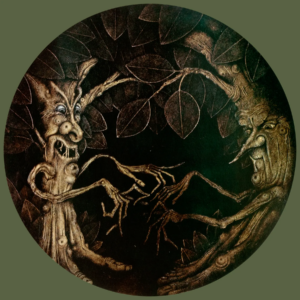
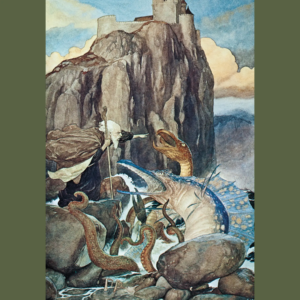
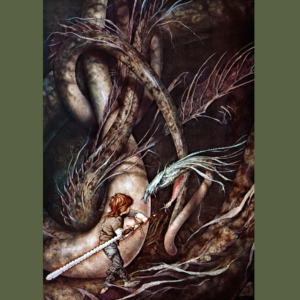
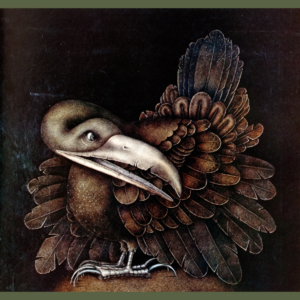
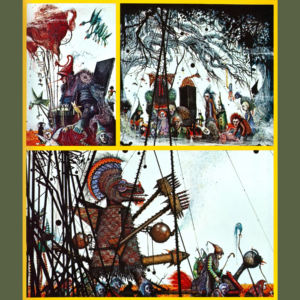
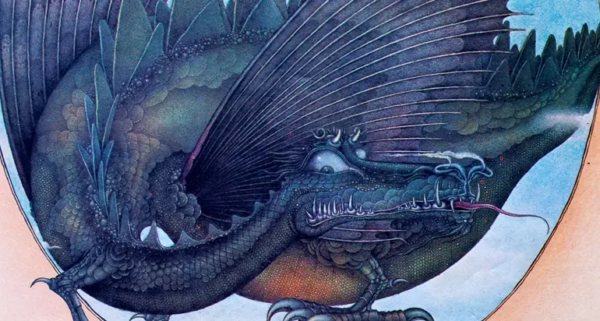
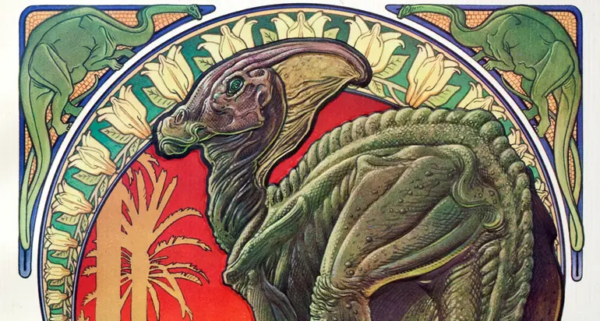
I was right! It’s (probably) Once Upon a Time (1976), a curiously scarce (but inexpensive) book subtitled “Some Contemporary Illustrators of Fantasy.” That subtitle gives the distinct impression of a concept not entirely fleshed out, of experimentation. The selection of work inside follows suit — it’s all good stuff, but seems a bit of a grab-bag. It reminds me a bit of the way Stewart Cowley forged narrative art books like the Terran Trade Authority (1978-1979) series out of a bunch of stuff laying about the art agency. Perhaps with good reason, as this book is an extension of Larkin’s work in organizing the UK’s Association of Illustrators. There’s no overarching narrative (like we would soon see in Gnomes) but much of the featured work was previously unpublished, making it feel like a collection of portfolios in a way.
Some killer artists in here, as you might imagine. The first plate is a four-page fold-out of Pauline Ellison’s covers for the Earthsea trilogy. Brian Froud gets a lot of room (he’d get a whole book from Larkin a few years later, in addition to Faeries). Ian Miller and Alan Lee also stand out — I don’t think any of their pieces in here have been recollected since. There are other artists that are great who I am not too familiar with — Chris McEwan and Wayne Anderson in particular. But it is the presence of Froud, Lee and Miller who really indicate how Larkin understood (and influenced) the future of fantasy art. |
| |
|
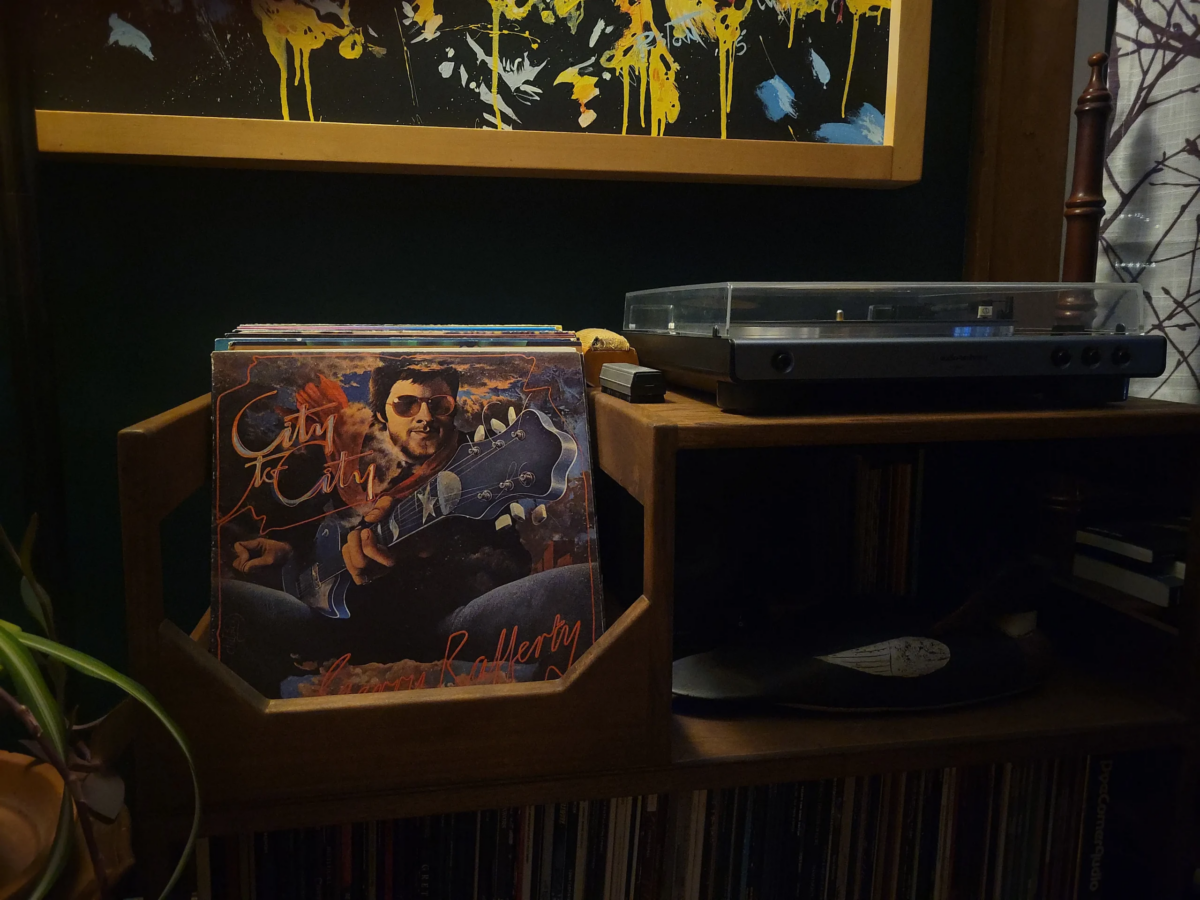
I took the above photo the other day because I was listening to City to City and wanted to drum up some conversation about Gerry Rafferty, who I think is largely underrated these days. The picture struck me as looking very much of the period (apparently I associate wood, records, duck decoys and houseplants with the late '70s?). I posted it on Bluesky with the caption, "Doing my best to exist in a 1978 pocket dimension tonight I guess." I then further asserted, "The thing about 'Baker Street' is that it has arguably the greatest sax part ever recorded, and then slams you out of nowhere at the end with one of the best guitar solos ever recorded."
Now, there is a valid counter argument that "I Still Believe" has a superior sax part, but I want to set that aside. They're both amazing, OK? But that guitar solo! The sax in "Baker Street" is everyone's focus but I never hear anyone talk about that guitar. It's a gigantic fireball, so scorching it almost seems out of place, but somehow it pulls back just enough to underscore the frustration and alienation that plagues the narrator of the song. The sax is the struggle, the guitar solo the bubbling resolution, where frustration just barely turns into the elation and freedom of the final lines that precede it: "When you wake up, it's a new mornin' / The sun is shinin', it's a new mornin' / You're goin', you're goin' home." Of course, the sax solo reasserts itself at the end. We're only ever free for a moment at a time.
The alienation of "Baker Street" and much of Rafferty's other work, I just learned, was possibly informed by his reading of Colin Wilson's The Outsider (1957), practically a field guide to alienation. Wilson later penned The Occult, which is sort of a field guide to being batshit insane, and a favorite entry of mine on the topic.
But back to that guitar solo. Despite Rafferty being painted on the cover aiming his guitar like a firearm, he barely plays guitar in the recordings. That mostly falls to session guitarist Hugh Burns. He's worked with a gigantic list of people, but Wikipedia highlights "Baker Street" along with, get this: George Michael's "Careless Whisper" (lol, the closed captioning describes the sax as "sultry music"). What are the chances of the same guitarist playing on two of the pop music's three greatest pop saxophone moments?!
What's all this got to do with tabletop RPGs? Absolutely nothing, though every time I leave the house in December I'm roleplaying a spy trying to elude his pursuers in an attempt to not get whacked. I mean WHAMMED. Which is sort of like a solo game of Killer, actually. So there you go, it is connected! |
| |
Vintage RPG
Copyright Stu Horvath, 2025, except when not
| |
|