|
I have a growing stack of oddball ’90s RPGs and I need to crack into them before they bury me. This is Blue Planet (1997). Here’s a fact that might tell you quite a bit about the game: the system mechanics begin on page 250 of a 340-page book.
I don’t think the text ever actually says it uses a d100, but it does; it’s a percentile skill system that, at its core, is pretty simple. Upon that core is layered a lot of additional systems that complicate things, like damage ranks. These tether inflicted damage to the strength of the to-hit roll, thus simulating the way two bullets from the same gun can range from being almost harmless to instantly lethal. I like that in theory! It’s clever and clean. But it’s one of many such nuanced systems (we have 21 hit locations to reckon with as well, for instance) and taken all together the system is suddenly ponderous. Attributes are scaled? Combat rounds are half a second!? I feel like this kind of unplayable fuckery is pretty par for the course in terms of ’90s games, and this is probably the friendliest one I’m looking at this week, and it’s still far more than I want to reckon with at my 2025 table.
What keeps Blue Planet on the shelf is the first 250 pages, which details a unique and intriguing setting. The titular planet is Poseidon, a mostly ocean world that a portion of humanity (and uplifted dolphins and whales, both of which I should note are playable species) has migrated to after unsurprisingly making Earth mostly uninhabitable. The wrinkle: there is a population of colonists already there for generations, genetically modified for life on an ocean world. Wrinkle Two is that the new arrivals are mostly backed by megacorp interests. Thus, the two factions are naturally at odds, with the dolphins and orca picking sides as they please (who is gonna tell an orca what to do, for real, but I hope they are mostly deciding to capsize the yachts of millionaires).
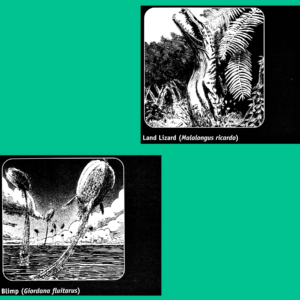
The work put into making this world both strange and plausible is astounding. The history is rich. The flora and fauna tap a sense of alien wonder that wouldn’t be repeated, I think, until the recent animated series Scavenger’s Reign. Even then, though, I don’t want to explore it myself. I enjoyed reading about it, but playing here? There’s too much to reckon with, the lore too deep and too inflexible. Perhaps if there were a scenario included, or even seeds, which would show me how to play in this world, I could muddle along. But as presented, there's no way in. The similarly themed and impressive Mothership zine In Other Waters: Tidebreak is probably where I’d land if I wanted to play something like this today.
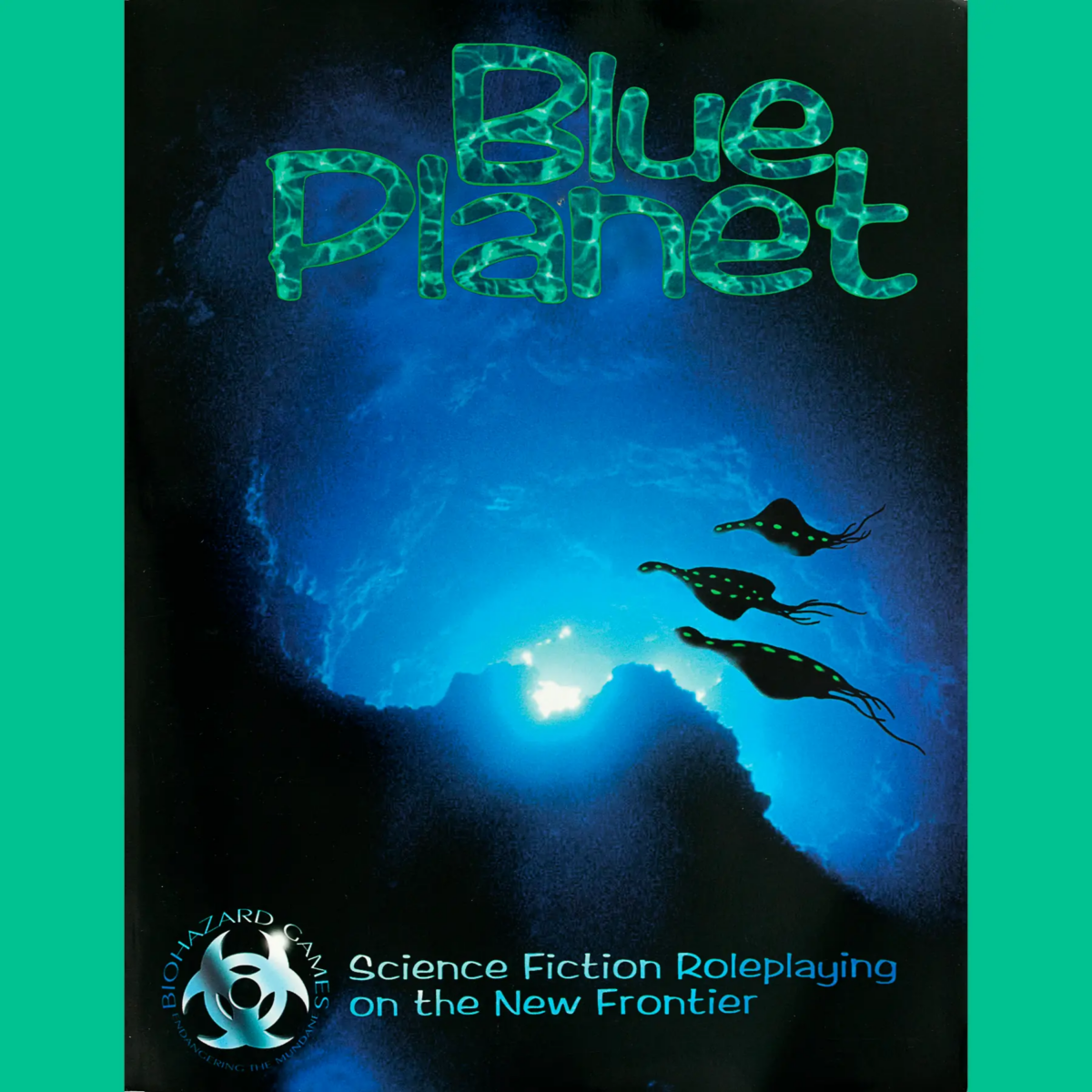
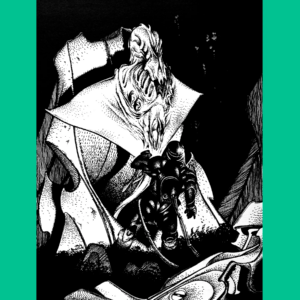
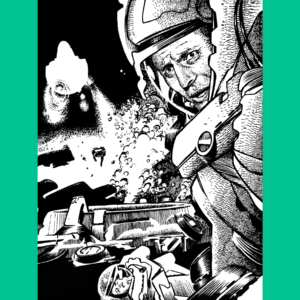
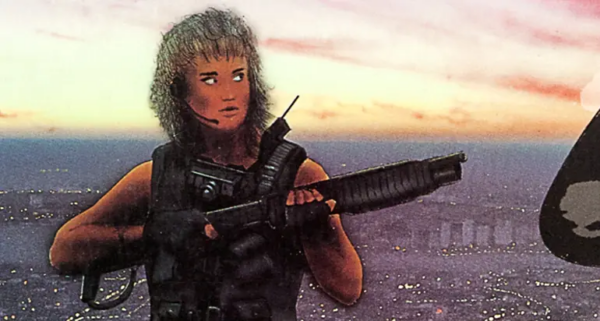
I don’t know how I feel about the cover art by Jeffrey Barber. I know I don’t like that ’90s-ass title treatment. Blair Reynolds does the feature illustrations and he’s grown some since he threw in the towel with Pagan Publishing (more on that in October). Christopher Benedict, whose work I am unfamiliar with otherwise, did the creature illustrations and did them very well, delivering suitably alien designs. No easy task! |