
The two books of Magic Encyclopedia (1992 for Volume One and 1993 for Volume Two, not to be confused with the later, actually useful four-volume Encyclopedia Magica) are exactly the sort of books that made folks complain about things like bloat and TSR just wanting to shake down their players for their allowance money. I don’t disagree.
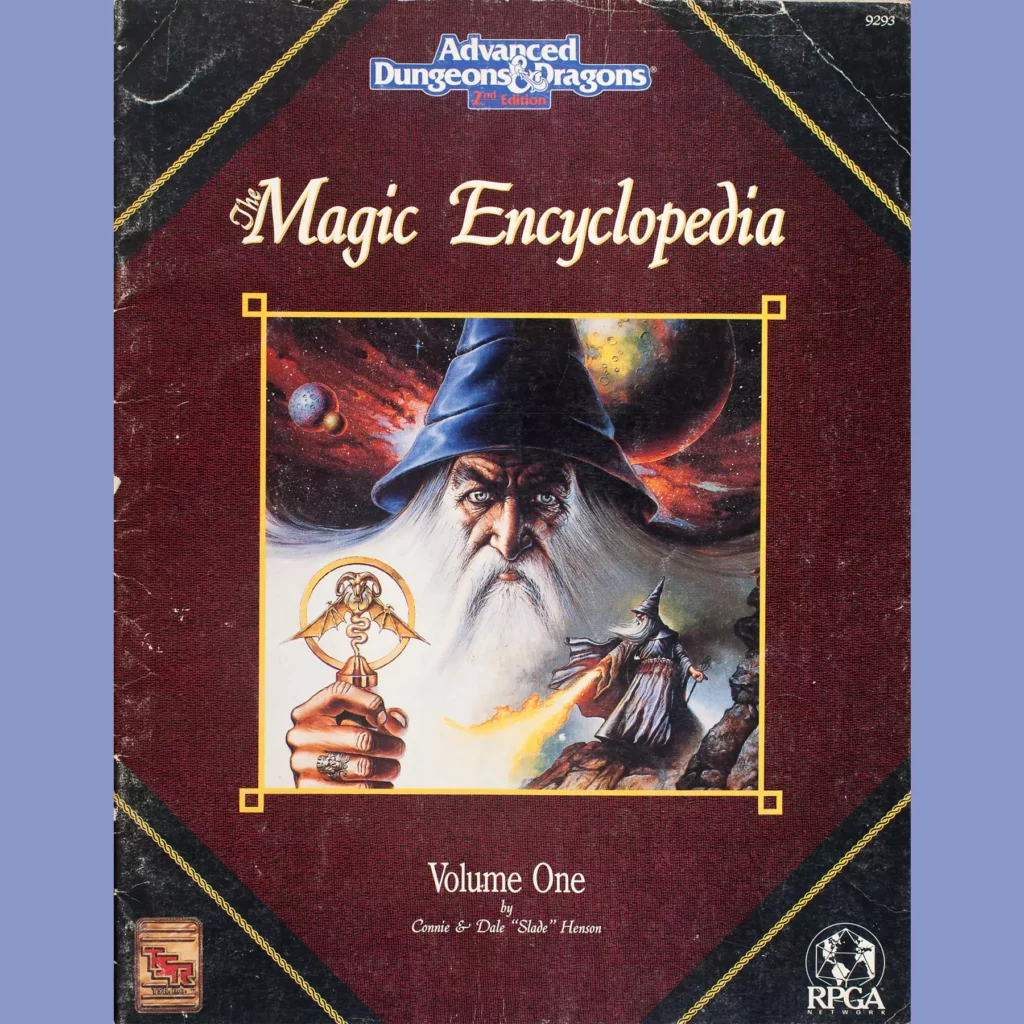
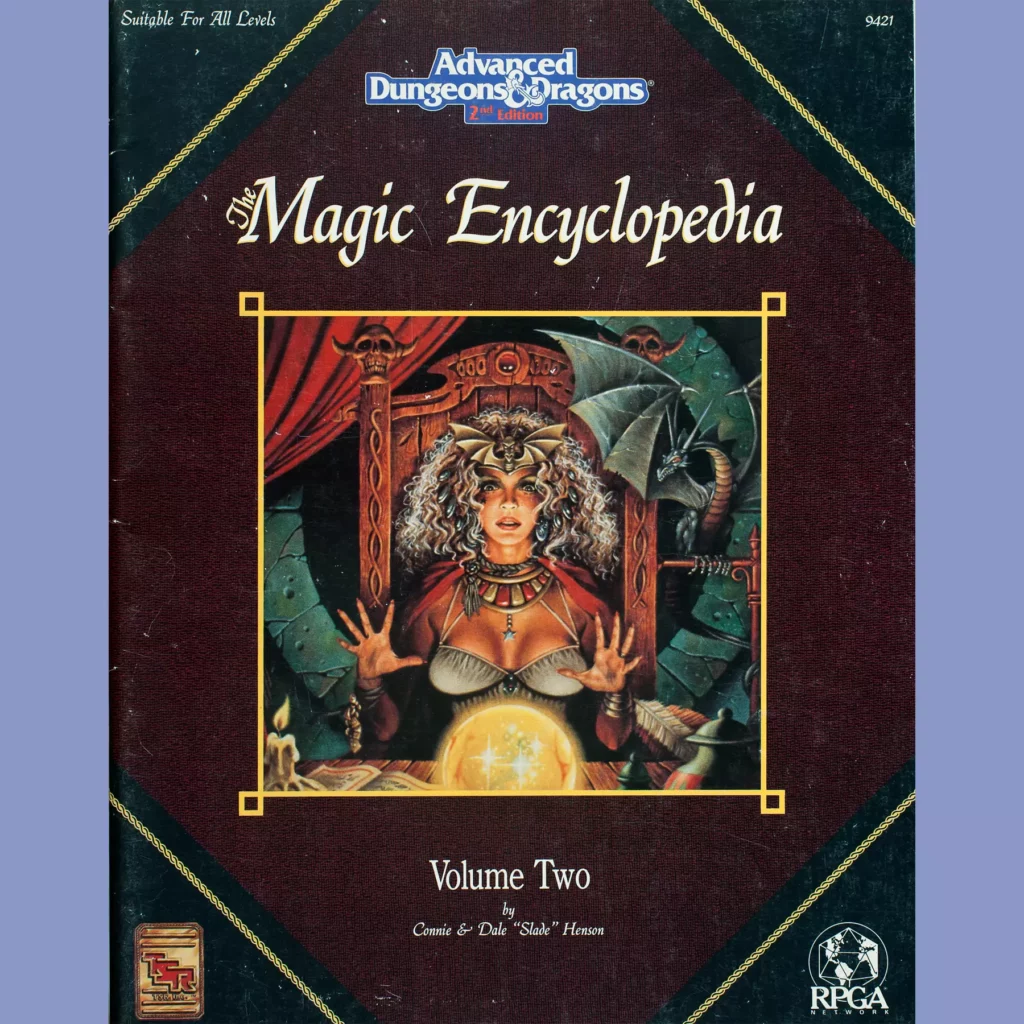
These are alphabetically arranged catalogs of all the magic items in D&D up to that point, collected by type. So, “necklace,” and “diadem,” and so on. Each item type is accompanied by a small illustration and a brief description, in case you weren’t sure what a tabard is. This is the lone useful thing the book does.
Following the item type description, all the specific magic items are listed out, followed by a code that allows you to cross reference the publication their description is in. None of the specific magic items or their effects are described here. This is not an encyclopedia. This is an index. And I know I have said in the past that I adore an index, but this? This is insulting.
What’s worse, the code isn’t easily parsable, like “Players Handbook Page 10.” They just used the product codes. That’s easy for some, perhaps. S1 is easy — that’s Tomb of Horrors. In a million years, I couldn’t tell you what product 8891 is (the index tells me it is the 1991 Dragonlance calendar — are you telling me they had magic items in the calendars?!). I have an above-average working knowledge of TSR’s product line and I can’t be fucked to try and use this as a reference. I mean damn. Under the credit box in Volume One is the line, “God, forgive us for what we have done to your world.” I can only take that to me that even the TSR team knew they were messing up with this one.
I like the Fred Fields cover for Volume One. The Caldwell on Volume Two isn’t a fave and it is recycled from a Dragon Magazine.

I have a digital copy of both of these but have never really looked at them much. I was curious to see how bad they were and was surprised to find them not as bad in my opinion. I particularly like that they have a publication source near the front of each book which clearly lists where each is located.
However the most helpful was simply the publication index. Ive actually been wanted something exactly like this for years! I agree that no person would ever know what 8891 was tied to. This list provides the title, product code, and category (REF1, REF 2, REF 3, etc). Im actually going to print this index out and use it to help manage my growing collection of TSR products.