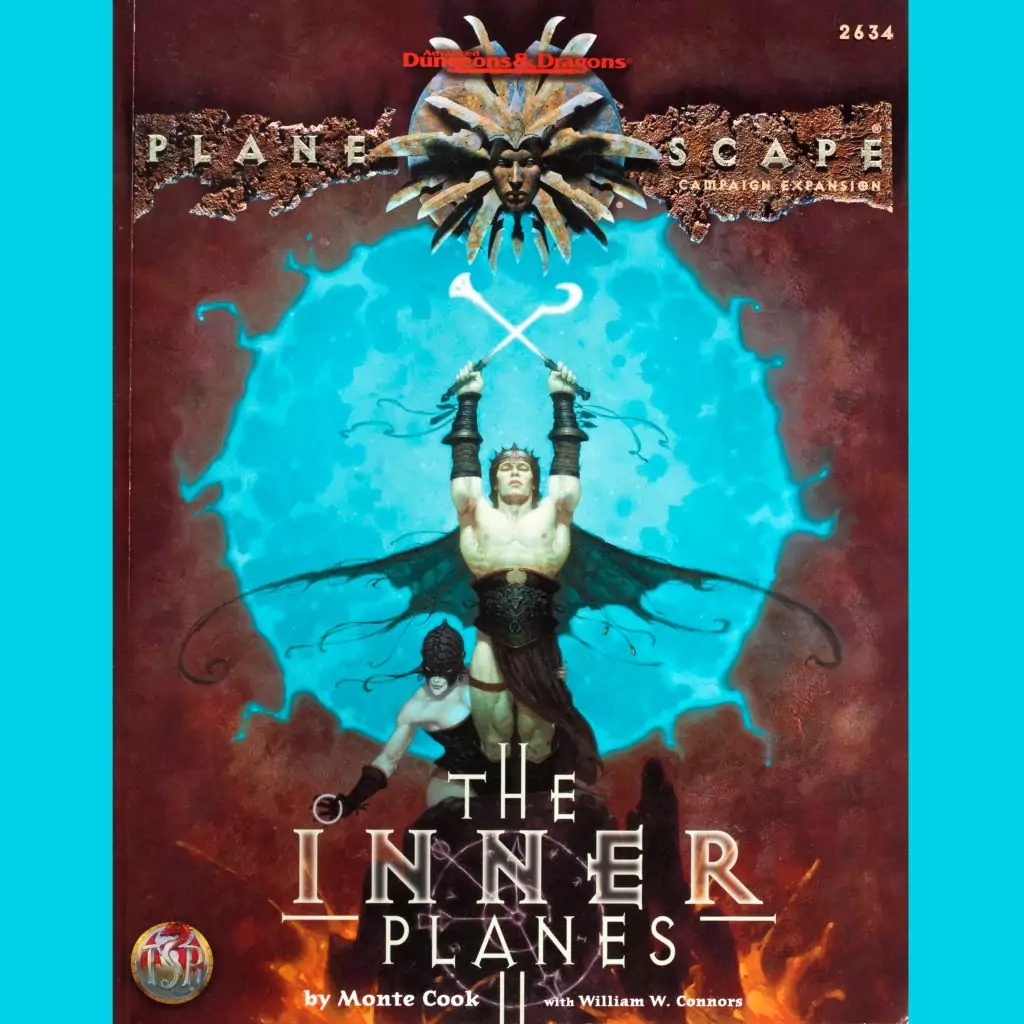
The Inner Planes (1998), by Monte Cook and William Conners, was the last sourcebook for Planescape. Funny thing: where it took three box sets to cover 16 outer planes, we have but one 128-page book to tackle 18 inner ones.
That’s OK, because the inner planes are basically infinite sources of raw, elemental energy. Extremely inhospitable to regular folks, and even most irregular ones. Translation: there’s not much to do there.
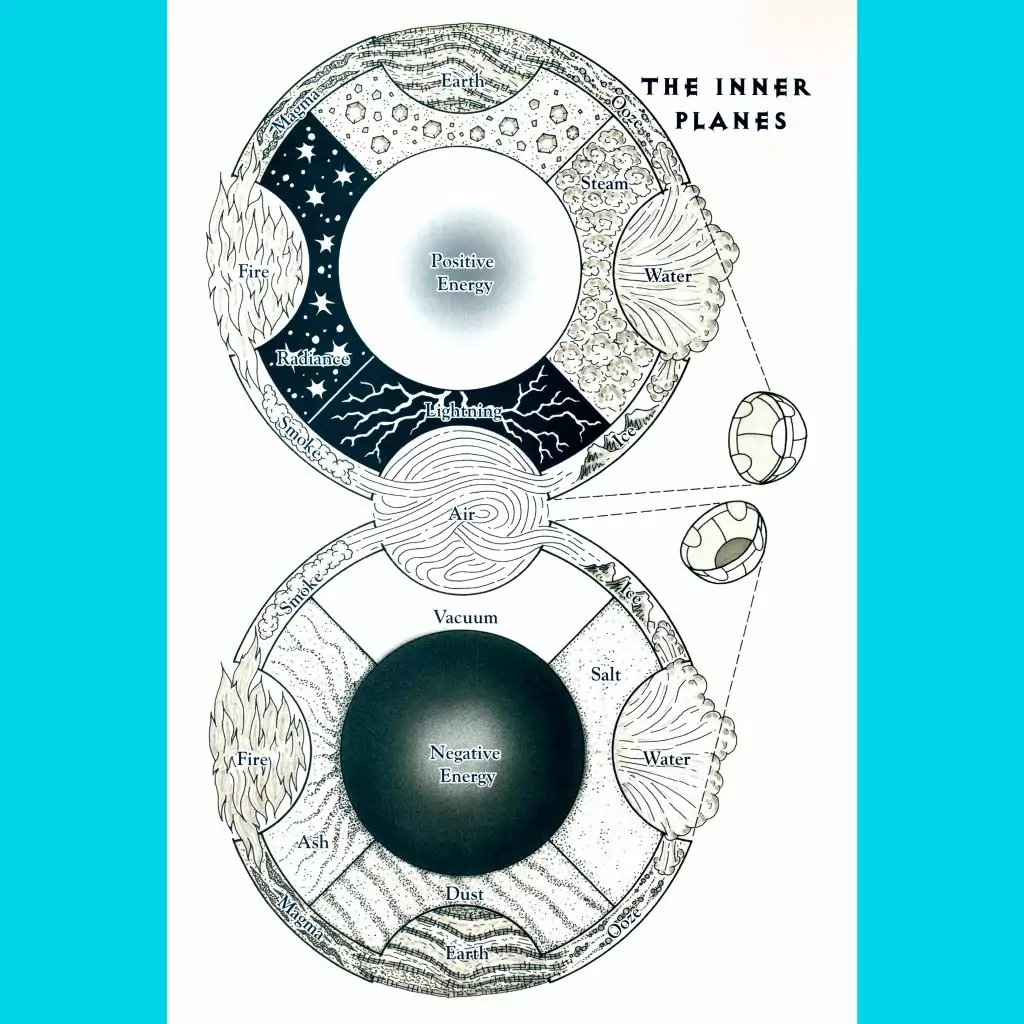
Let’s see if I can name them all without looking them up. The four elements are easy: earth, air, fire and water. There are positive and negative energy planes. There are 4 para-elements, created by the mix of two of the prime elements, so you have: ice, magma, ooze and smoke. Last are the eight quasi-elements: lightning, radiance…steam…mineral…and I have no idea what the other four are. Dust, salt (!?), ash and vacuum. Each edge (if you can say an infinite plane has an edge) has a border of even weirder combinations – for instance, between ice and salt is the Stinging Storm.
You can see how survival is a problem in places like this. Inner Planes gives solutions on this front. Cook does a good job of giving you a reason to want to survive, as many of the locations he details are extremely interesting – weird little islands populated by bizarre ruins and strange survivors, all suitable for a quick pop in and out.
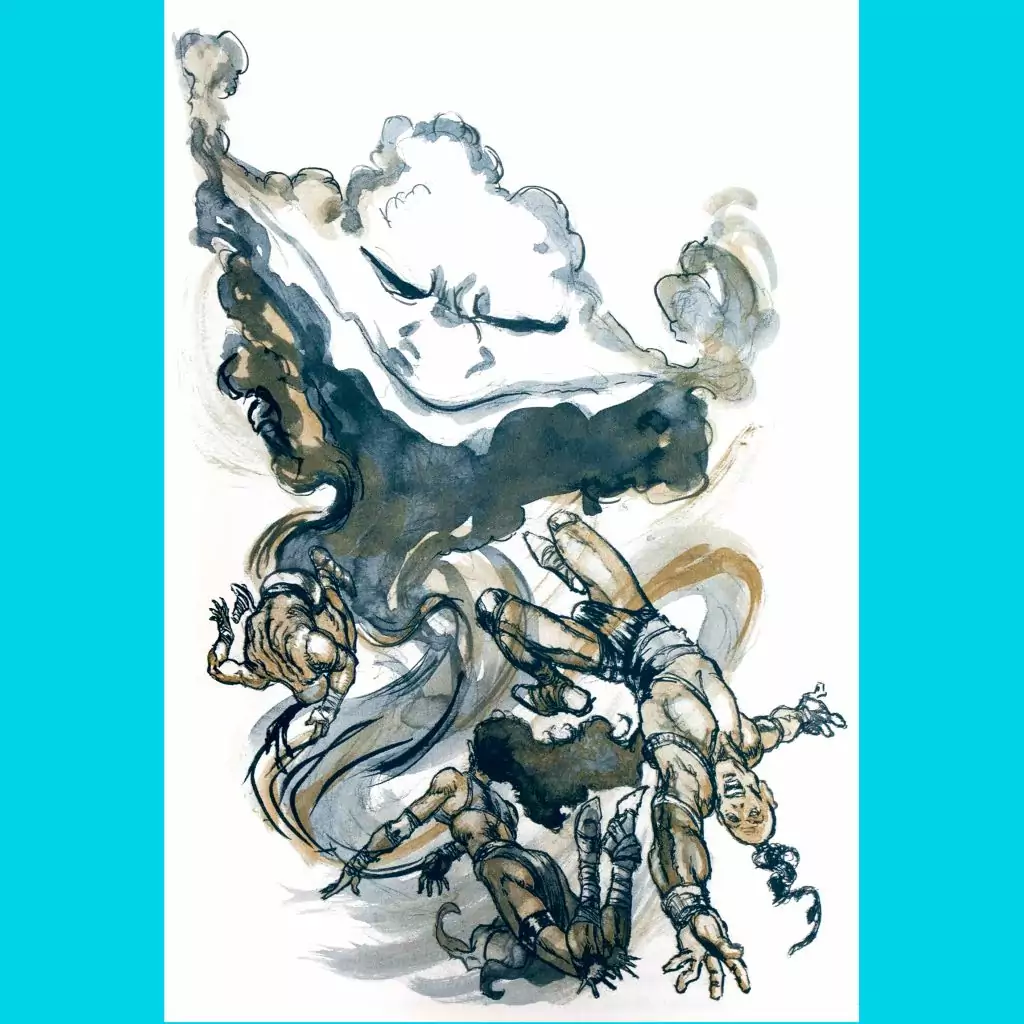
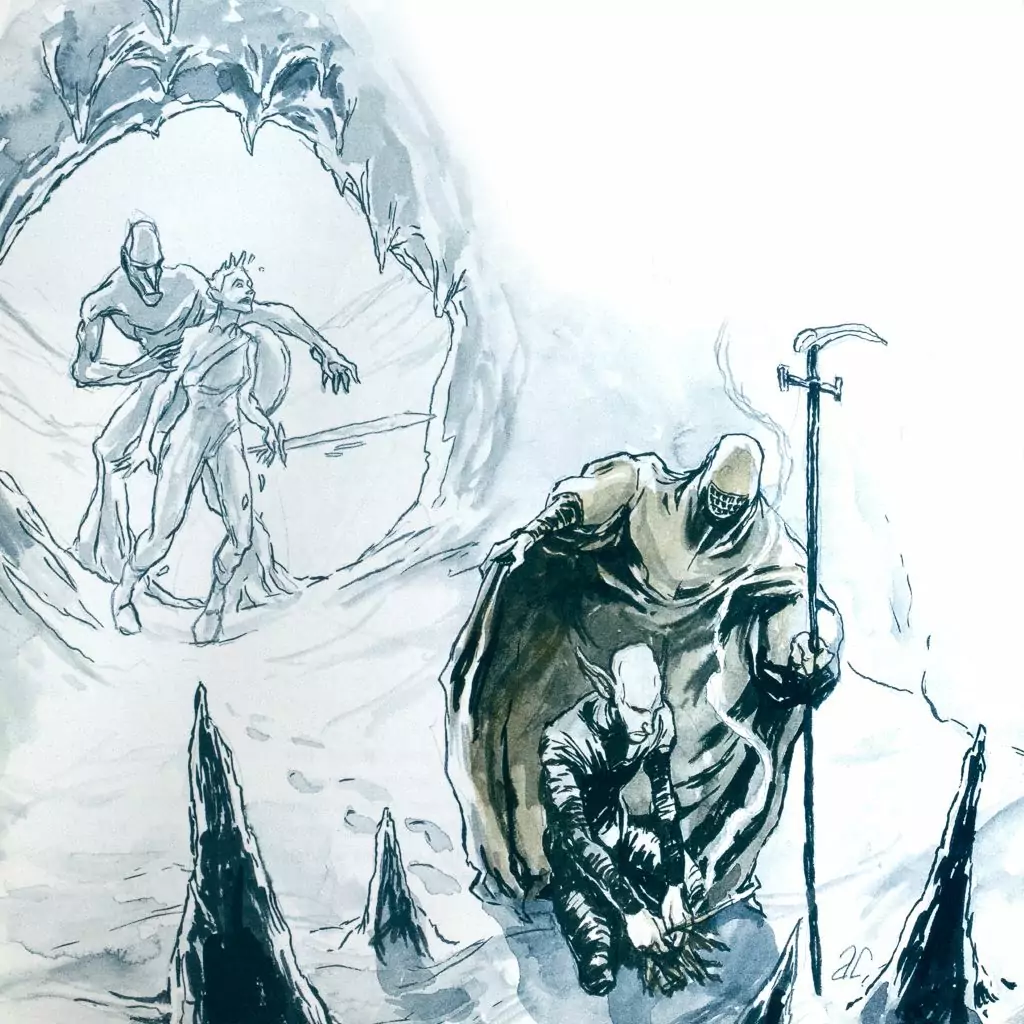
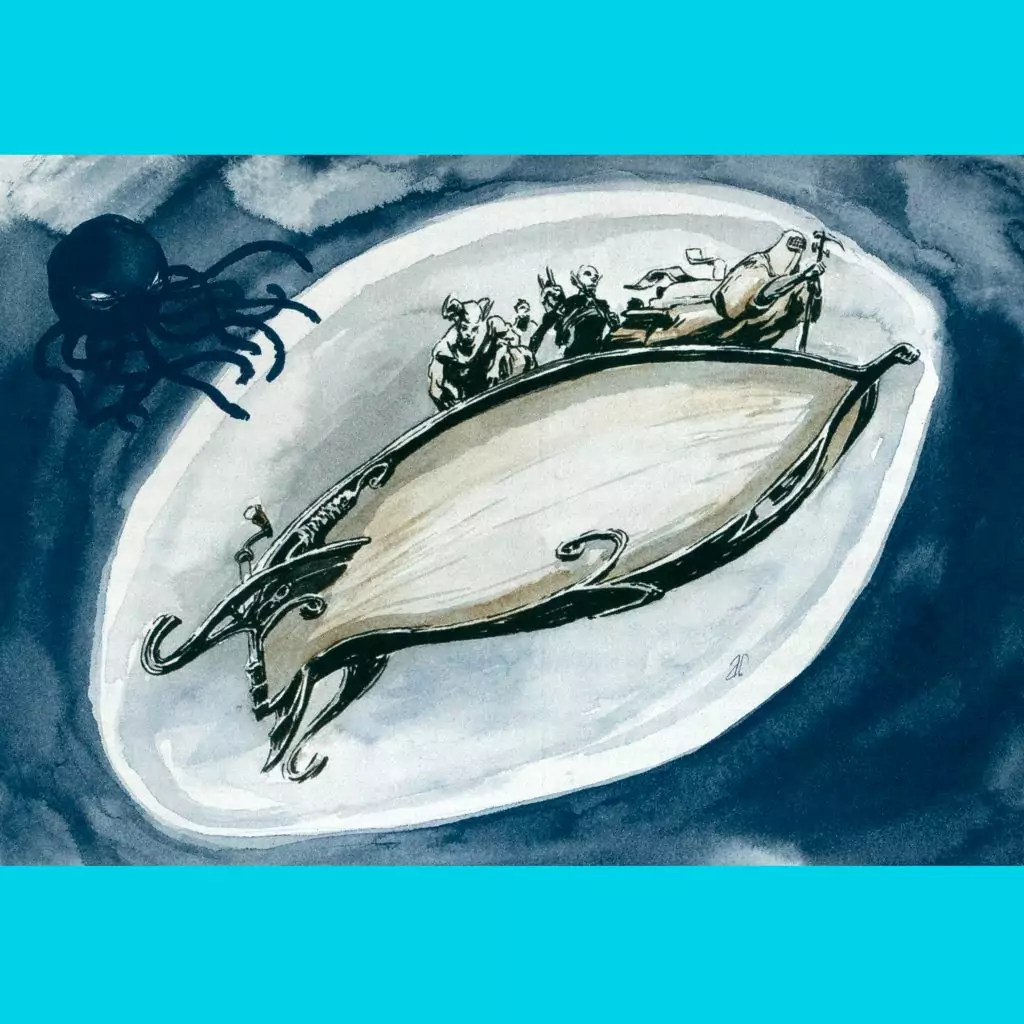
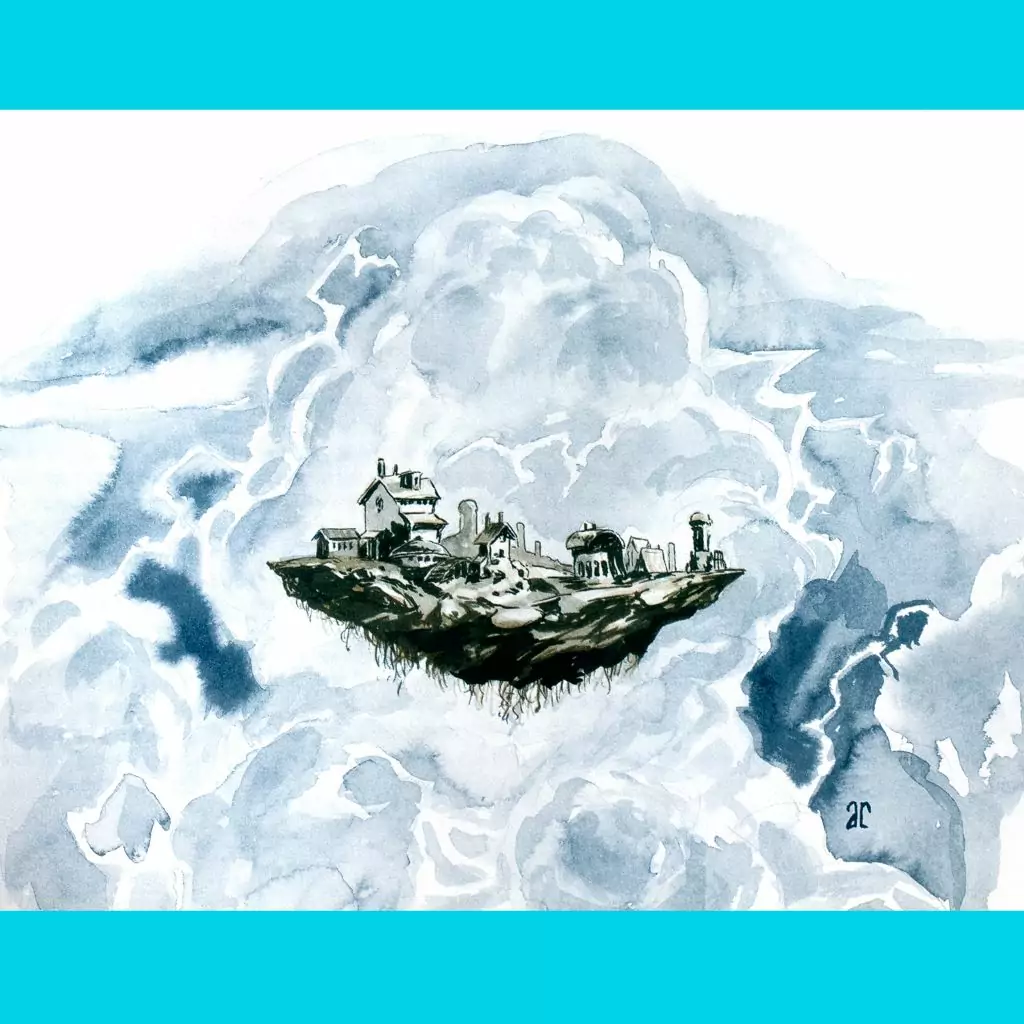
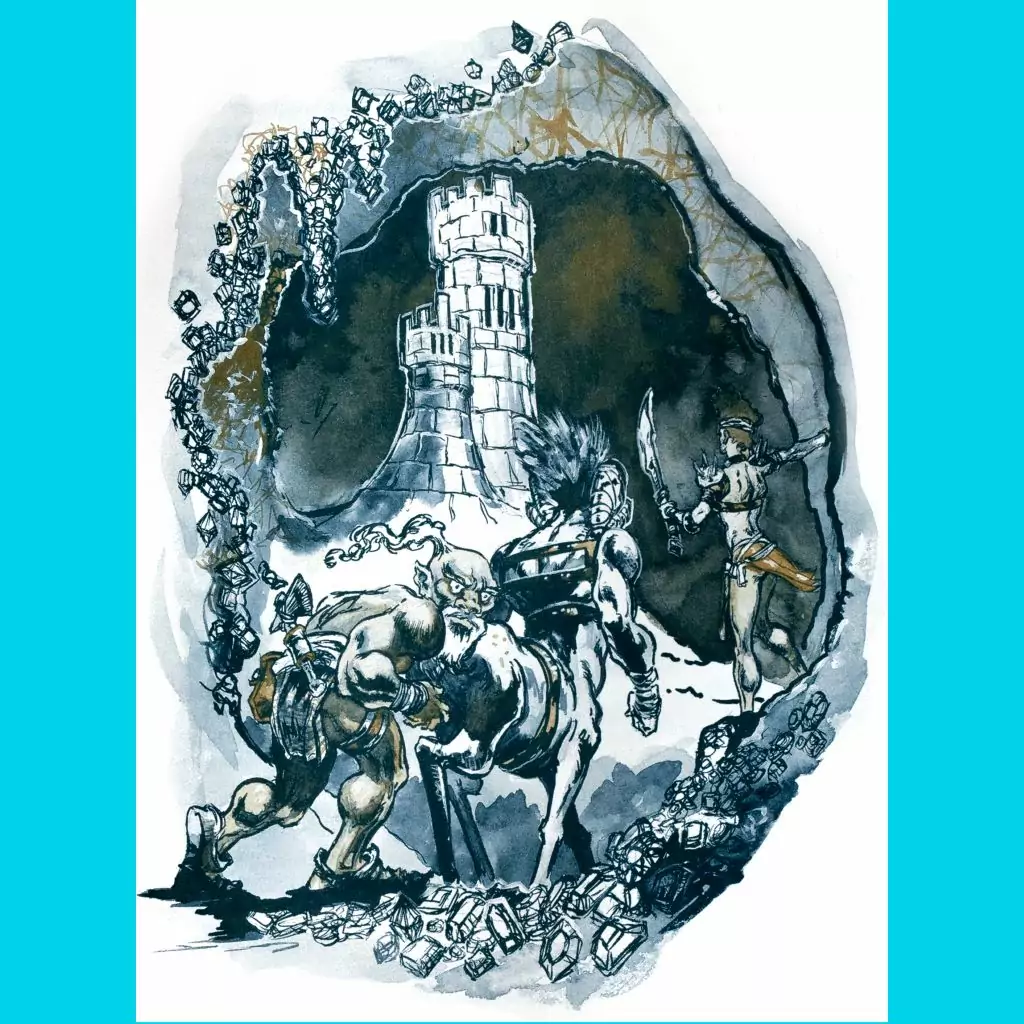
Latter day Planescape mainstays Hannibal King and Adam Rex (those have to be pseudonyms, right?) are on illustration duty. They do their usual solid job, but I think any artist would be tested by the sheer weirdness of the inner planes. Except Brom. Whoever commissioned that cover painting deserved a raise – its Brom doing what Brom does best, but it contrasts so perfectly with the established Planescape aesthetic in a way that lets you know you’re embarking to harsh lands. I love it.