One of the reasons I don’t like referring to my book, Monsters, Aliens and Holes in the Ground as a history is because I feel like my own view is so baked into it. Which is a good thing, and you can even learn some history from it but only if you accept that it is being filtered through a particular view (mine) from a particular place (north Jersey) and a particular time (or series of times, really). If you accept MAHG as the only perspective on RPGs, you’re dismissing far more than you’re getting.
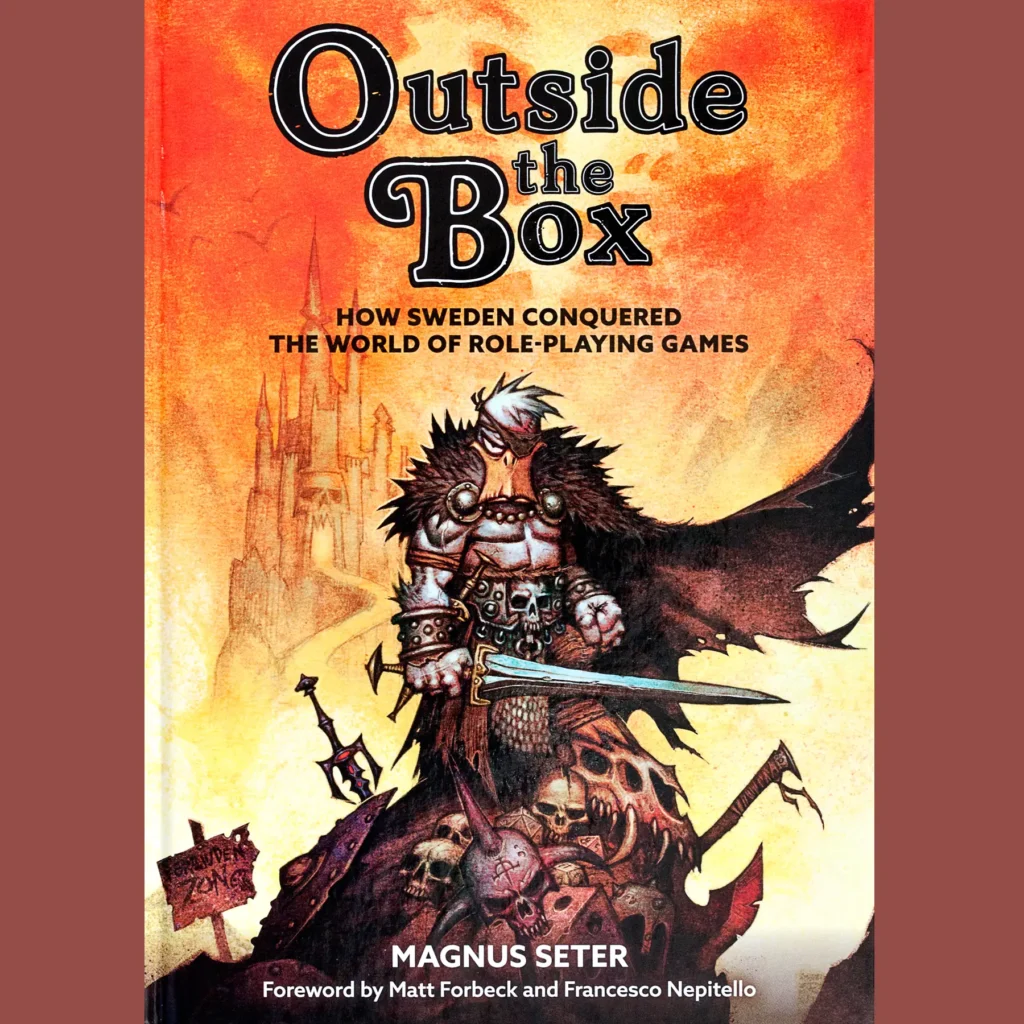
Outside the Box (2024) is the perfect example of this. It’s an excellent history of Swedish RPGs by Magnus Seter, told from the context of a life lived in Sweden growing up alongside their development. I gesture at some of the facts in his book in my own, but never in a million years would I have been capable of writing a book like this. It’s delightful and thorough and true, but most important (to me, anyway), it feels lived in.
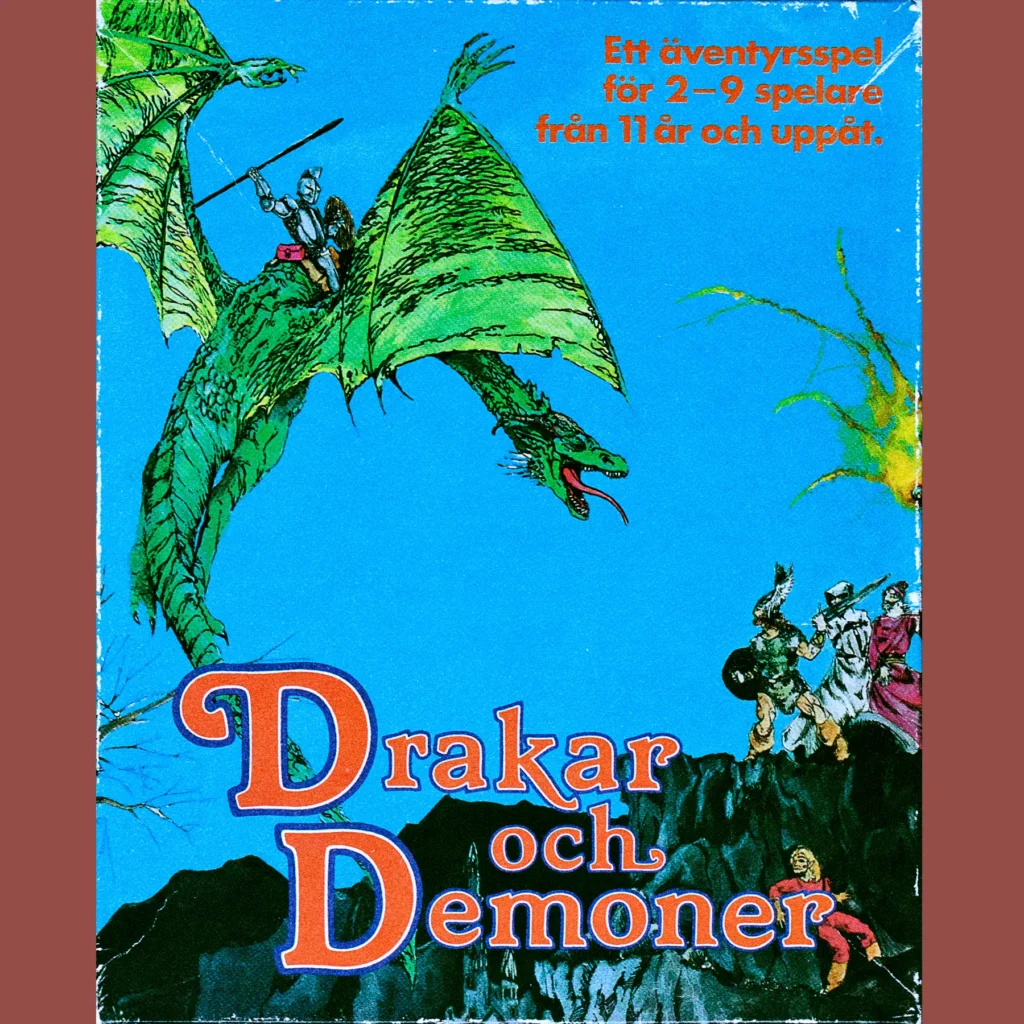
I find the Swedish scene interesting because it is sort of the equivalent of learning that not everyone counts in base-10 (associated with fingers) but that base-12 (ancient Egypt) and base-20 (Aztec) and others are possible. This is so because Dungeons & Dragons never really caught on in Sweden. Rather, the root that Swedish RPG sprout from is Chaosium’s Basic Role-Playing generally and Magic World specifically. Drakar och Demoner (1982) was the result, though it didn’t really take off until the second edition in ’84, which featured one of Michael Whelan’s iconic Elric paintings on the cover of the box. I love how this recontextualizes an image that I associated firmly with the fifth edition of Stormbringer and, to a lesser extent, my favorite Cirith Ungol album (I also like the fact that for heshers with no context for Elric, the image possibly resonates on a more Tolkienesque frequency thanks to the band’s name). For Swedish gamers, there is little daylight between that painting and Drakar och Demoner. And from that game, there is a clear line of descent through Kult, Mutant and other games to stuff like Mork Borg and Free League’s suite of games. All of which is recorded here (and often touches the US and UK markets in surprising ways that would likely not be noted by US or UK audiences).
The folks at Fandrake sent me this copy, which is in English, because I was unable to buy my own. They were seeking US distribution, but I am not sure that has manifested, which is a shame. I feel like we’re poorer for it. In a perfect world, I’d have a shelf full of regional histories just like this from all over the world.