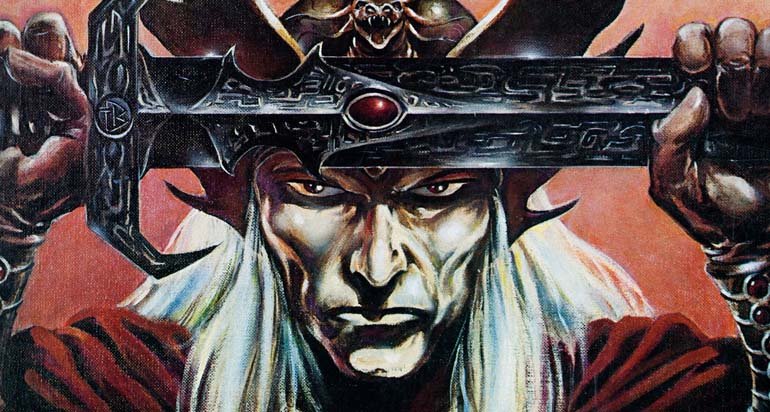
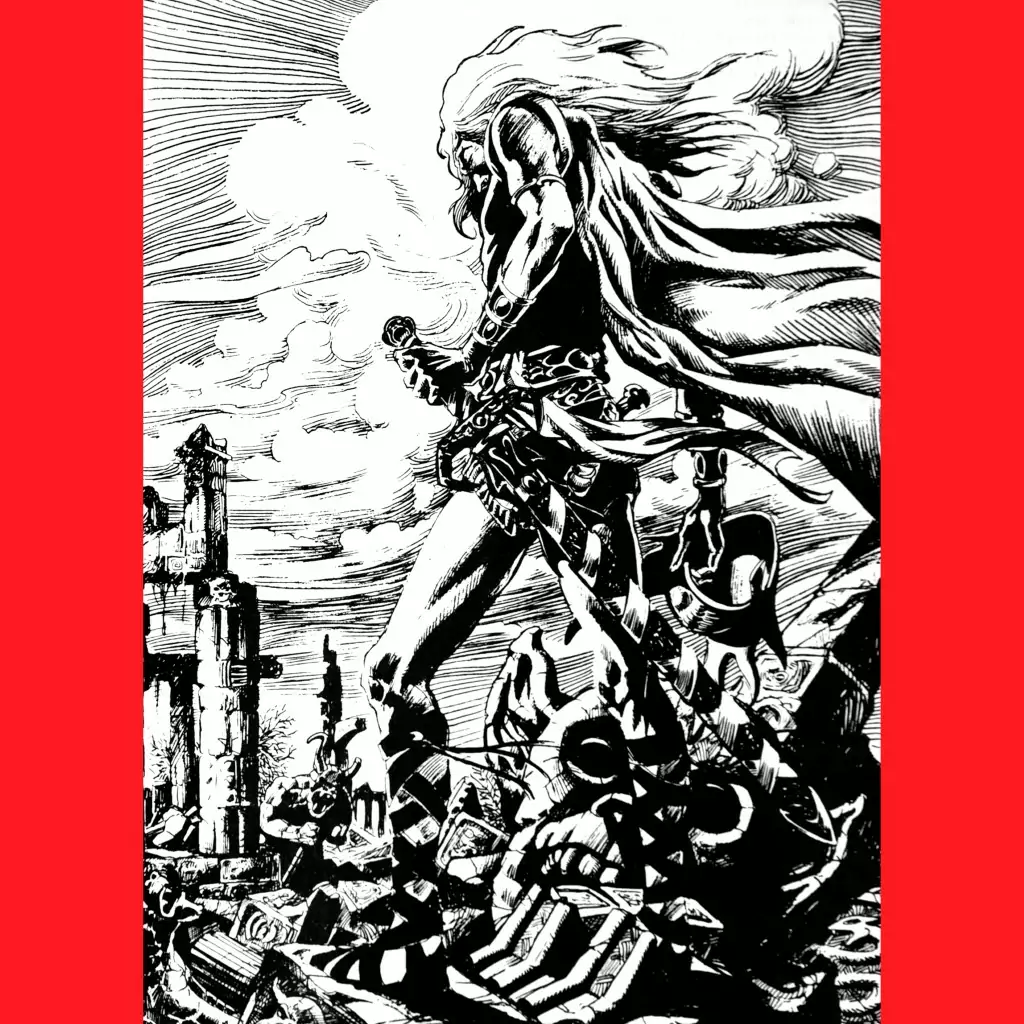
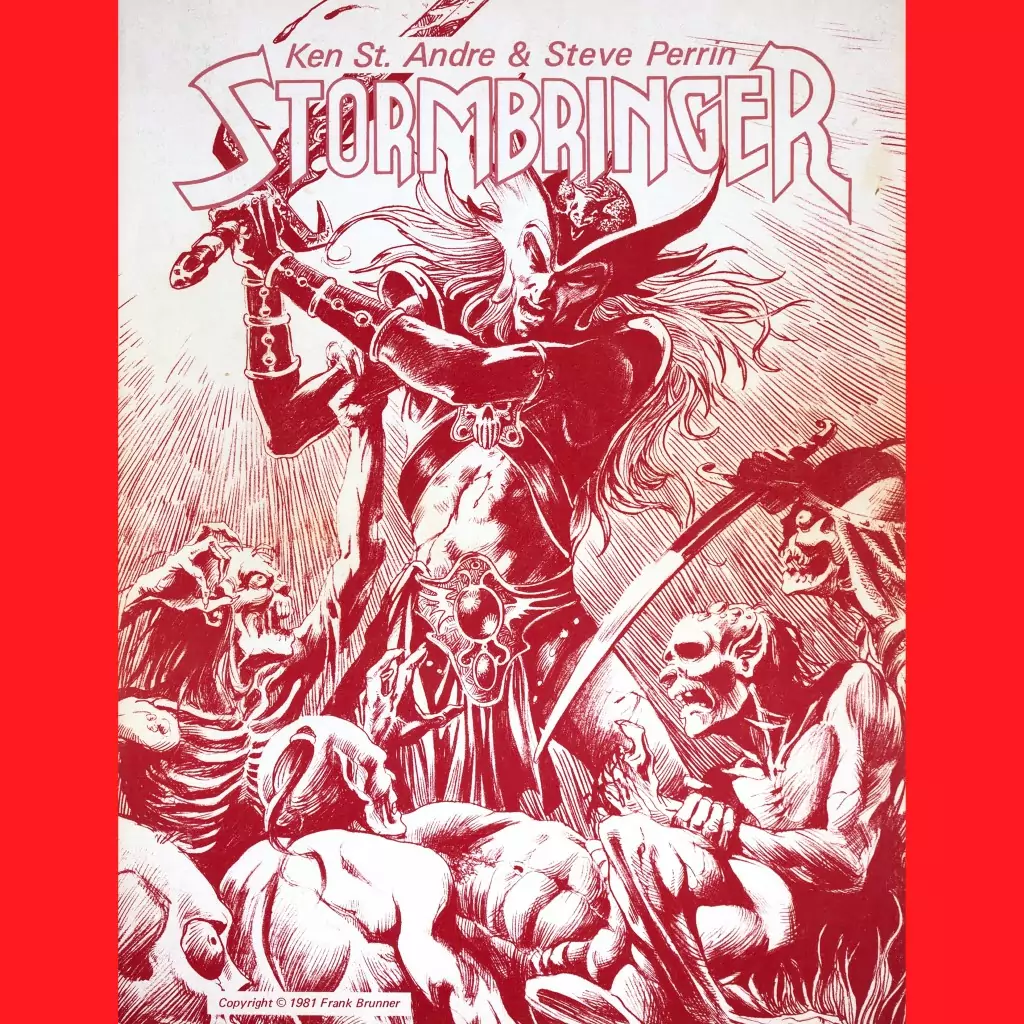
Stormbringer is Chaosium’s RPG based on Michael Moorcock’s novels featuring his most famous anti-hero, the albino prince Elric. It was a solid choice for an RPG campaign setting license – the world is rich, strange and doomed.
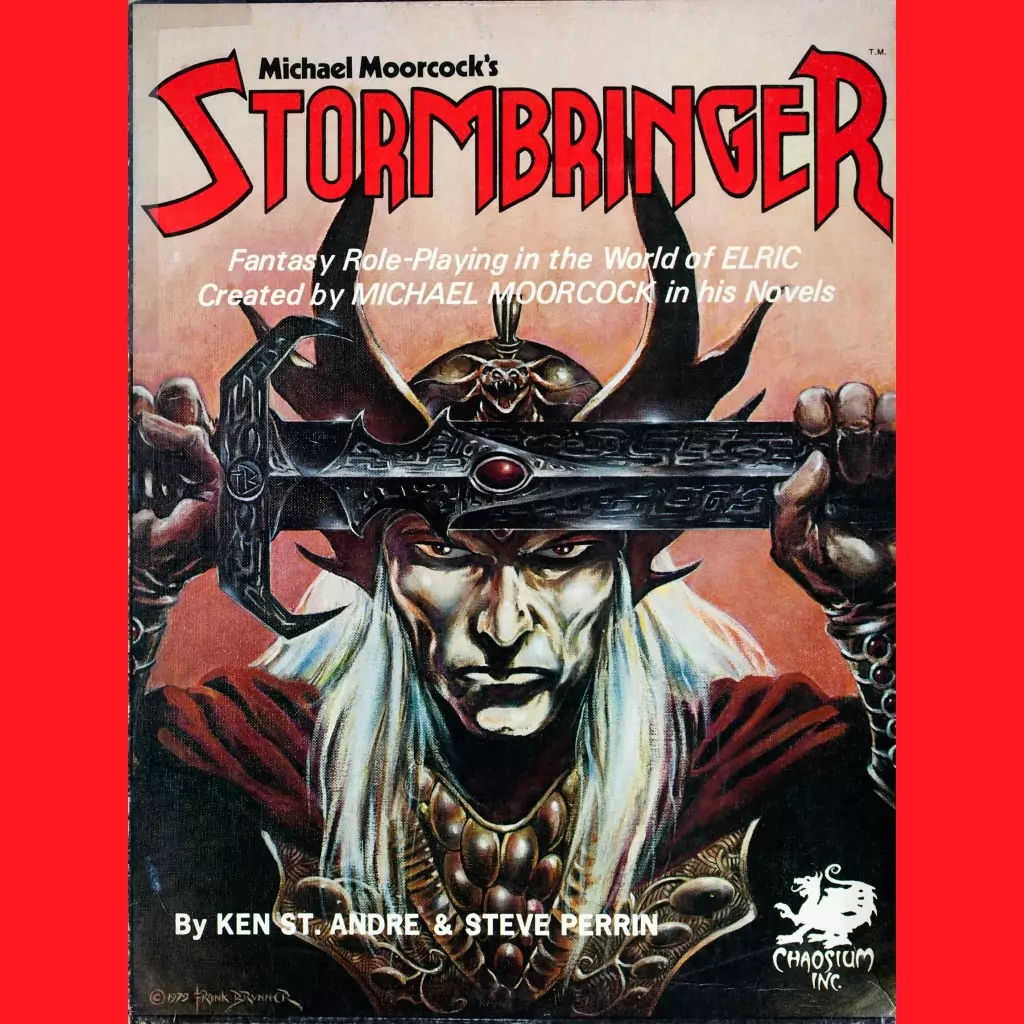
This is a high-powered expansion of Chaosium’s Basic RPG (a simplified version of RuneQuest) and is skill-based. The best part of the game is the magic system focused on summoning and binding demons and elementals.
It’s through the magic system that Stormbringer captures the flavor of Moorcock’s stories. Everyone has access to demon magic. However, like any deal with the devil, the power derived comes at a high personal cost, from crippling physical ailments to giving over your will to become a pawn in the struggle between law and chaos. These costs infuse the game with an overriding sense of doom: eventually the bill comes due for even the greatest hero. This reflects explicitly in the campaign setting – at the point in Moorcock’s fictional timeline that players find themselves, the world is ten short years from ending.
Most traditional fantasy RPGs are about accumulation of power gradually. In Elric’s world, power is right there for the taking, so Stormbringer is more interested in what players are willing to risk in the long term to solve short-term goals. It is a rare for a character to not be utterly consumed by his choices in the end, just like Elric.
Stormbringer’s editions are revisions and reorganizations. In terms of play, the first three are essentially identical. This is the…well, I don’t know. The first printing of the 1st edition was in a “fat” (1” deep) box and had a single rulebook with a red cover. The 2nd printing of the 1st edition switched to a “skinny” box and a blue cover for the rulebook. The 2nd edition split the book into three smaller booklet and sports a new catalog number. My copy is a skinny box with a single red cover rulebook and the 2nd edition catalog number, so it is a bit of an anomaly, I guess. I doubt anyone other than me cares, though.
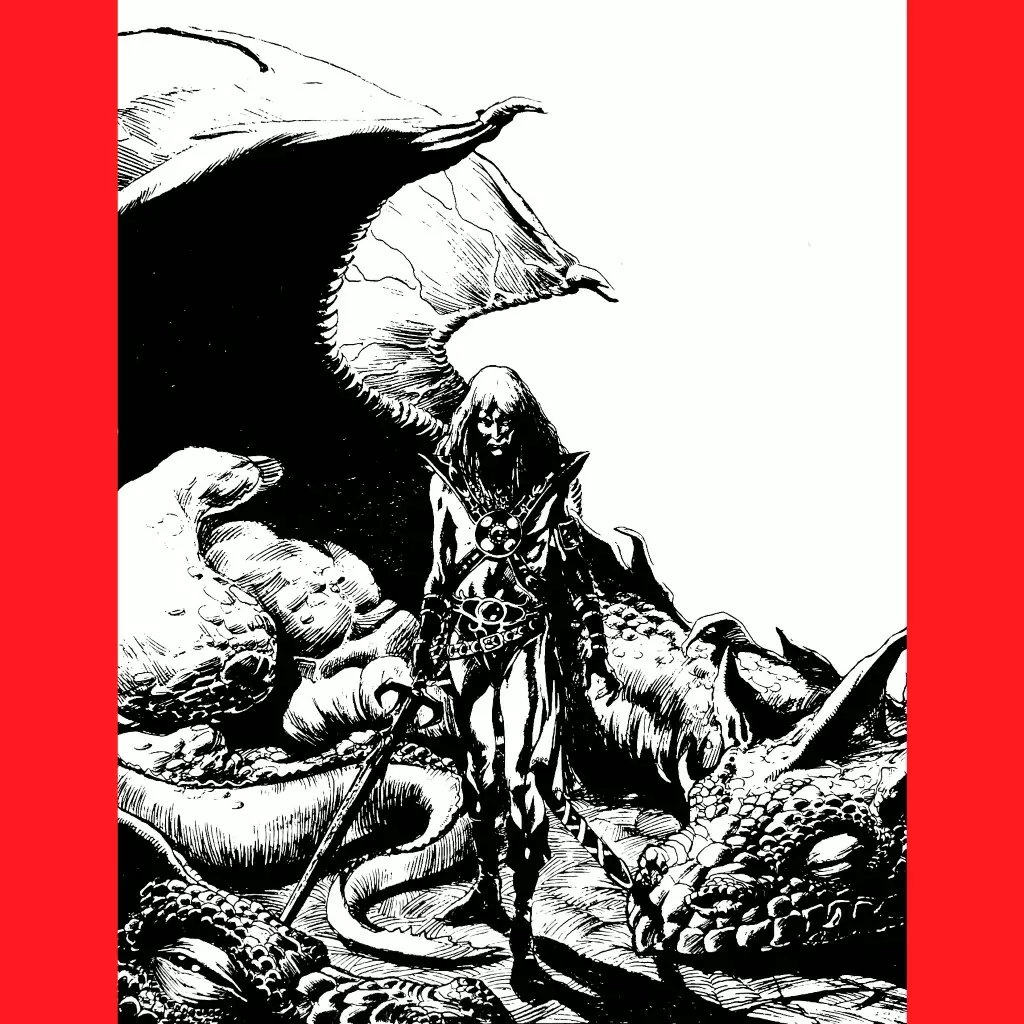
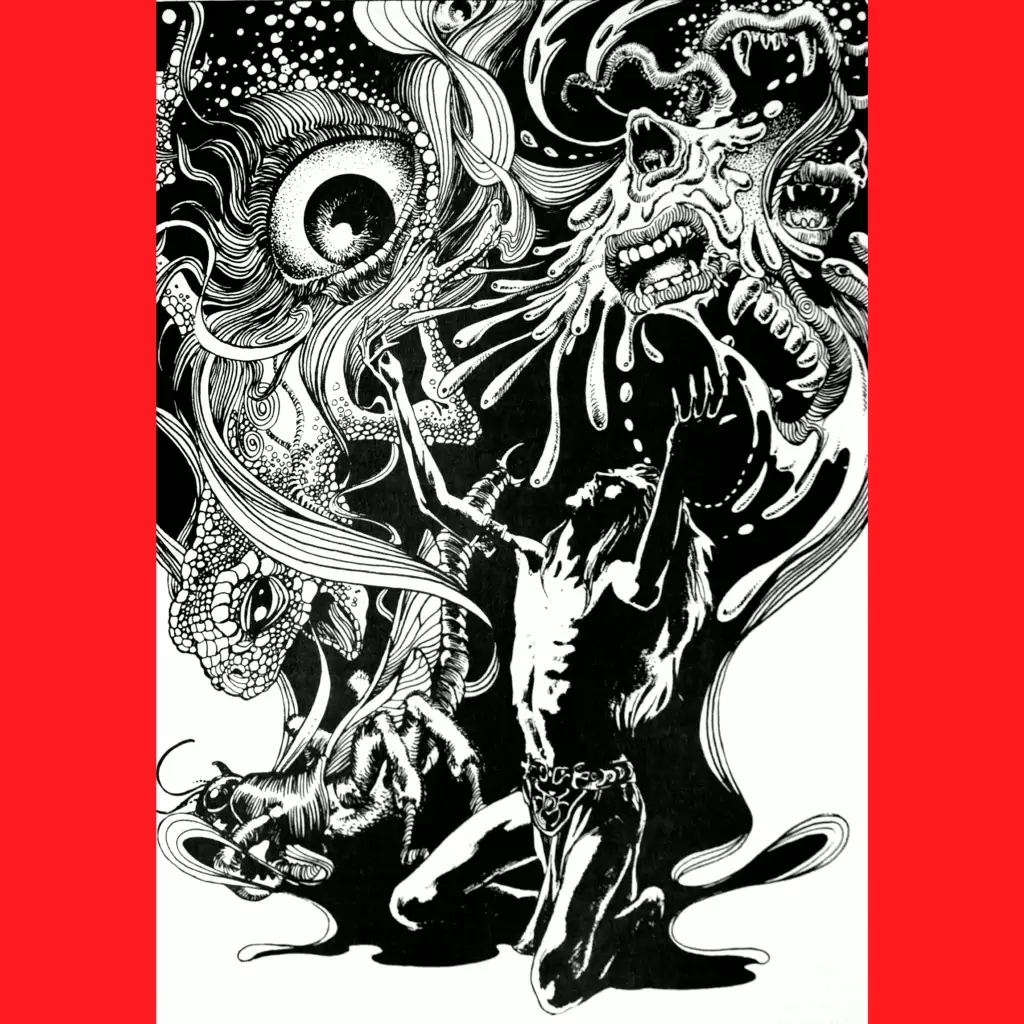

Late replier here, but this game is my favorite ttrpg of all time. I have gamemastered it since the eighties, and it is – just as you say – the magic system which sets this game apart from other “flash-bang-nonsense” as dear ol’ departed Mr. Stafford of Chaosium, once said. I also like that the game is structured around chaos. Rolling up a character is very much random, just as many of the scenarios are. The Chaosium style of playing is in my view a very refreshing one and has been from the start, as they are not primarily built with “balance” in mind. If you, as a player character encounter really monstrous and deadly opponents, it is implied that you always should contemplate fleeing or avoid battle in some other way, and not in the ‘D&D-way’ go on another murder-hobo tour. This is not because the Chaosium-made scenarios are less inclined to have combat be a big part of the game, but that there are other ways of looking at encounters.
And! The chaotic part of that is extra emphasized in the Stormbringer game, as the world is full of old empires and regions once populated by now dead-but-not-vanished creatures and/or effects. If you get your hands on a copy of this game and want to play it, please bear in mind that the chaotic ways of generating characters, playing the scenarios and making magical things happen is an intrinsic part of the world of The Young Kingdoms – the realms of Stormbringer.