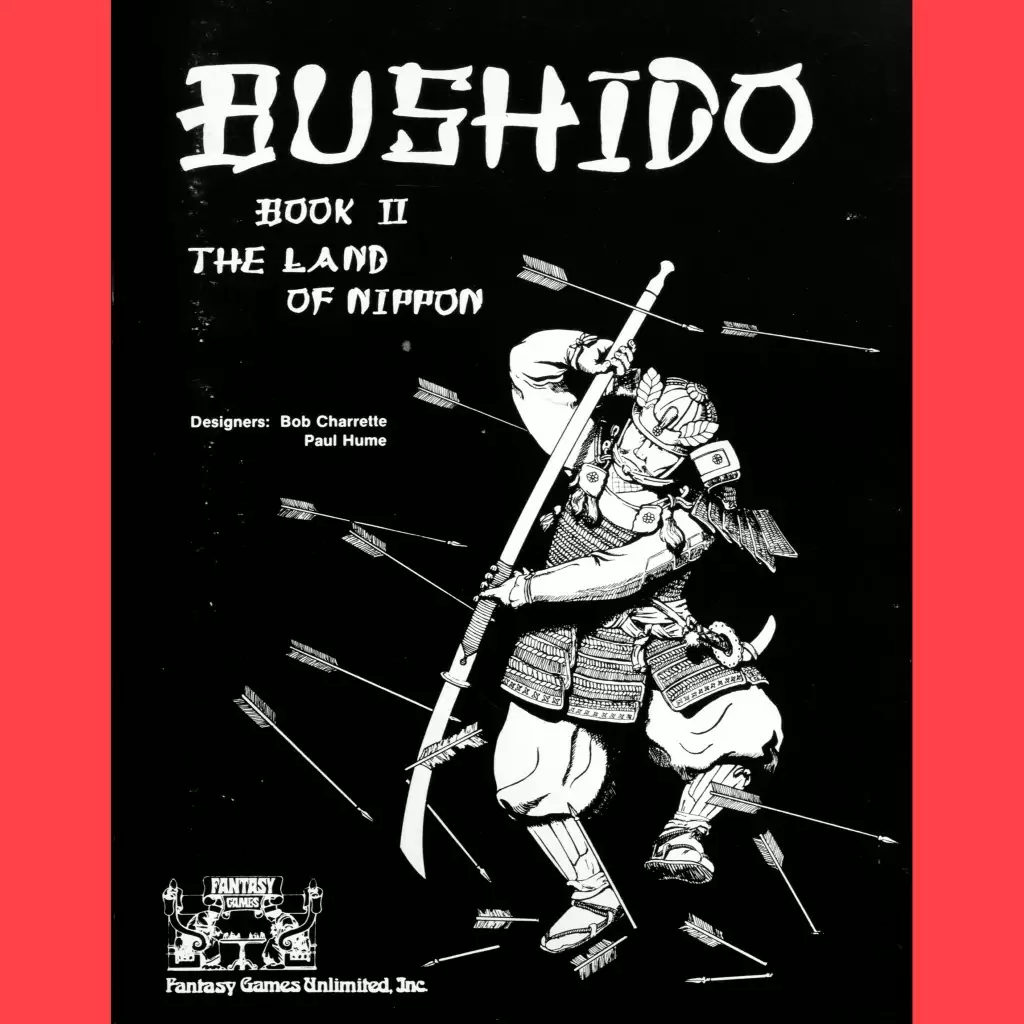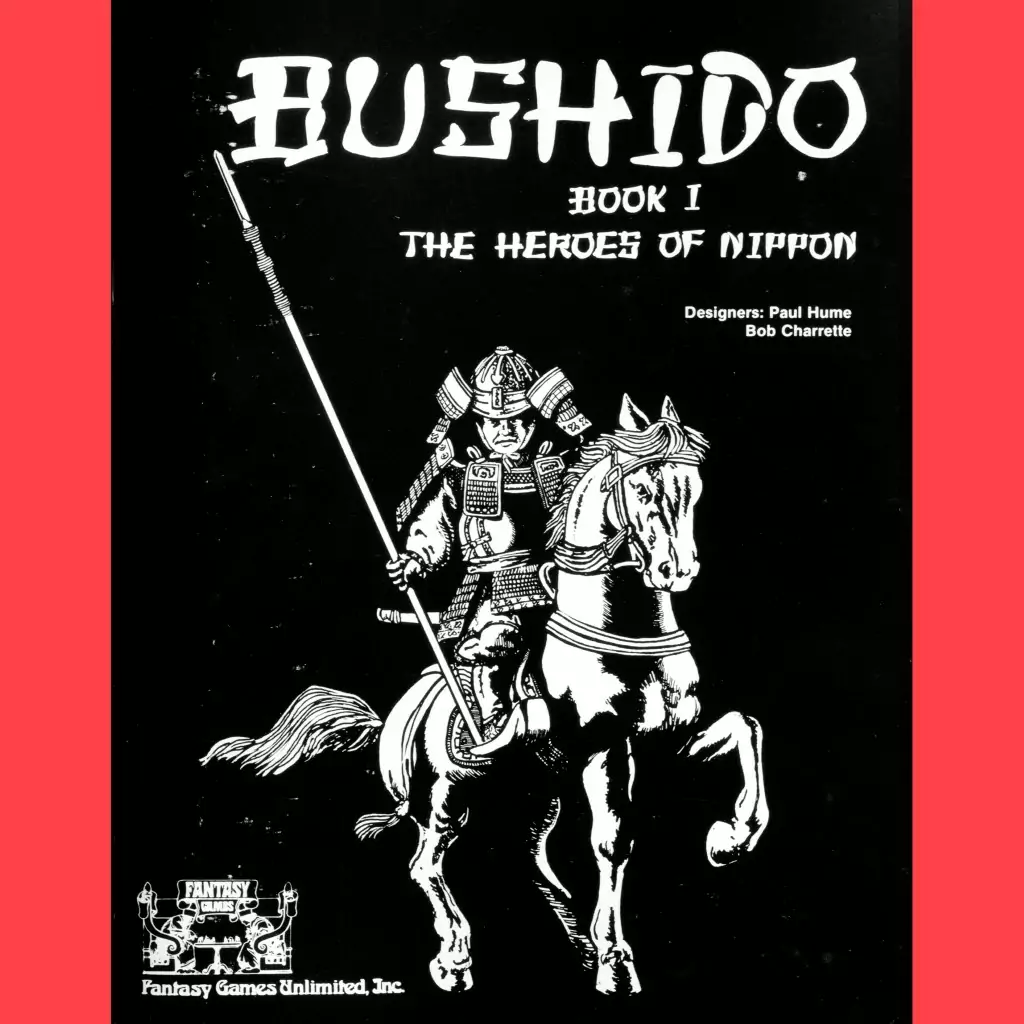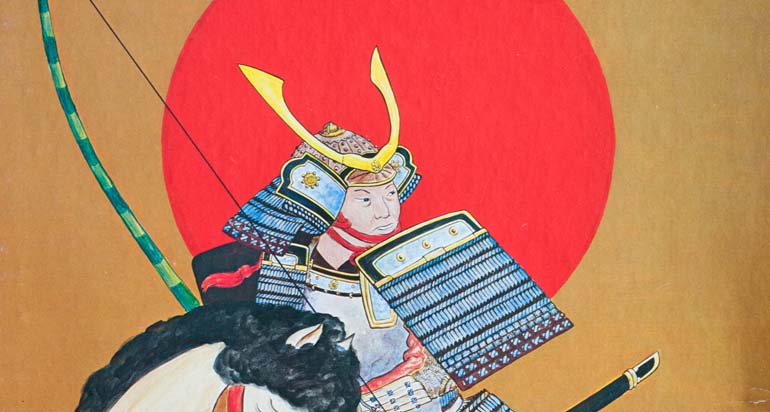
Bushido is the first RPG directly inspired by an Asian culture, in this case the history and folklore of Japan. In turn, it influenced the creation of Oriental Adventures for Dungeons & Dragons, which cemented Asian-themed games as a solid, if small, RPG sub-genre.
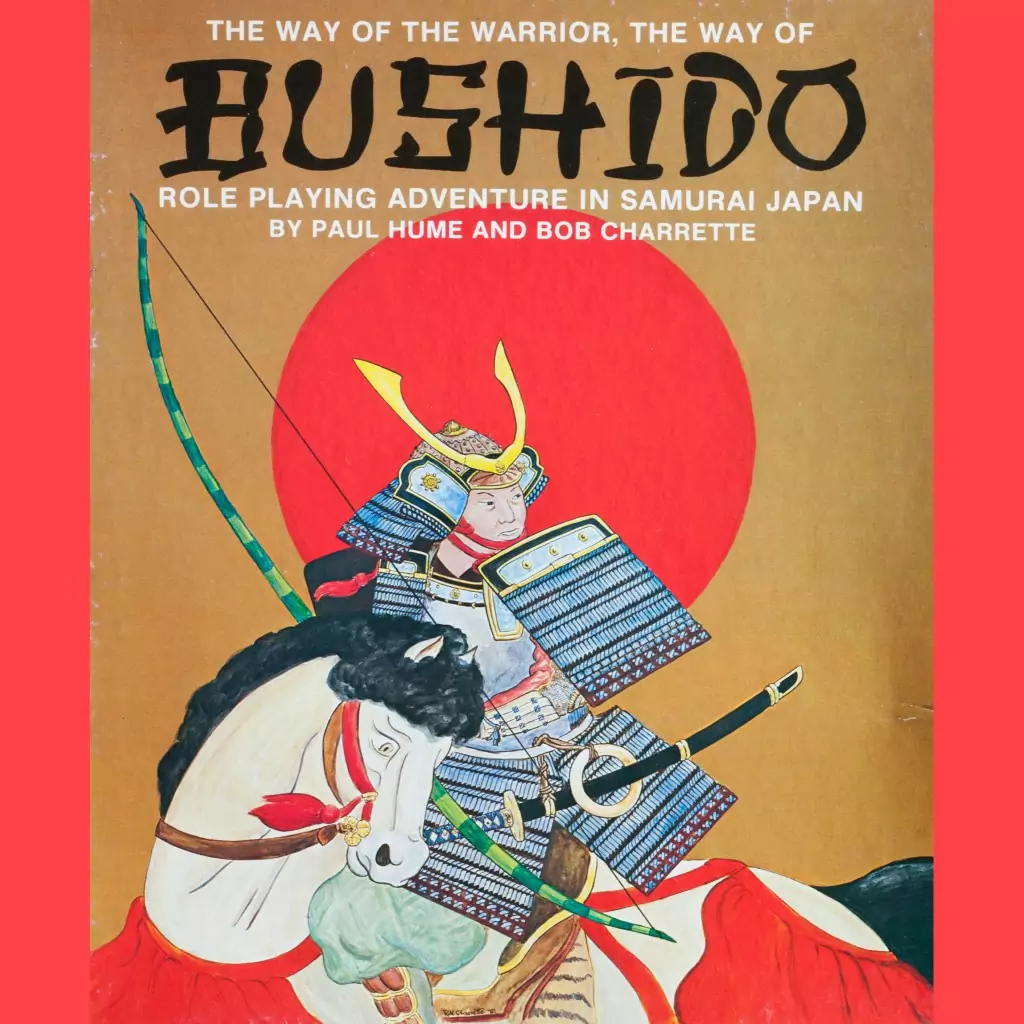
The world of Bushido is not reflective of a single period in historical Japan, but rather is a fictionalized Japan where many periods blend together. Six character professions are available for play: bushi (classic samurai-style fighters), budoka (martial artists and peasant warriors), yakuza (professional criminal, not unlike D&D’s thief), shugenja (Taoist sorcerers), gakusho (Buddhist or Shinto monks, which combine aspects of D&D’s clerics and monks) and ninja, which need no explanation. Each profession has a suite of supernatural powers fueled by ki. Shegenja and Gakusho have access to magical spells.
Inspired specifically by chanbara films, Bushido is just lightly fantastic. Each profession has a defined role to play in society and much of the rules and the robust skill system are given over to establishing the aspects of the game centering on social class. Accumulating and maintaining On (honor), is paramount to all characters (aside of the nefarious ninja). Being mindful of On shifts the focus of the game away from combat and toward roleplaying, especially since earning On is just as important to character advancement as combat experience. Obligations weigh so heavily on player actions that the game recognizes characters must have responsibilities outside of adventuring. It accomplishes this with Downtime, a variable length of time between adventures during which characters train, study, get jobs, maintain property, potentially marry and more (shades of Pendragon). All of this grounds the game and gives characters a sense of greater responsibility beyond chopping up kappa or other critters.