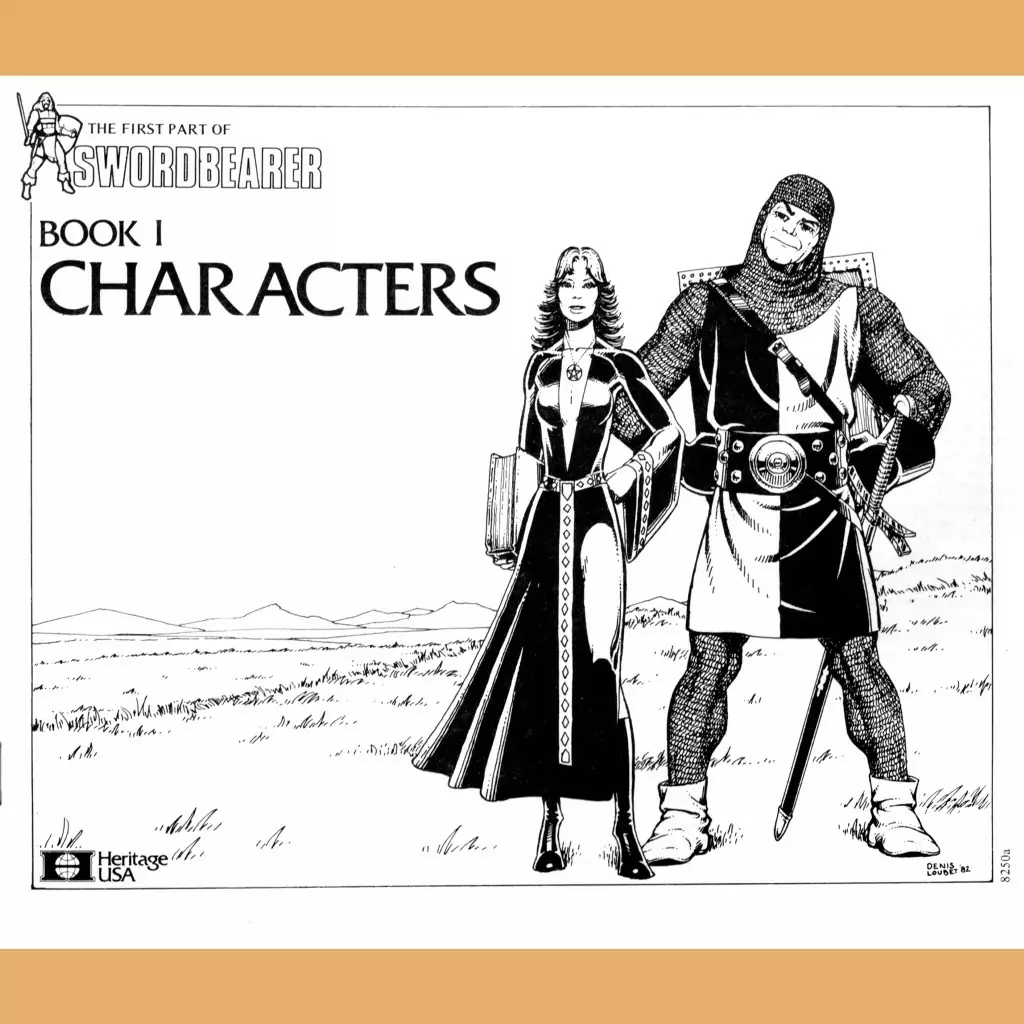
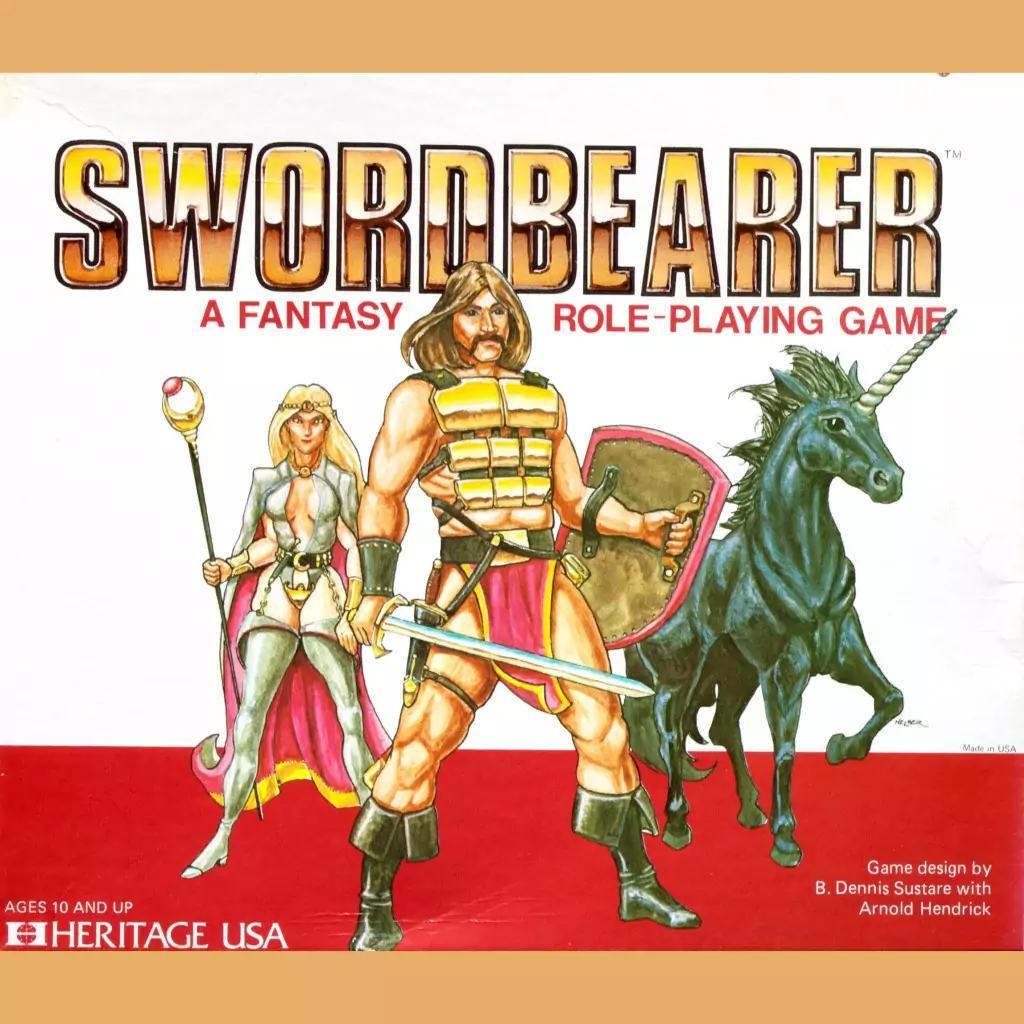
Swordbearer (1982) is a strange game. Like Heroes of Olympus, it is by B. Dennis Sustare, the creator of Bunnies & Burrows. It is initially strange because of the format. The publisher, Heritage USA, was primarily a maker of miniatures, so the box set here is the sort of 7×8 box you’d expect to get a pound of lead in. The books (three of them) are all horizontally oriented. I don’t think any of this is particularly strange now — we’ve got lots of form factors. But then? I suspect one reason it didn’t sell well was because folks just didn’t know they were looking at an RPG on the shelf.
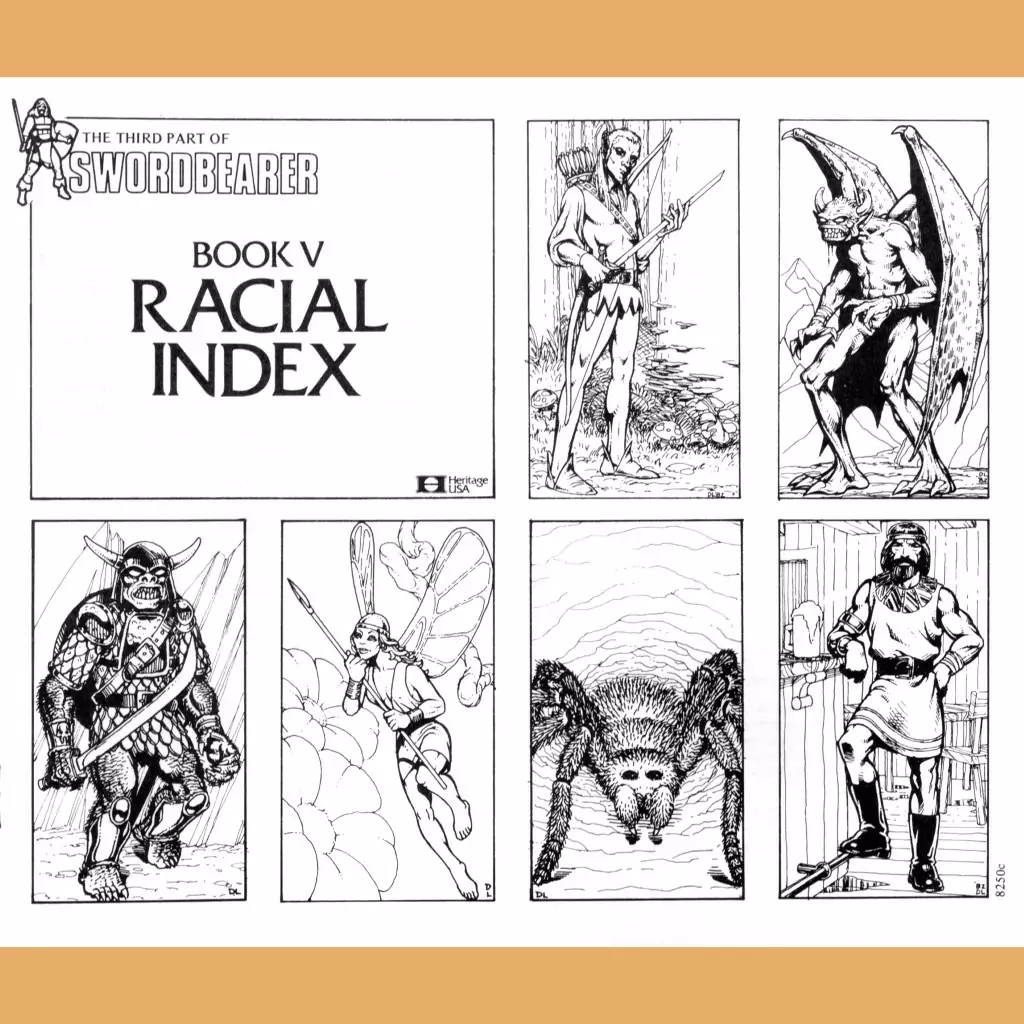
It is strange in other ways, too. It is a classless, percentile based skill system. There are a ton of playable races, many of which are weird, in a way that seems to anticipate Talislanta. Like the moonspiders, which are giant intelligent spiders, or the bunrabs, which are rabbit people, or Selkets, which seem a prime inspiration for D&D’s thri-kreen. Even regular monstrous humanoids like orcs and minotaurs are available for play, which seems unusual for the time. The magic system is pretty wild, too. There are two flavors, one sort of based in elements, the other in humors. Casting spells requires suitably powerful nodes — pure essences of varying strengths that the spell is cast through. The magic system feels rudimentary here, but interesting. I wish it had been explored more.
My favorite is how the game simplifies some annoying stuff from other games. Encumbrance is reduced to inventory slots — you have ten. That’s it! This is probably over simplified (How do knapsacks work?) but I kind of love the way the game shrugs off your concerns and just does it. The social status system is a super cool way to hand wave money, too. Each character has a status and that status assumes equipment and such they can afford and…they just have it. No bookkeeping. Easy! Status of course can be gained or lost. I love this abstraction.
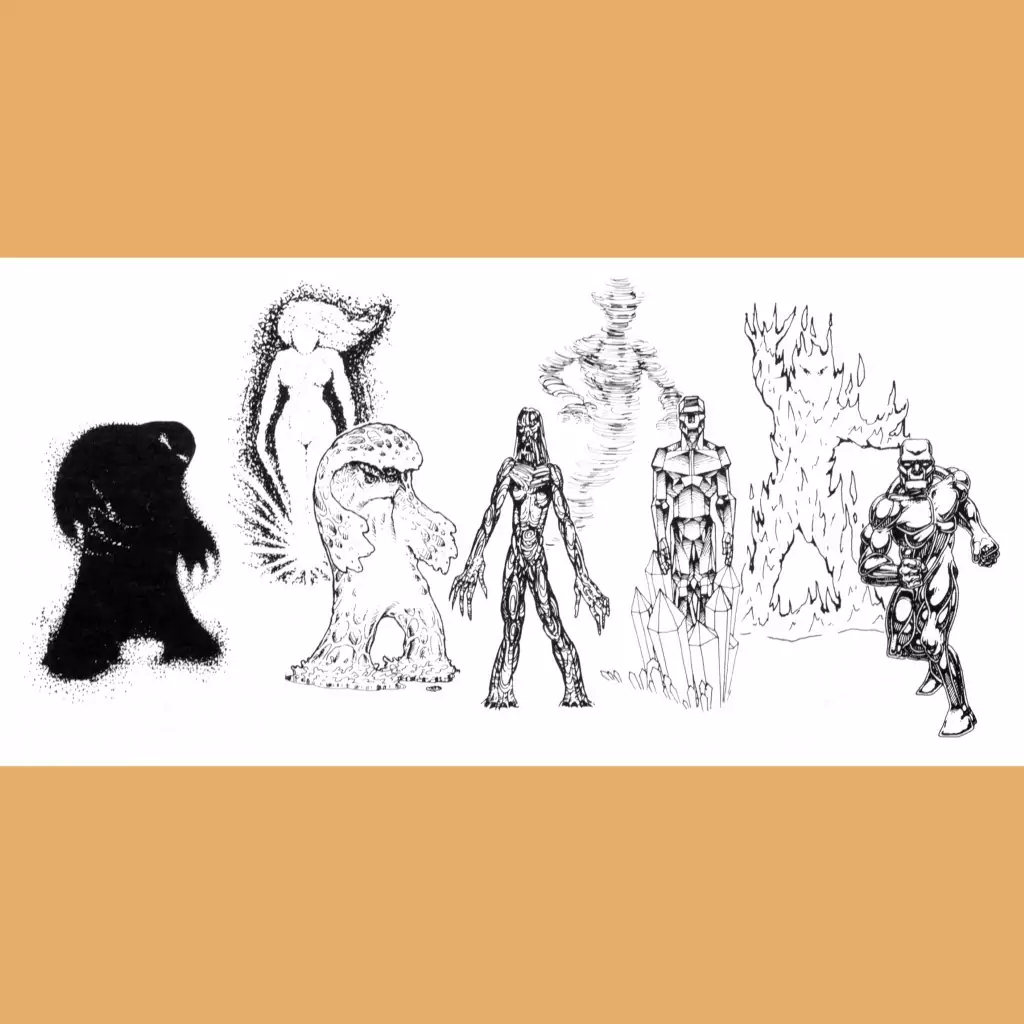
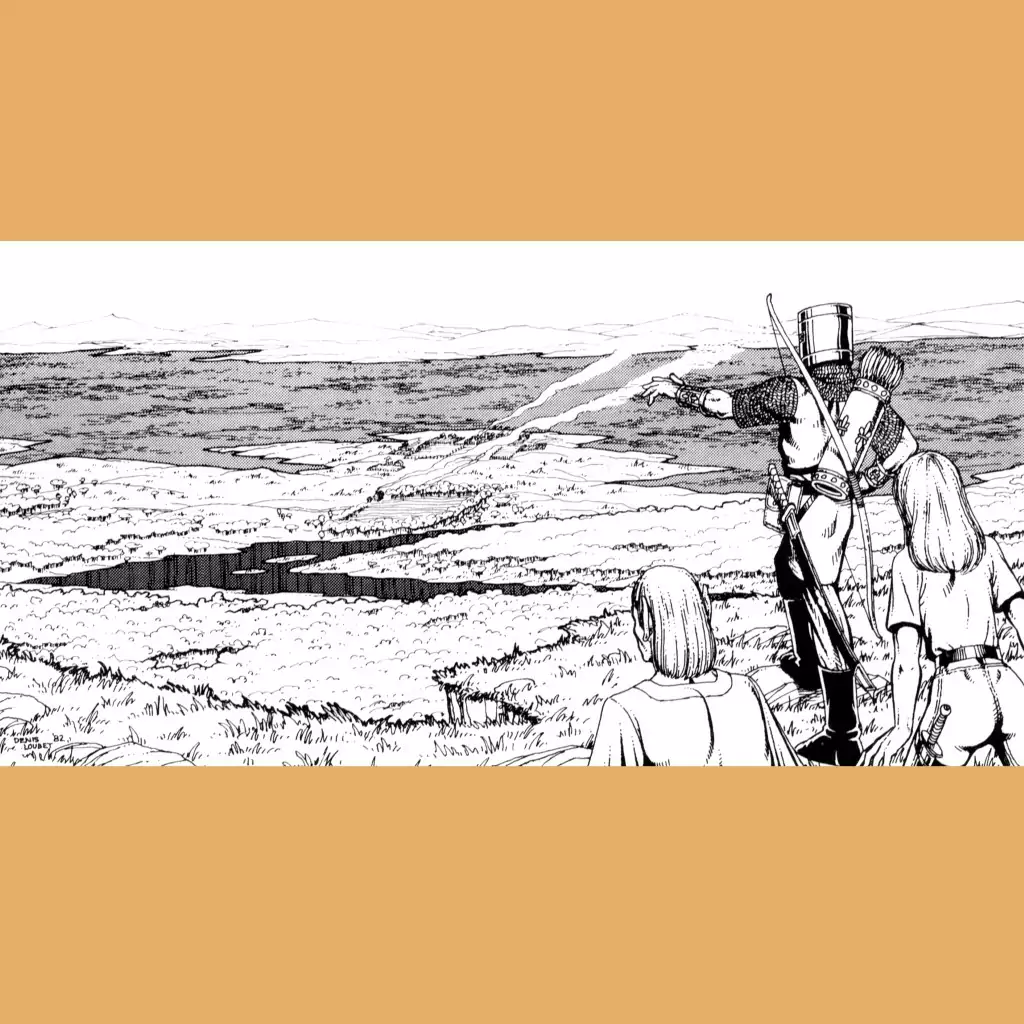
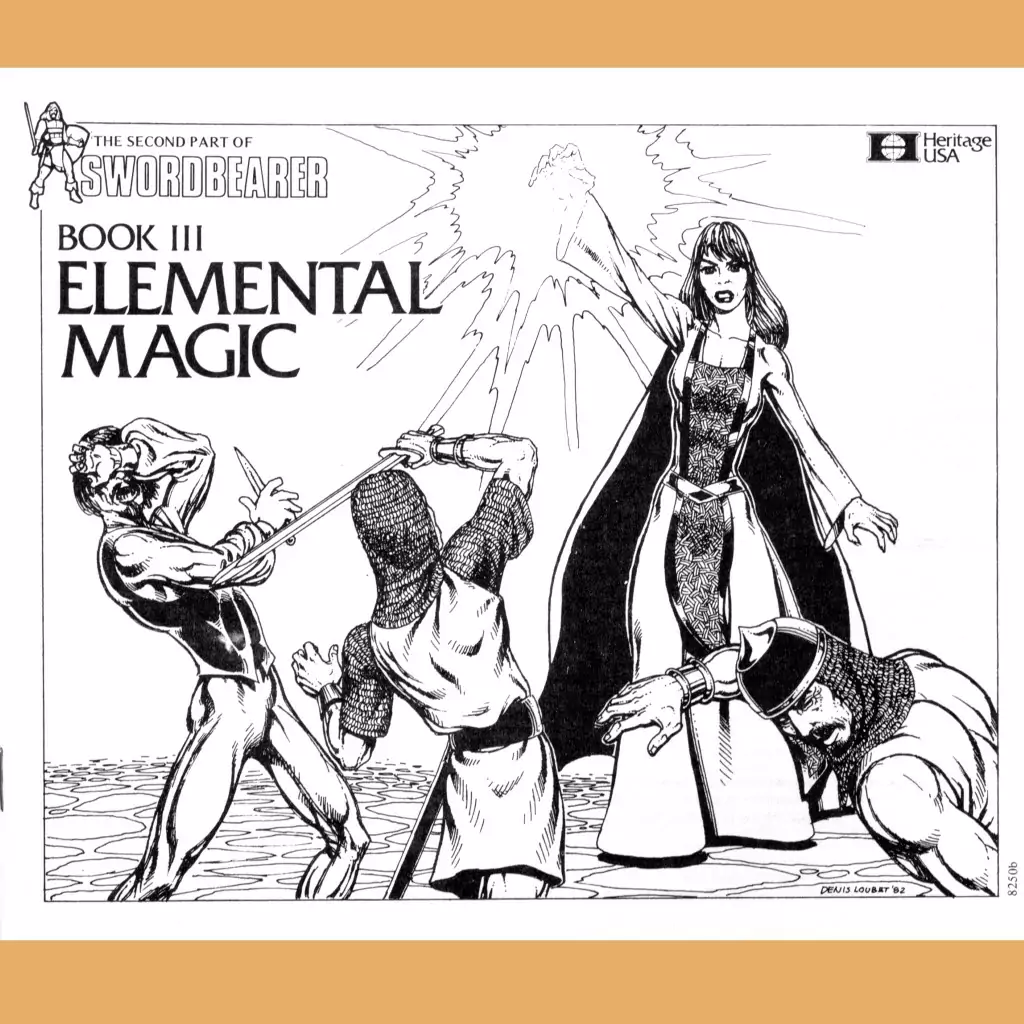
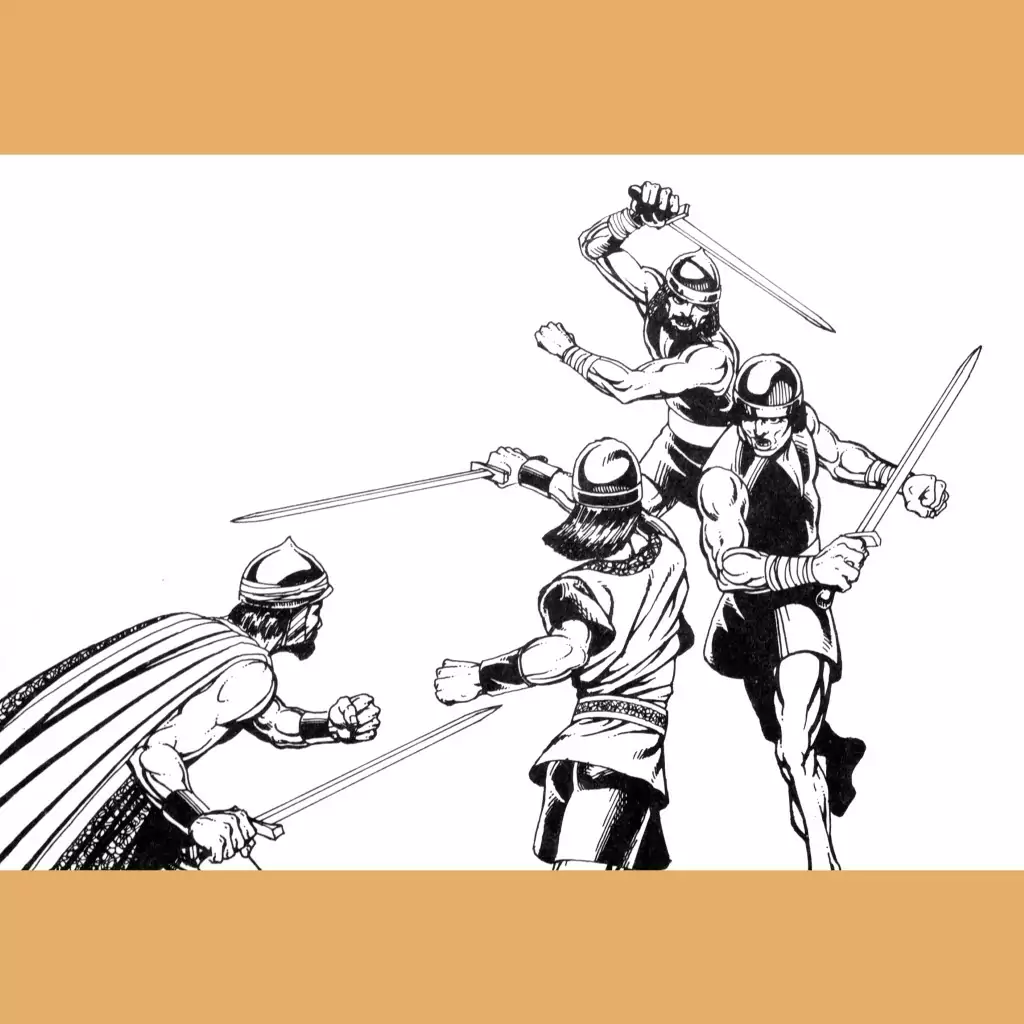
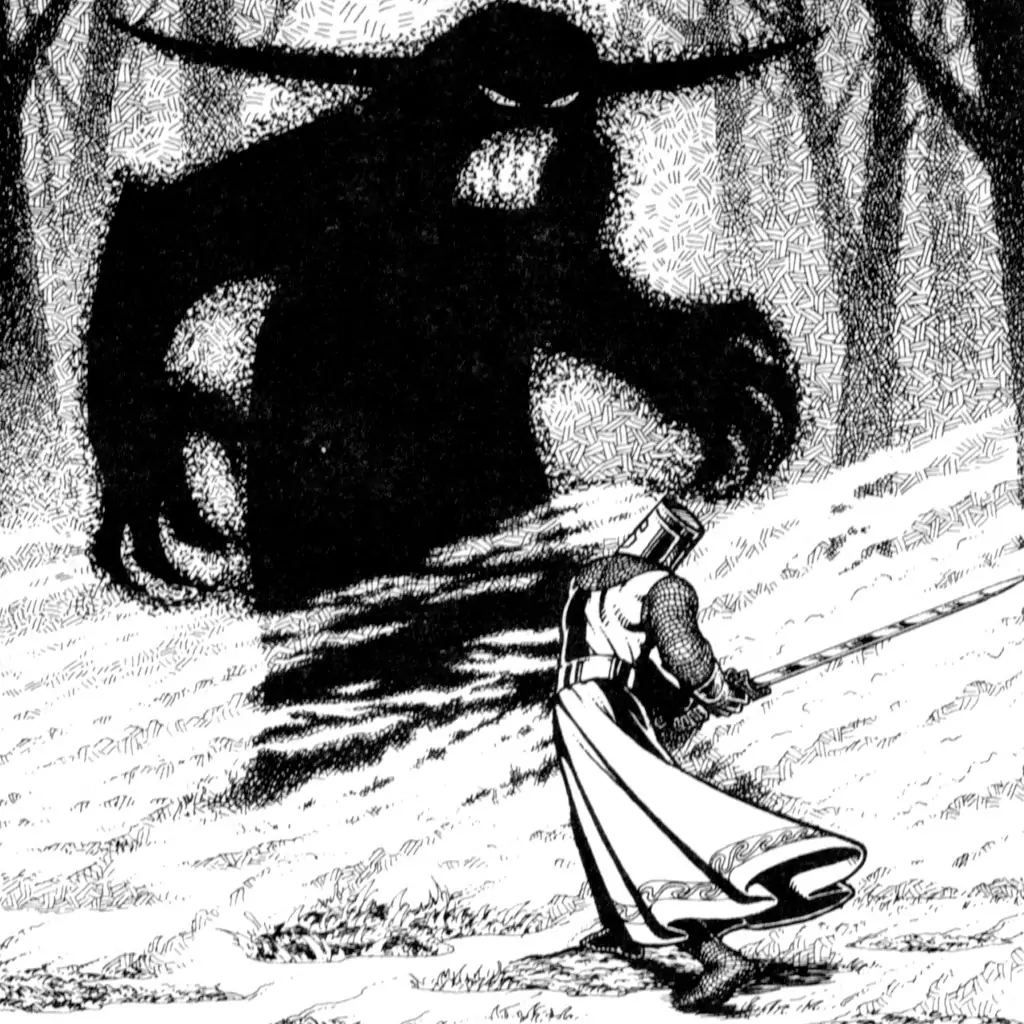
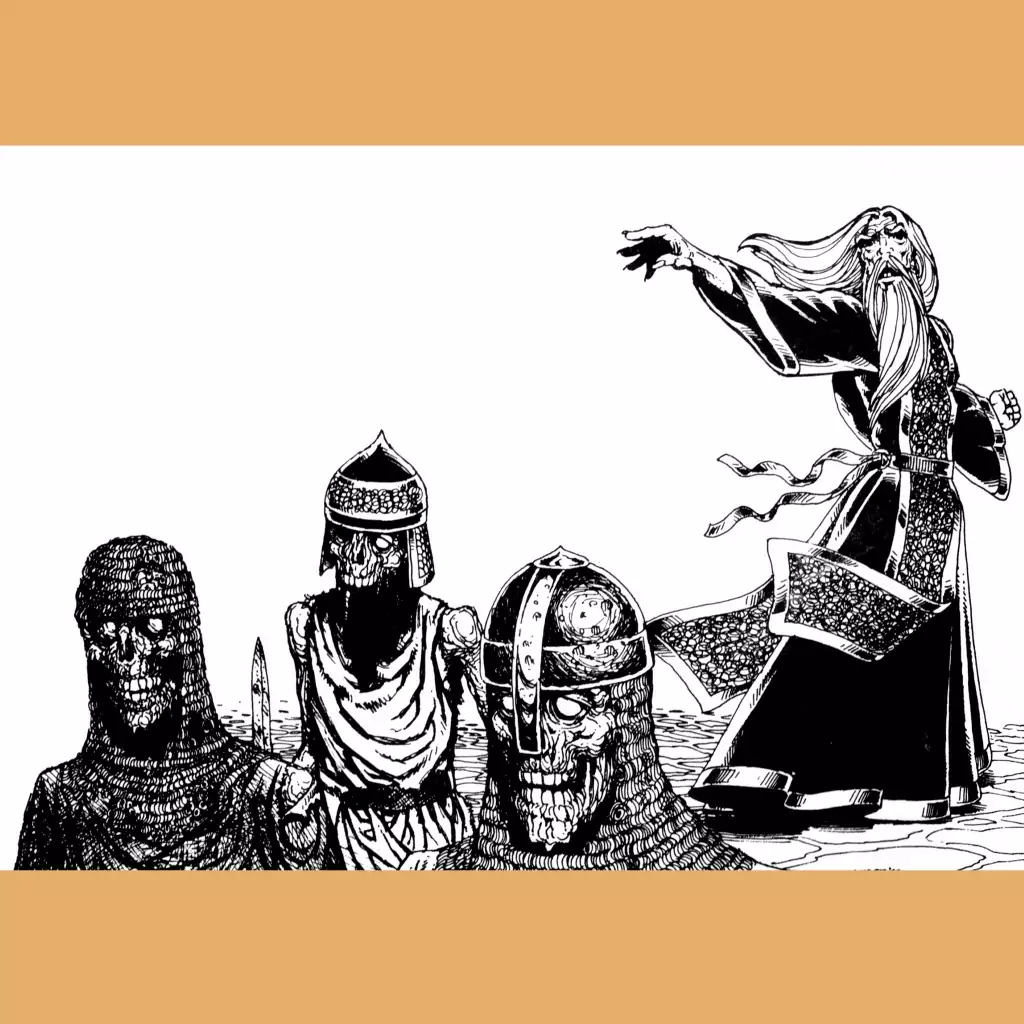
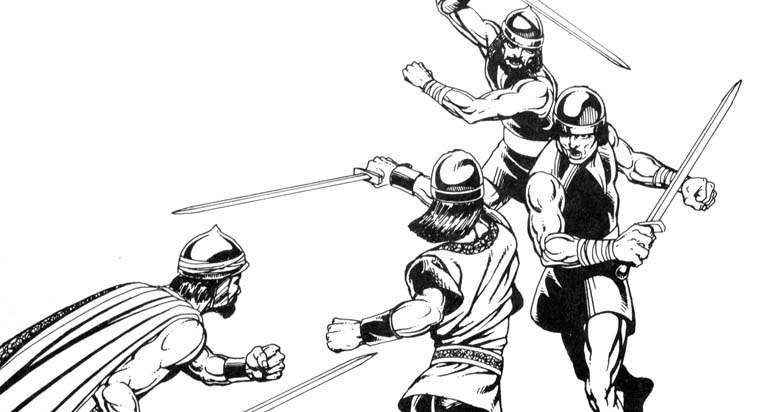
Early Denis Loubet illustrations throughout. They’re lovely and benefit, Arthur Adam-like, from being shrunk down to fit the format.