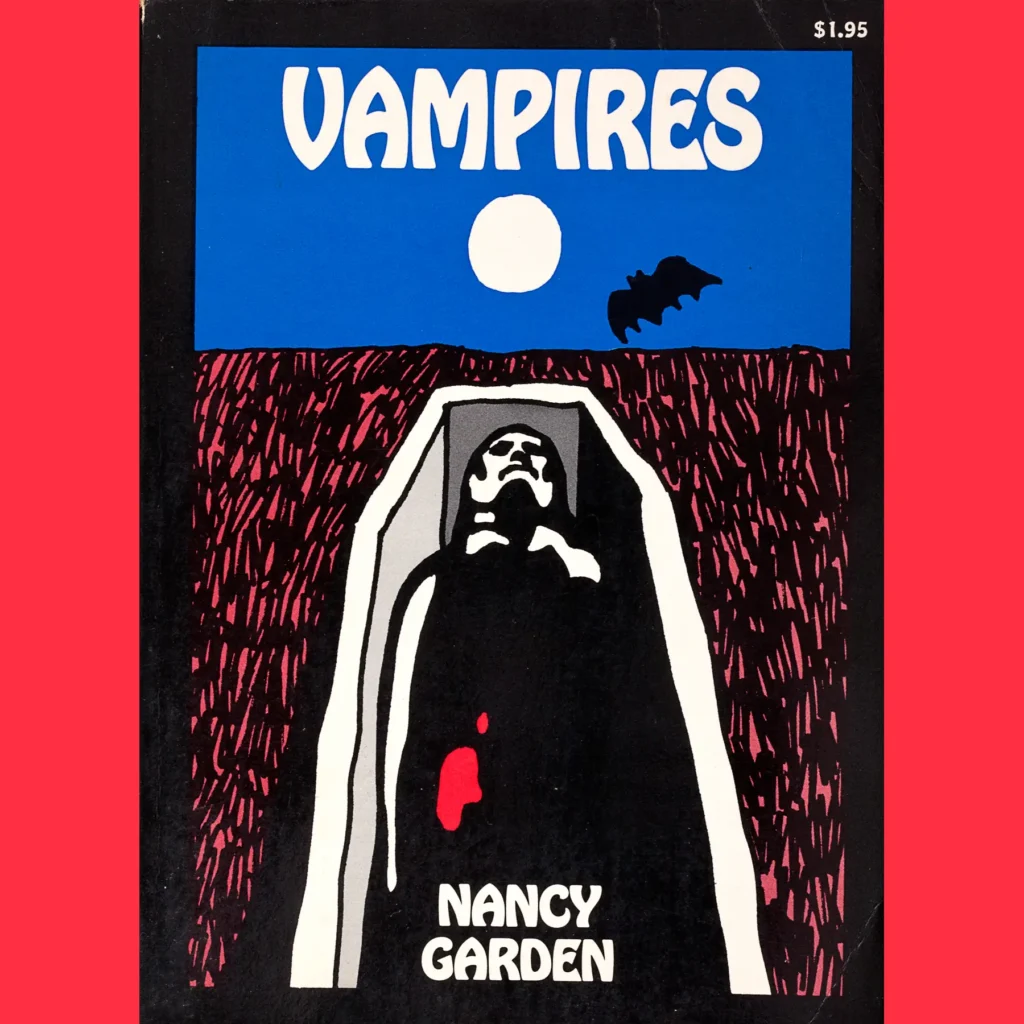
Nancy Garden’s Vampires (1973) is part of Lippincott’s Weird and Horrible Library, 13 volumes of delightful supernaturally themed books that were a staple of my library’s shelf dedicated to “the unknown.” Garden contributed three other volumes (most of which you’ll see this year), which amounts to her entire output in the realm of non-fiction monster literature.
Most of her career was spent writing juvenile fiction, split pretty evenly between supernatural adventures, like Prisoner of Vampires (1985), and social dramas, like Annie on My Mind (1982). The latter is a teen lesbian romance that was frequently challenged and inspired a book burning in Kansas in 1993. Garden (herself a lesbian) said of the incident “Burned! I didn’t think people burned books any more. Only Nazis burn books.” She was pretty rad.
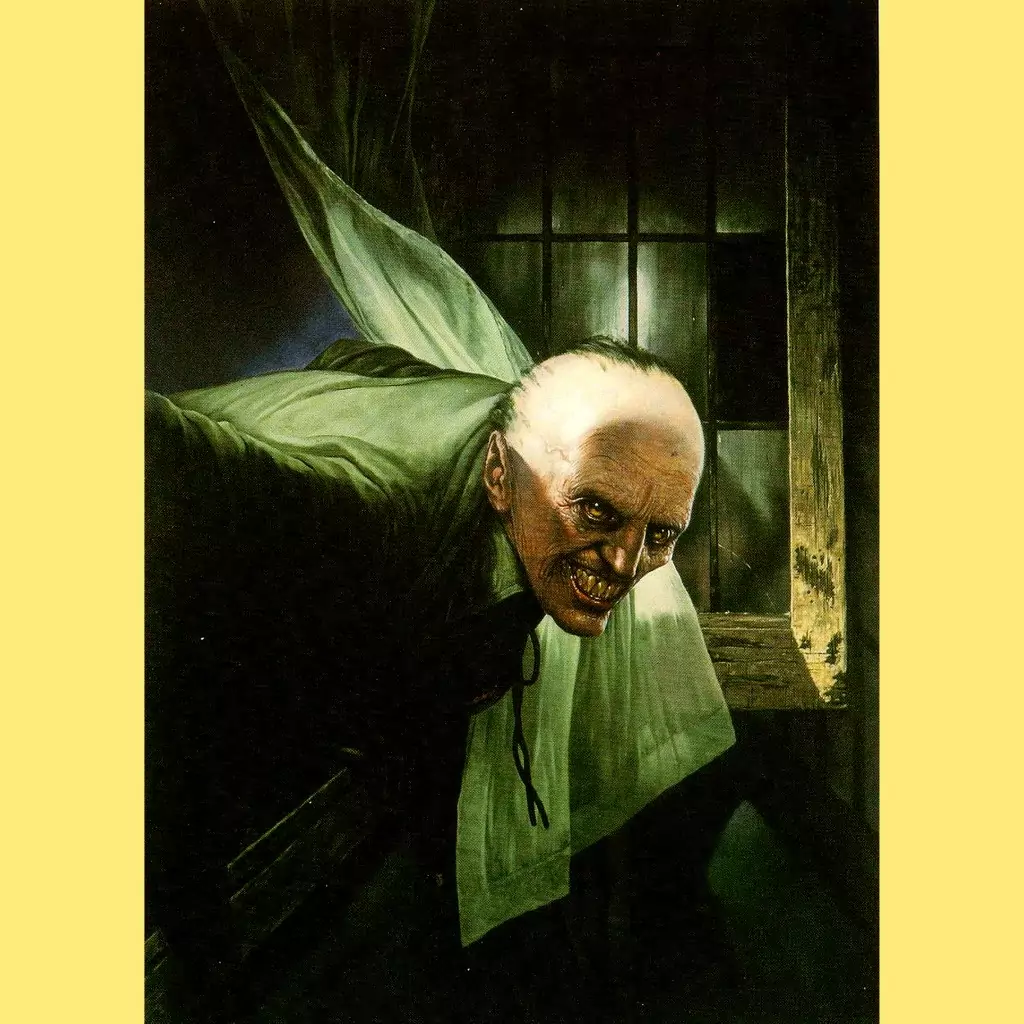
Anyway, Vampires. It’s interesting how all the books this week cover the same basic ground (Dracula, Vlad the Impaler, Elizabeth Bathory, Bela Lugosi, Christopher Lee, and so on) and yet all manage to have their own distinct character. Garden is a sly storyteller and for the most part well researched. There is a real feeling of trying to piece together puzzles of a historical and folkloric nature. I’m afraid I have to take a few points off for her inclusion of the Croglin Grange vampire, in which a vampire crawls through a window to drink a woman’s blood and gets shot in the leg for his trouble. Even though that’s a favorite (the Les Edward painting rules), the story is actually a lift from Varney the Vampire, passed off as truth to a credulous fellow named Augustus Hare, who recorded it in his autobiography, and thus it became a folktale (Montague Summers presents the opening of Varney in his 1928 bookThe Vampire, His Kith and Kin directly before presenting Hare’s story, and they are shockingly similar, though Summers fails to make mention of the similarity). Garden’s book even includes an illustration of Croglin Low Hall, drawn by Charles G. Harper and published in the very book where he argues there is no such place as Croglin Grange (Haunted Houses, 1924). That’s how folklore works, though—nearly every book on vampires includes the Croglin story, because it’s a damn good story.
Garden earns those points back by starting her book of with a retelling of Sheridan Le Fanu’s “Carmilla” (1872). It’s one of the most important vampire stories (the source of all “lesbian vampire” stories that follow), but it usually gets overlooked in the overviews. It, along with Goethe’s “Bride of Corinth” is the culmination of the most ancient version of the vampire, which was usually a woman — Lilith, Lamia, Gorgo, Empusae, and so on — and both work to reposition their women as complex, powerful characters rather than child-eating parodies of the monstrous feminine.
