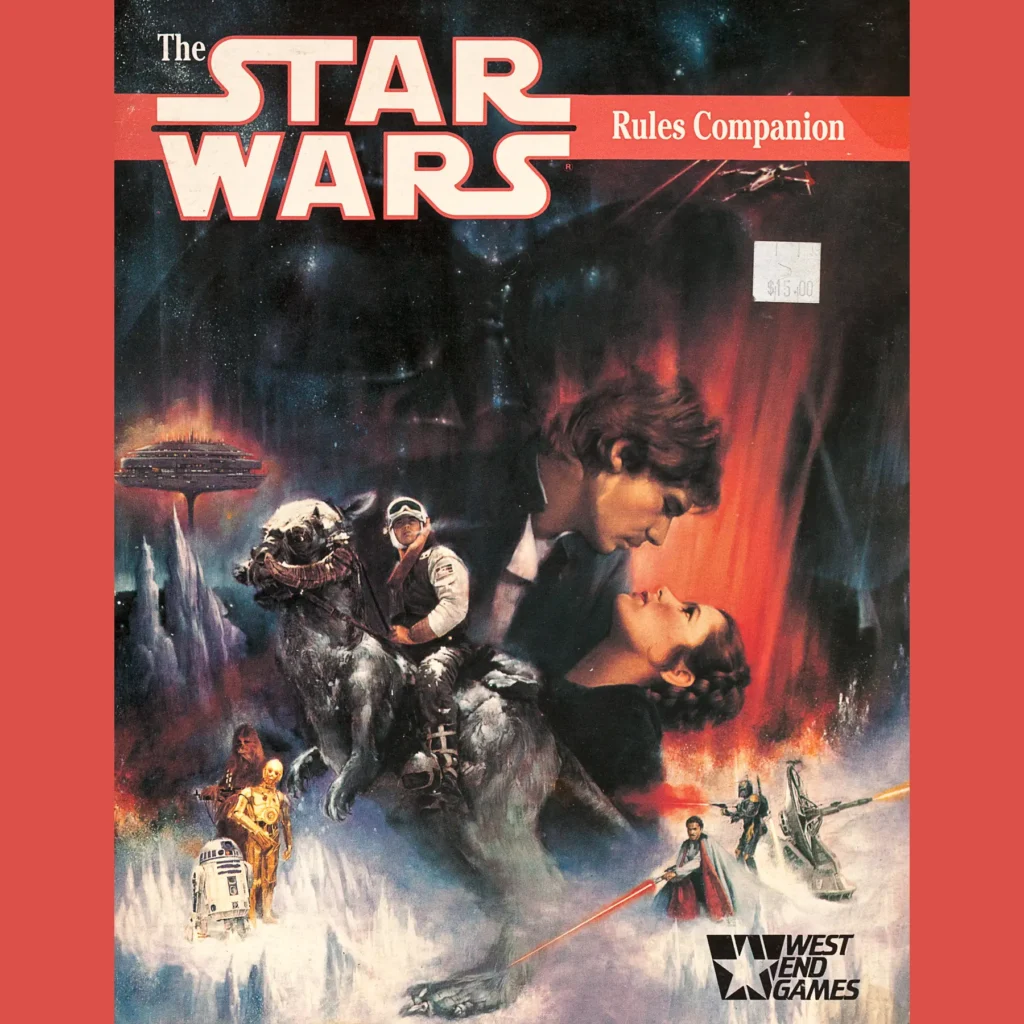
When West End Games’ Star Wars RPG came out, it was pretty much immediately followed by the four-page Star Wars Rules Upgrade, which was included as an insert in just about every Star Wars product for the next two years. It was part errata, part tweak, part suggestion, all meant to answer questions that came rolling in following the core rules release. Eventually, it led to this, The Star Wars Rules Companion (1989), a collection of revised, expanded and optional rules. As someone who primarily played and ran the second edition, a lot of this material seems rather…unfamiliar. I don’t know if that indicates that most of this stuff was pitched out or if I just never play games by the rules as written.
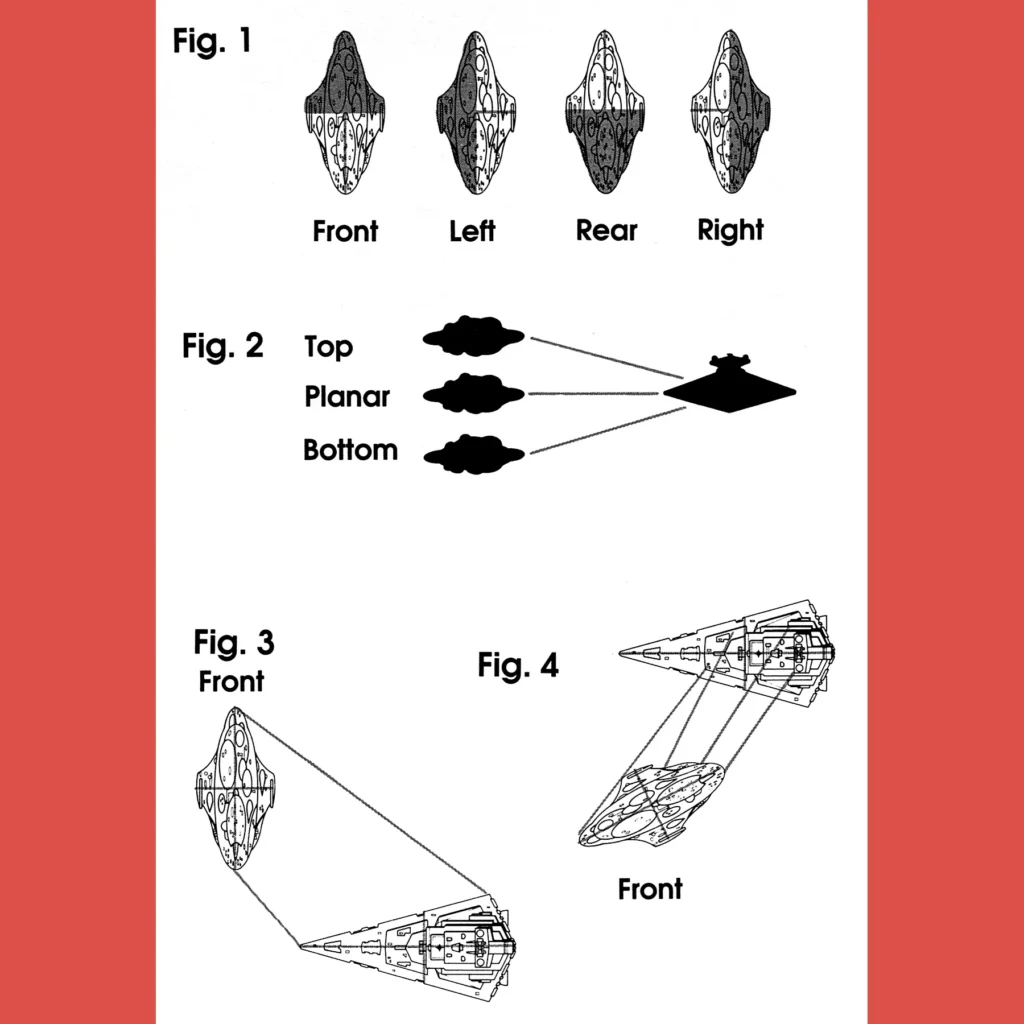
I feel that most of this stuff aims to make the game toothier. The core Star Wars experience is pretty smooth and cinematic. I don’t really want more complexity and fiddly systems, I want to go, go, go. But other people do, I guess. Personal combat, starship combat and Force powers all get an (optional) injection of complexity here. It’s not D&D, but I still don’t really want it.
More useful are the rules for Droid creation and the clarification on how the Dark Side corruption works, which I recall was frustratingly ambiguous in the core rules when I played the first time in the late ’80s.
One thing really jumped out at me, though. Uncertainty dice! The example given is a skill test for charting a jump through hyperspace with incomplete data. The idea is that in addition the regular skill roll (x-number of dice totaled against a challenge rating to succeed) the player and the GM both roll a number of additional dice (from two to four). Each side adds up the result, with the GM secretly subtracting their total from the players. The result is applied as a bonus or penalty to the roll. But because the player doesn’t know the result, they have to make their decision based on narrative data, not mechanical data. Do they pull out of the jump early, do they stay the course? It’s a liiitle awkward, but I like the way it can refocus the drama of the game in key situations.
The primary draw for the product in 1989 was probably the heaps of production art used to illustrate the book, including a nice set of color pages. I’ve always liked this cover art, too, in part because I think it is somewhat rarer than a lot of the other film posters. Even if it is the mushiest of them. The same art appears on the Live Action Adventures book, a book I have zero interest in (LARP? I would never) but kept around for a while just because of the cover.