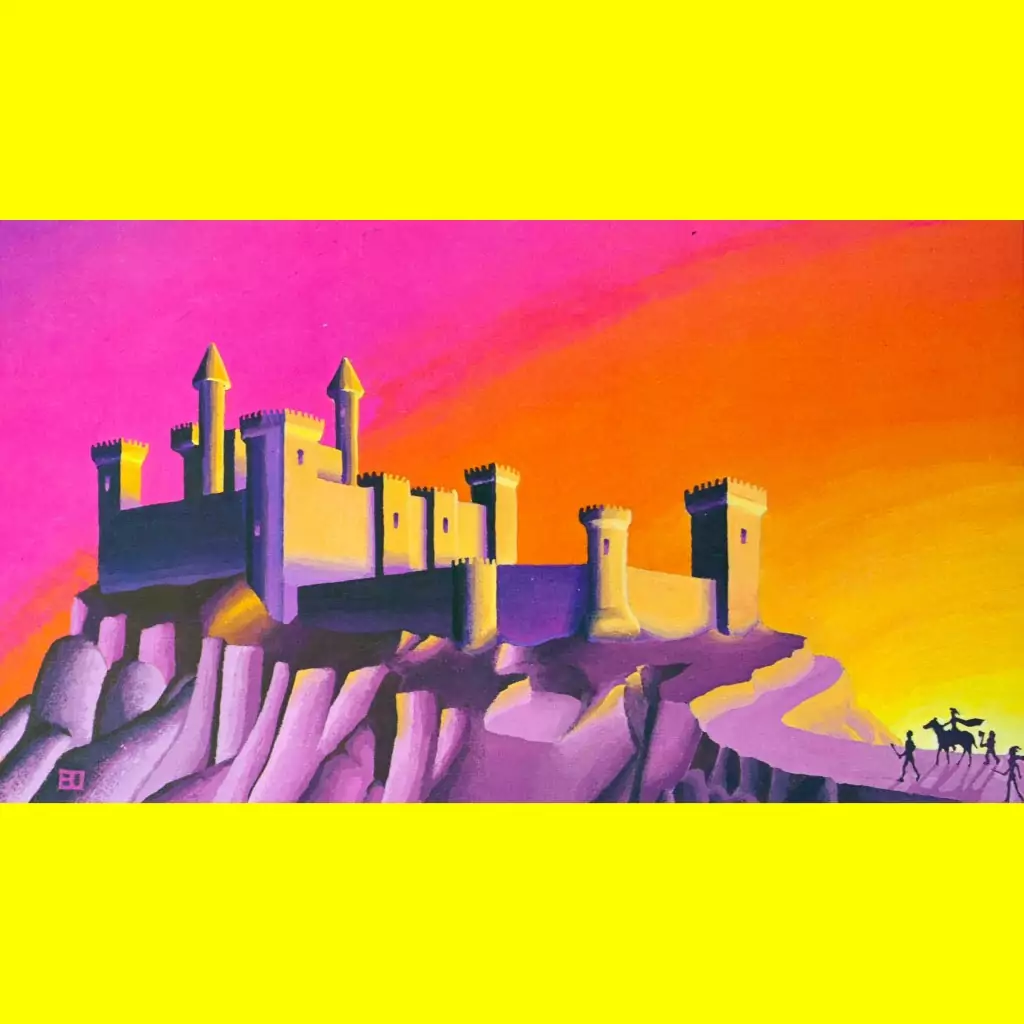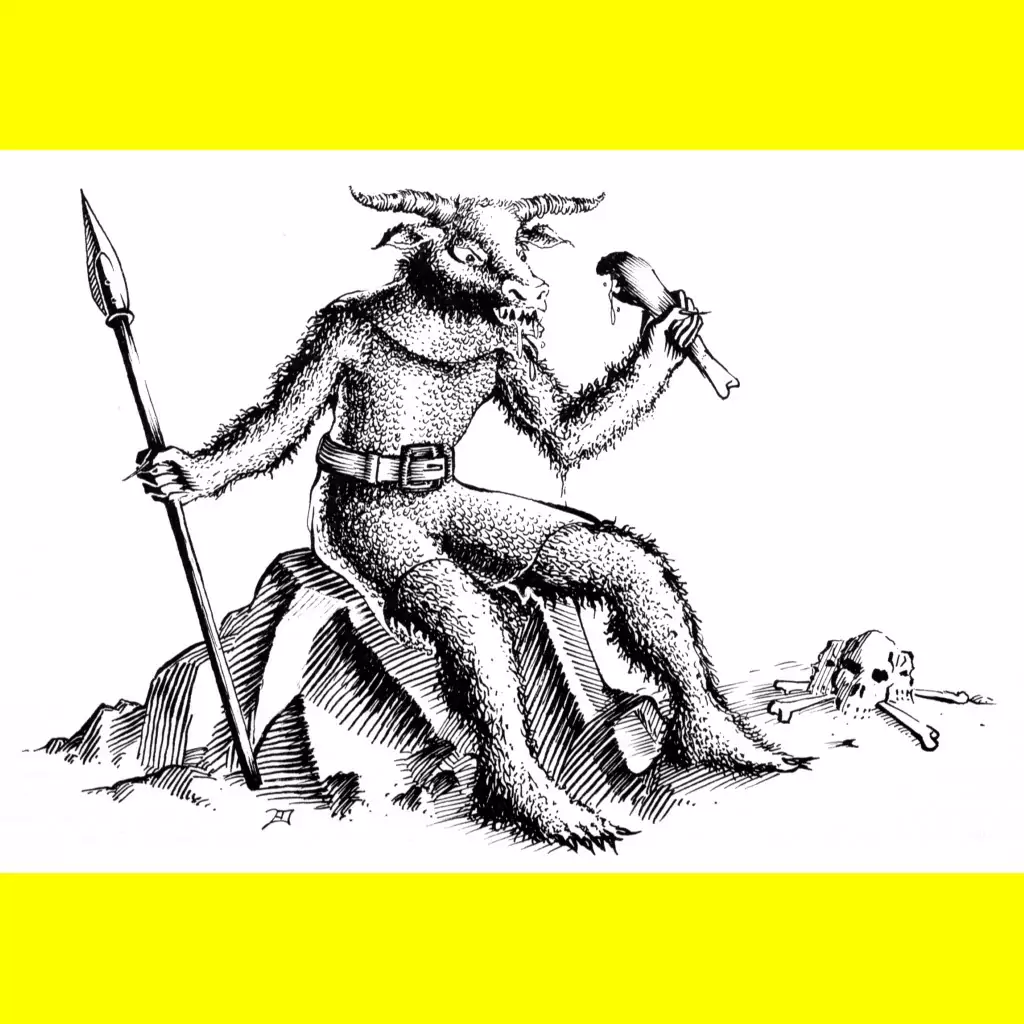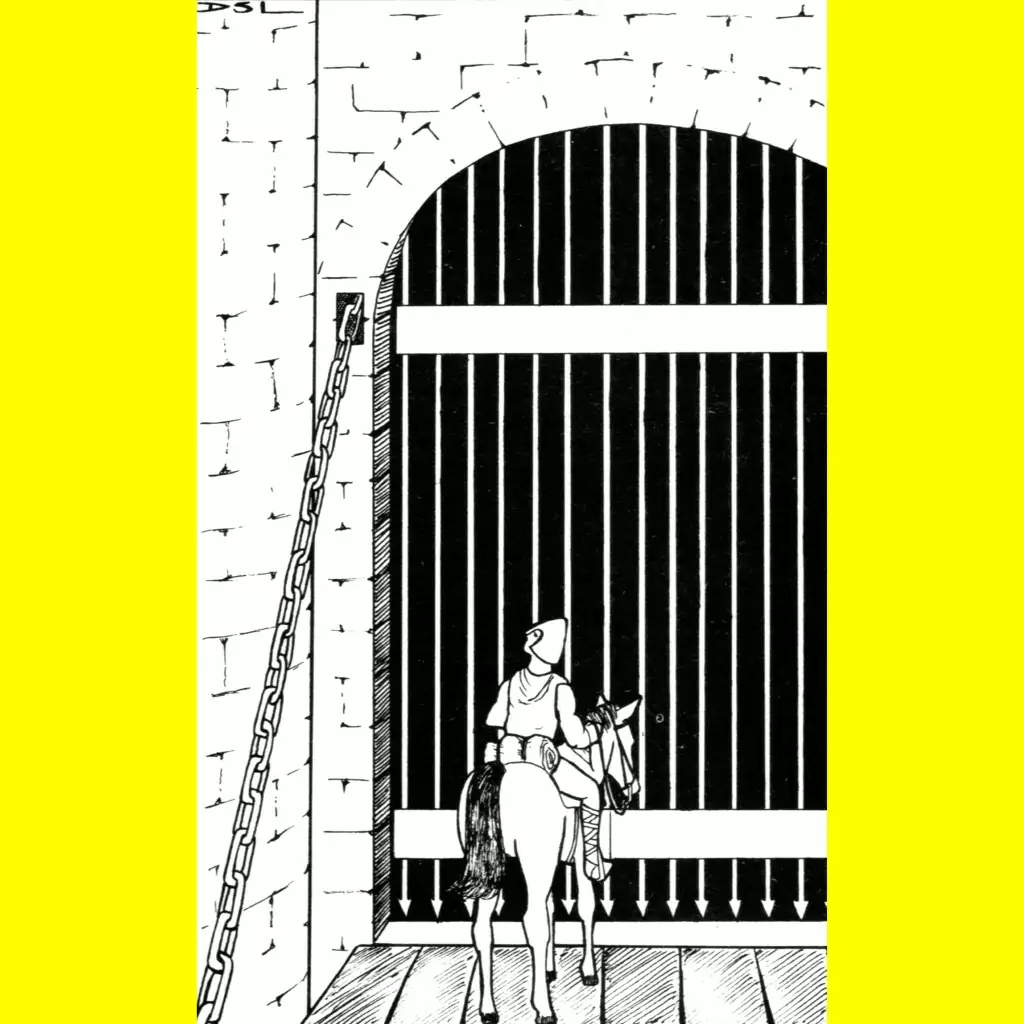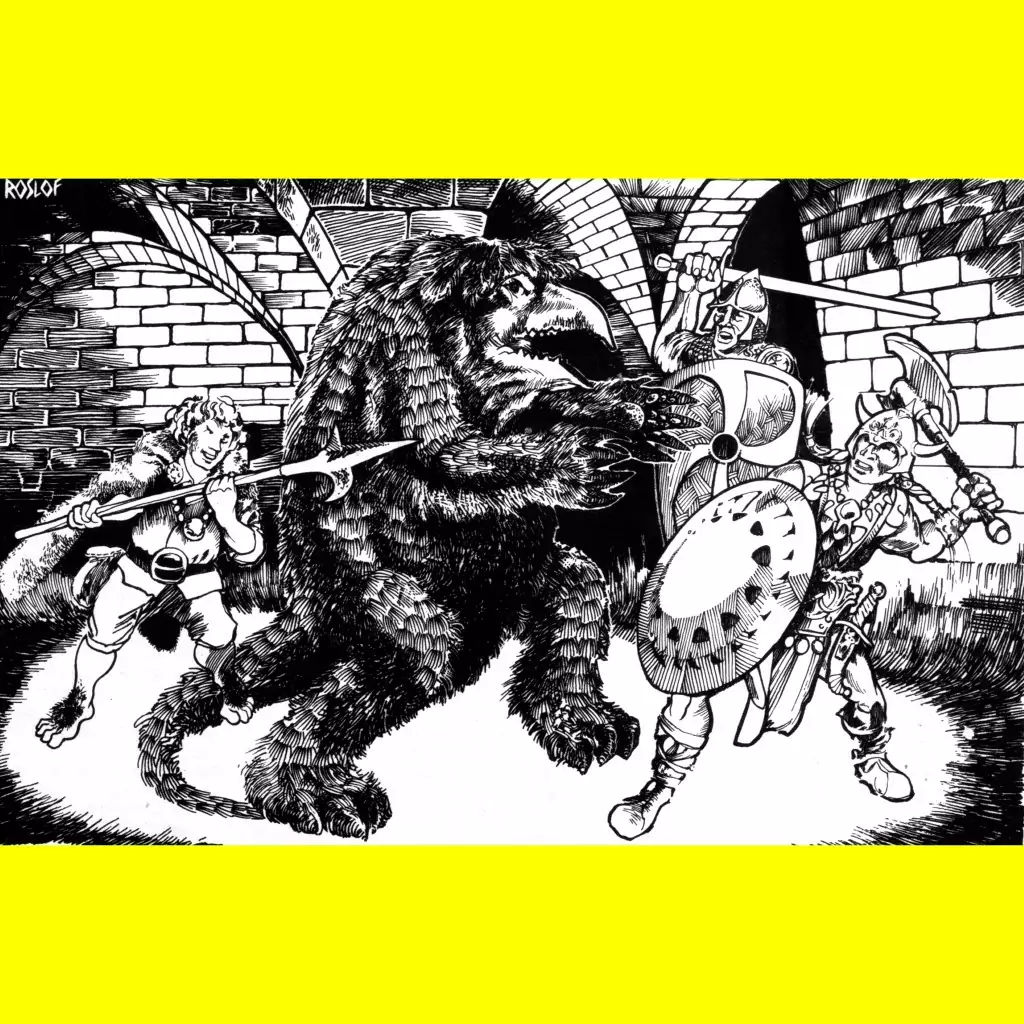
It doesn’t get much more classic than B2: The Keep on the Borderlands (1979). If there is one module that a non-RPGer might recognize, its this one – I’ve heard tell there were more than a million copies printed, and it was included in some of the 1977 Basic Sets and all of the 1981 Basic Sets, so it got around (I have three copies myself). It is generally considered one of the best D&D adventures and, despite being for the Basic system, was used in the public playtest package for D&D 5E.
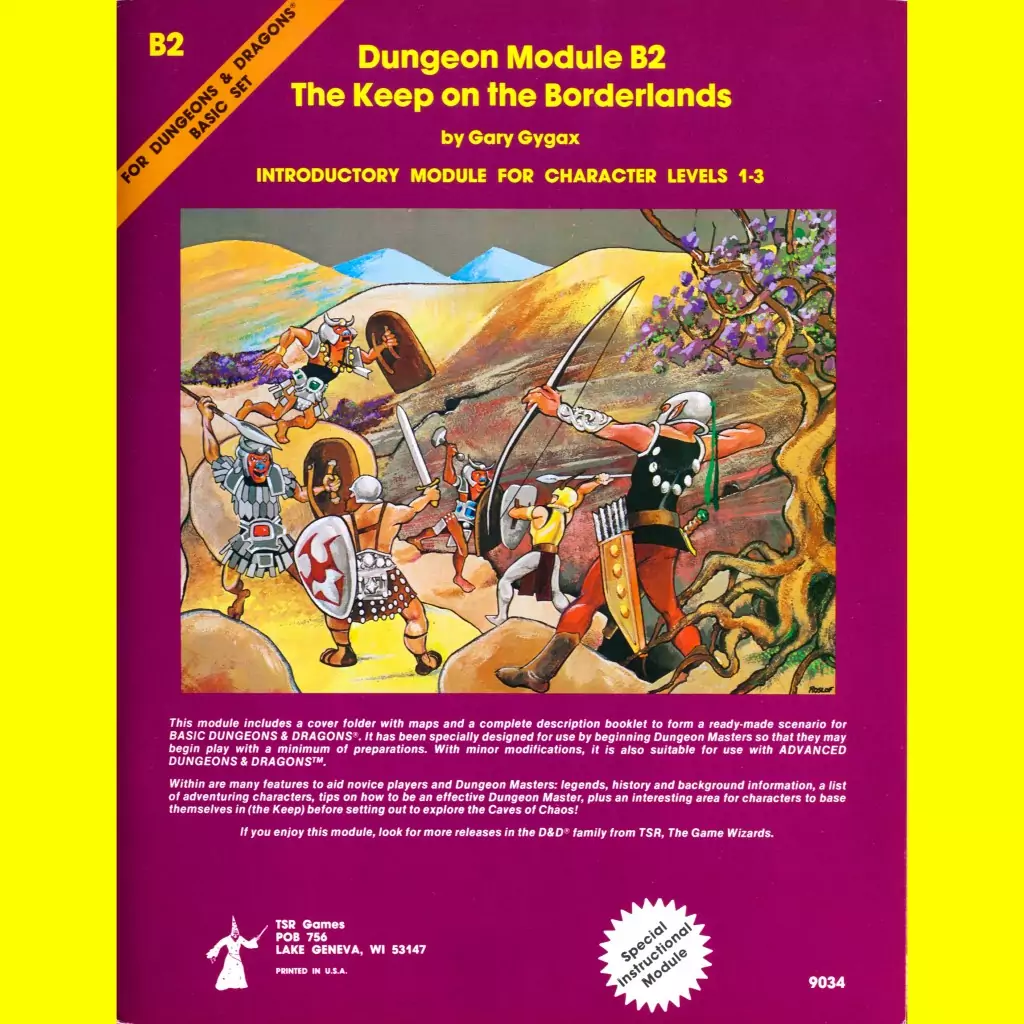
As a teaching tool, I think Borderlands is less effective than B1, but it set up a template for many adventures to come. The keep isn’t the dungeon, it is the player’s base of operations. The dungeon is the Caves of Chaos, an underground labyrinth of caverns populated by many different tribes of monstrous humanoids (and some undead too)(not to mention the lizard men in the nearby swamp). The focus on the keep, rather than the caves, is important, as the caves are not meant to be explored in one go. Rather, the module expects players to make multiple expeditions, testing their opponent’s capabilities and, ideally, turn the tribes against each other.
The nice thing about B2 is that by establishing all the locations and factions in detail, it has all the dominoes laid out and the players get to knock them down (or not) in the way that they choose, allowing the story to proceed directly out of their actions. This basic premise has been used many times since – Temple of Elemental Evil (1985) comes to mind – to great effect.
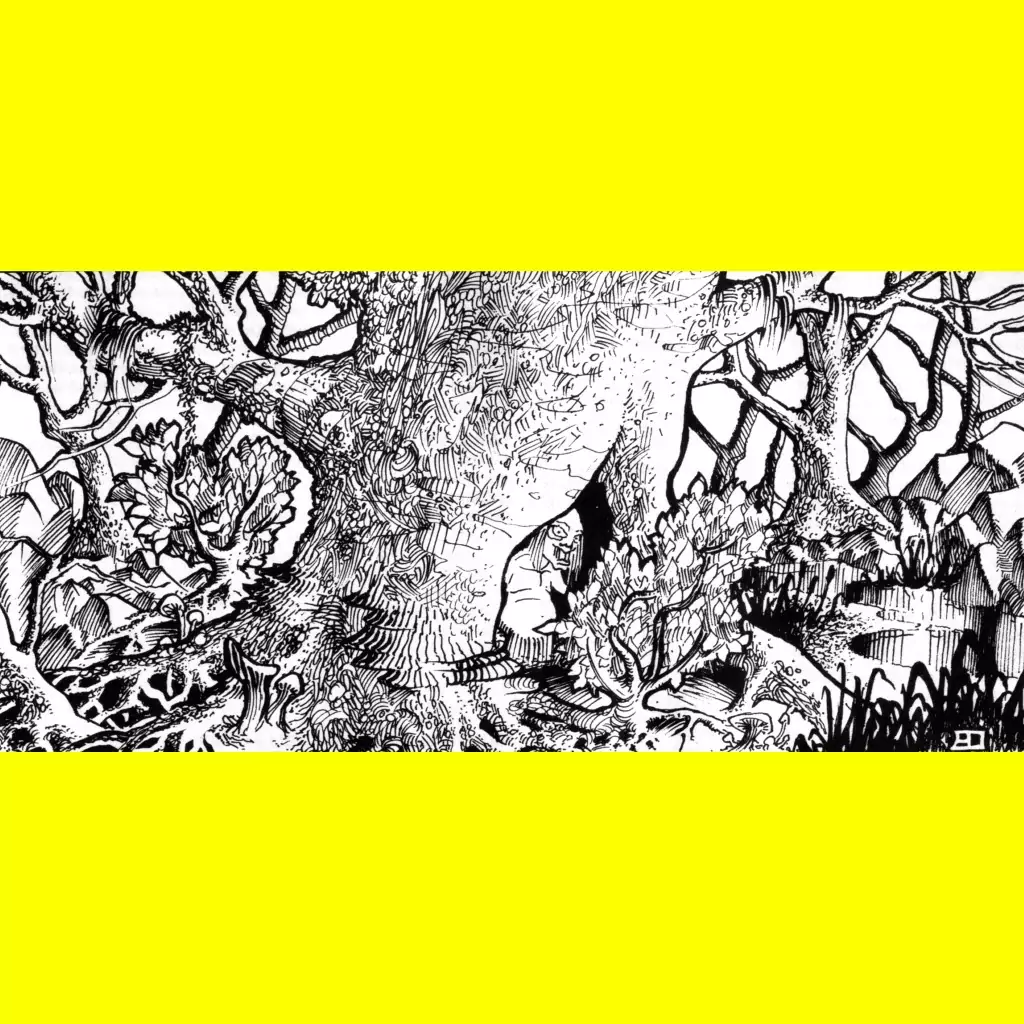
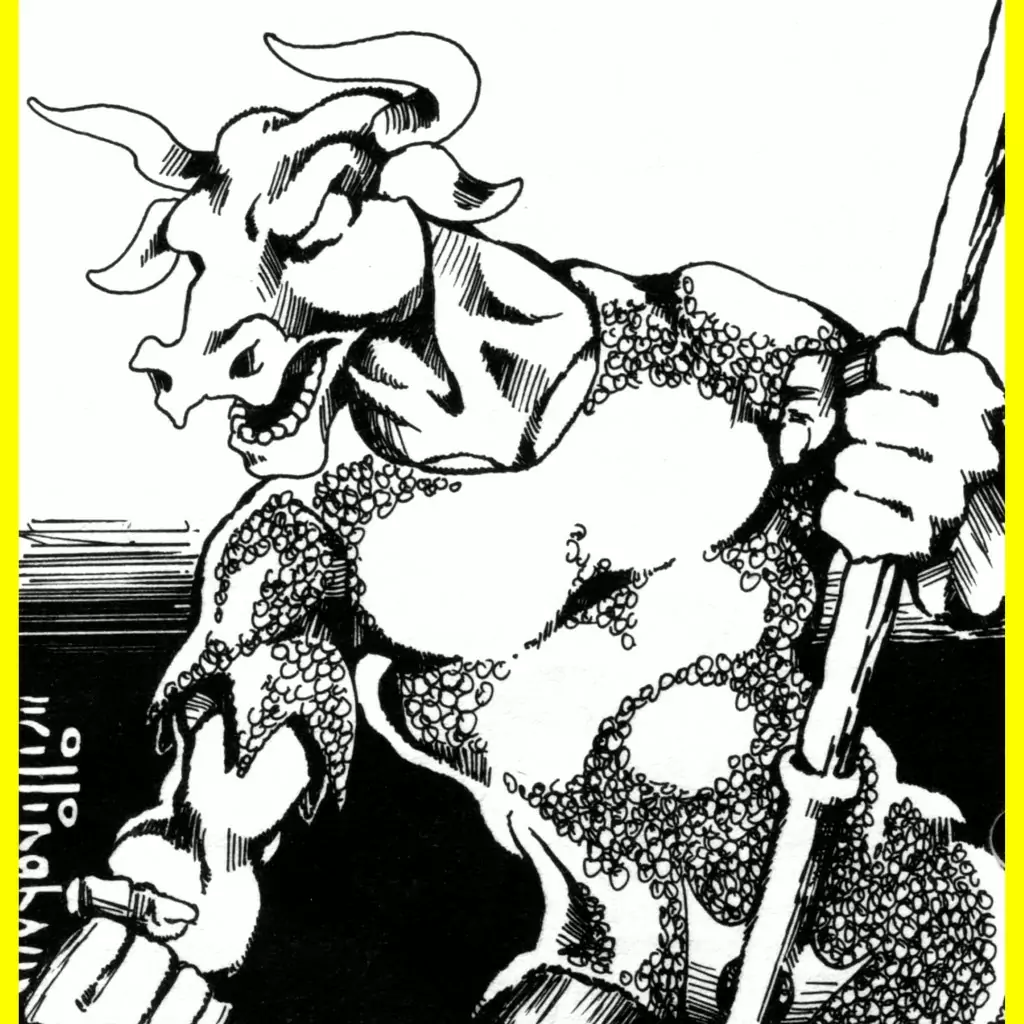
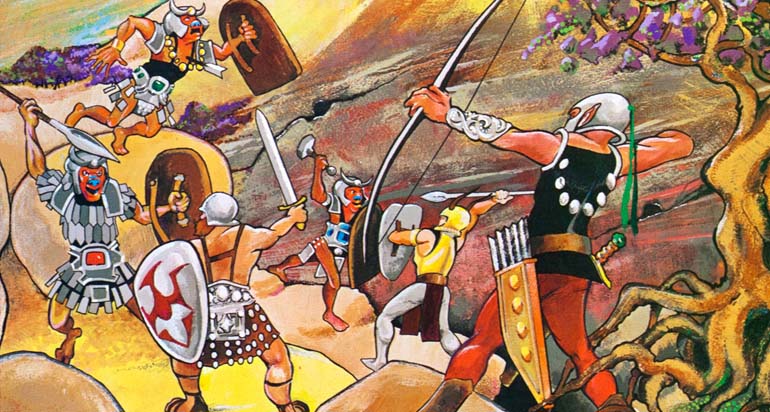
The art is a whose who of fantastic early D&D artists – Roslof, Willingham, Erol Otus, Jeff Dee, Diesel. (There are variations between printings in terms of what art is in the module. I’ve taken images from both variations I own for this post)
(I should note RuneQuest’s Snakepipe Hollow (1979) was developed concurrently, shares a similar approach, has Caverns of Chaos and does an even better job with the framework – if you dig B2, you should check that out, too.)