Lankhmar, how I love thee.
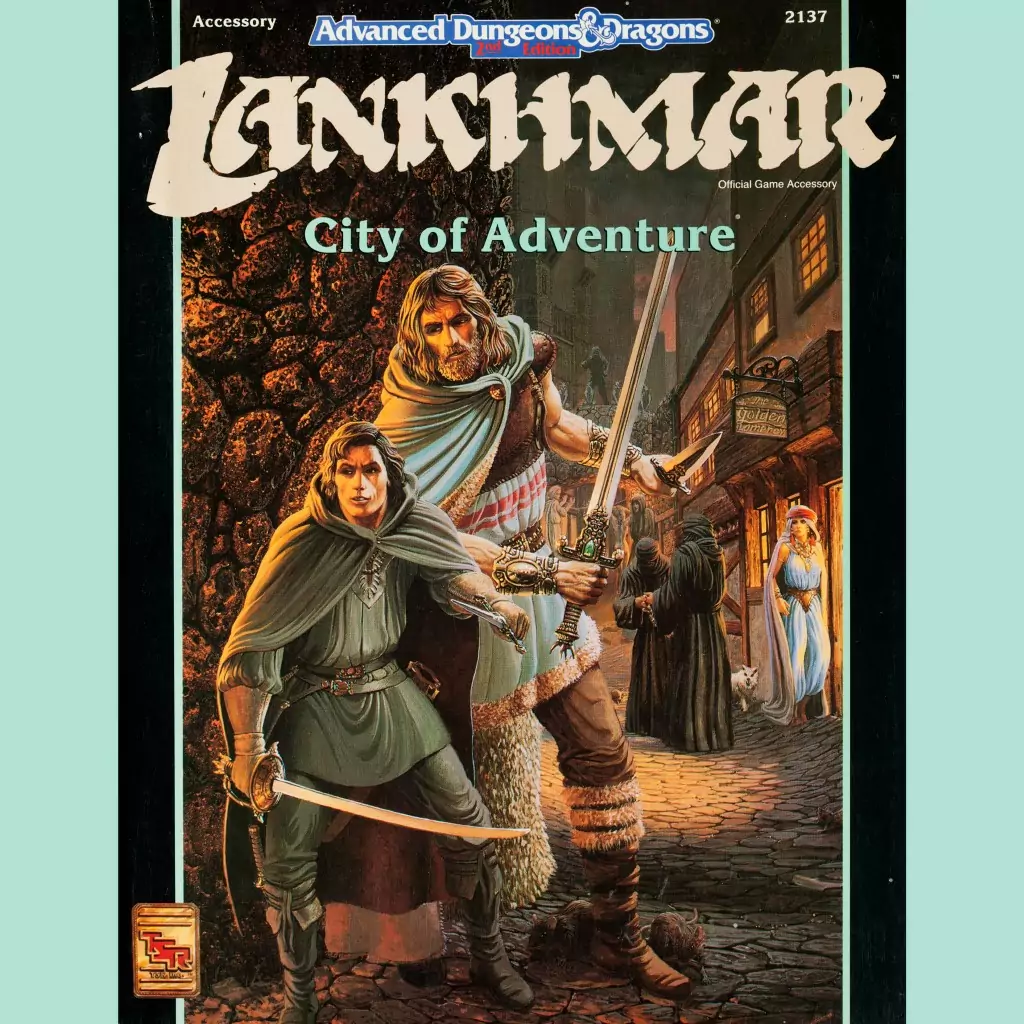
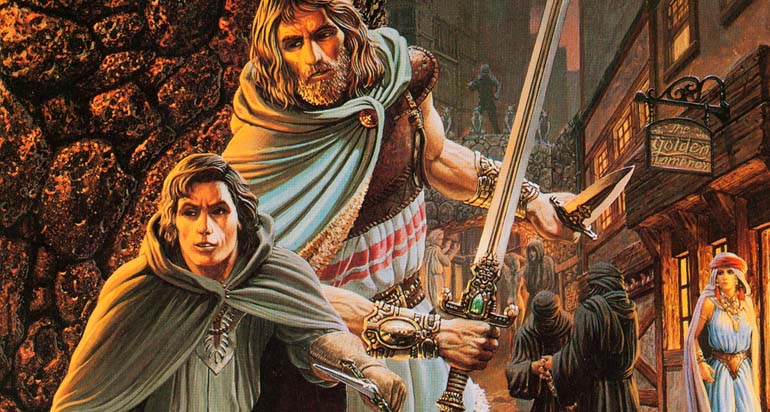
Lanhkmar is the decadent city of Fritz Leiber’s Fafhrd and the Gray Mouser stories – if you put a man-eating rat familiar to my head and told me to choose my favorite fantasy writer, Leiber would be my pick. Because of this, and the fact that the licensing money from TSR provided a destitute Leiber a comfortable existence in his twilight years, I have a great fondness for the Lankhmar campaign setting for Dungeons & Dragons.
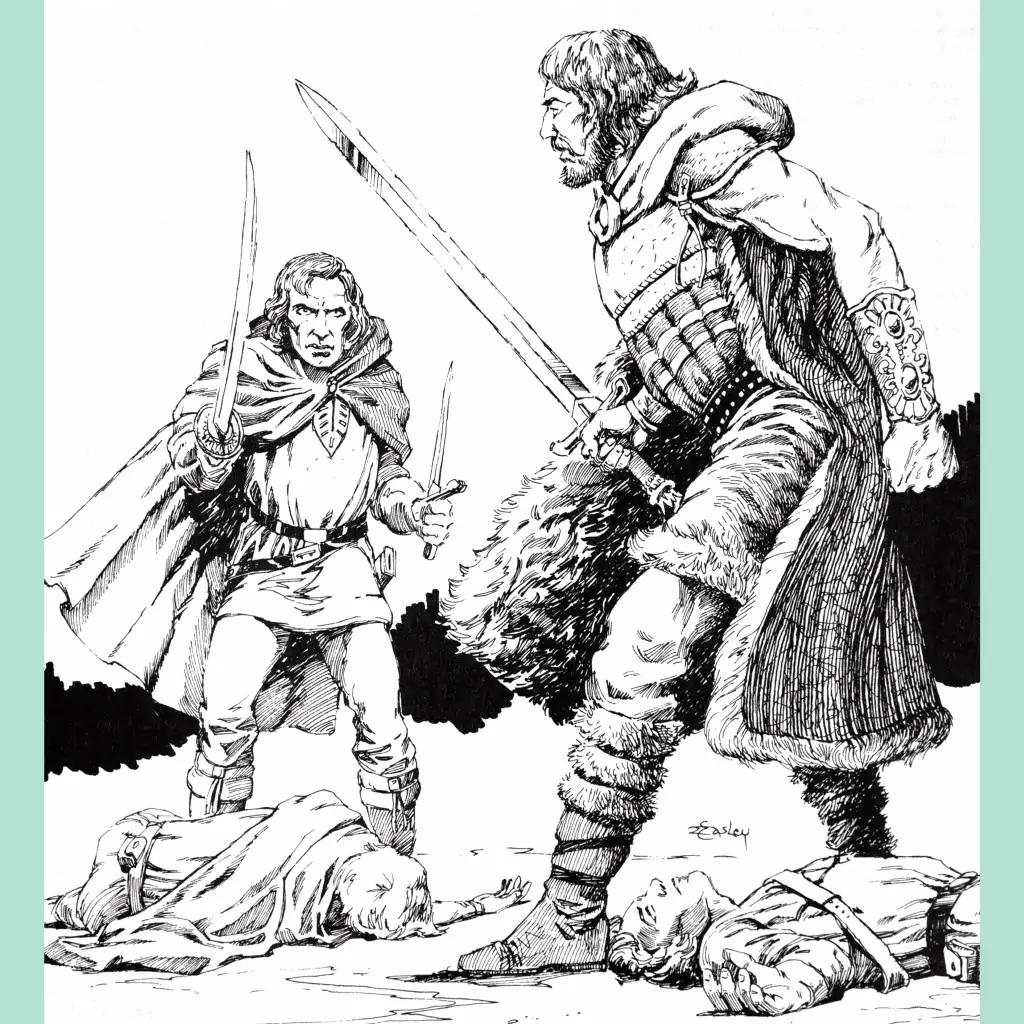
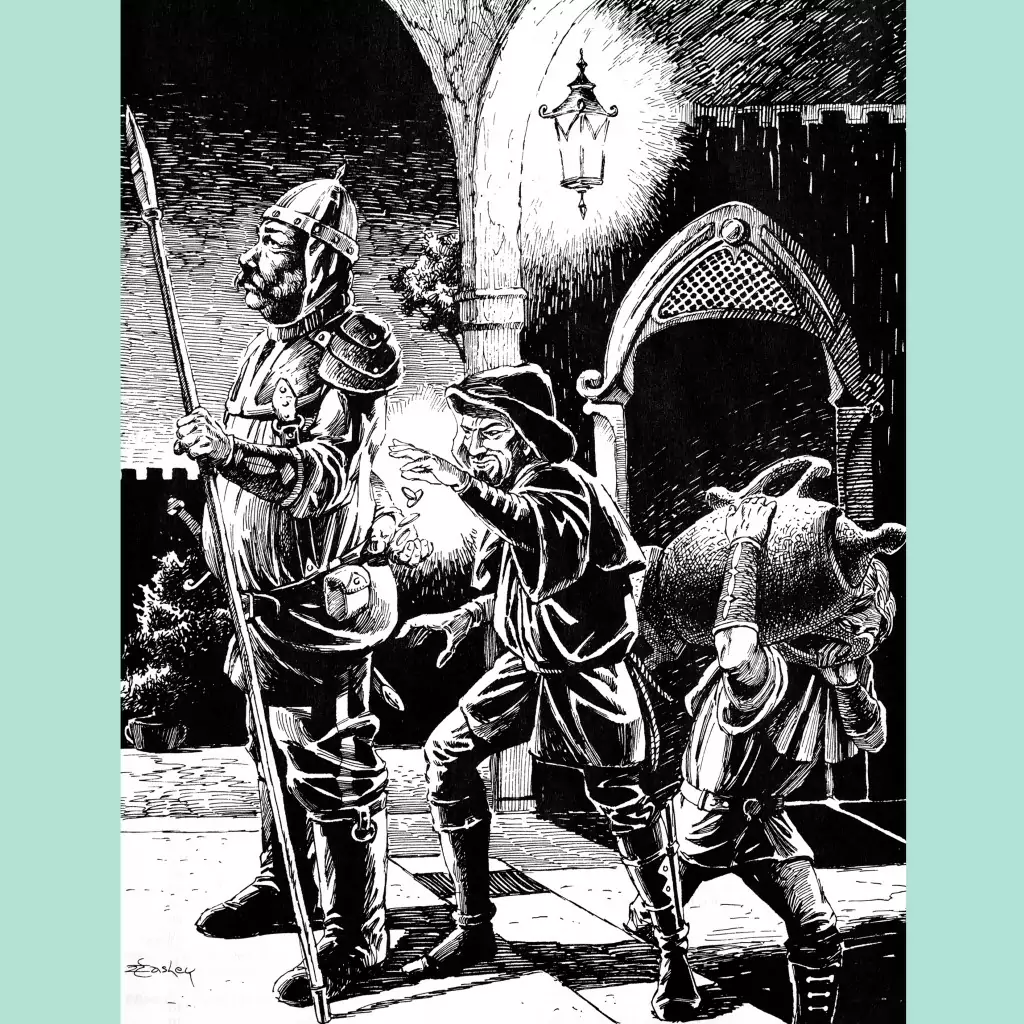
This post combines both versions of the Lankhmar: City of Adventure – the 1985 version for AD&D and the 1993 updates for 2nd Edition. They are essentially the same. The ’85 version sports a handy mini-book for maps and character sheets, which is nice, but the ’93 version features a cleaner design. The biggest difference is the art – I prefer the Elmore illustrations from ’85 (included here) and can’t figure out why they ditched them for the reprint.
Anyway! The content of the books is exhaustive, covering dozens of NPCs and creatures, almost entirely drawn from Leiber’s work. In effort to preserve the flavor of the original stories in the RPG context, character creation is reworked, removing the demihuman races and tweaking most of the classes. The biggest difference from vanilla D&D is the magic. Clerics don’t exist and arcane magic is divided into black (regular spells), white (functioning as a wizard but drawing from the divine spells) and elemental specialties. All magic is generally reserved for NPCs.
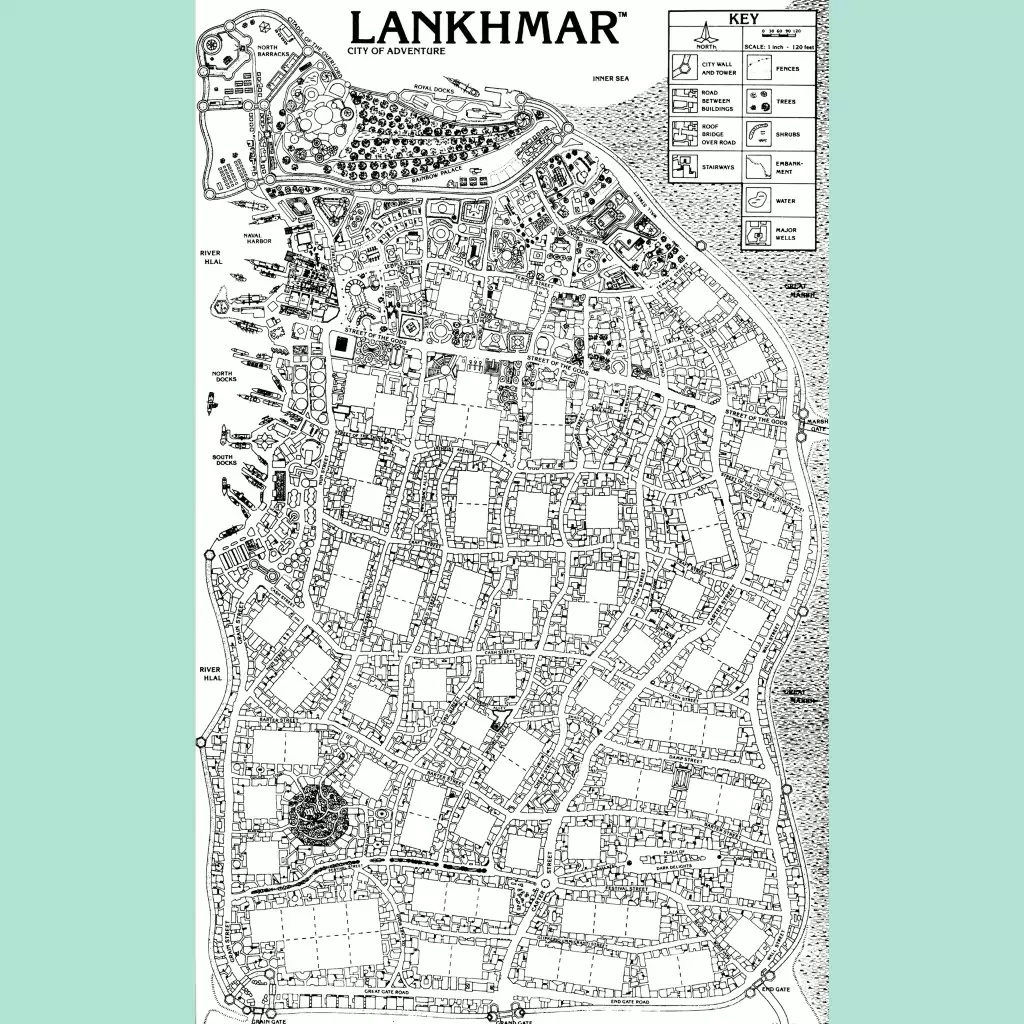
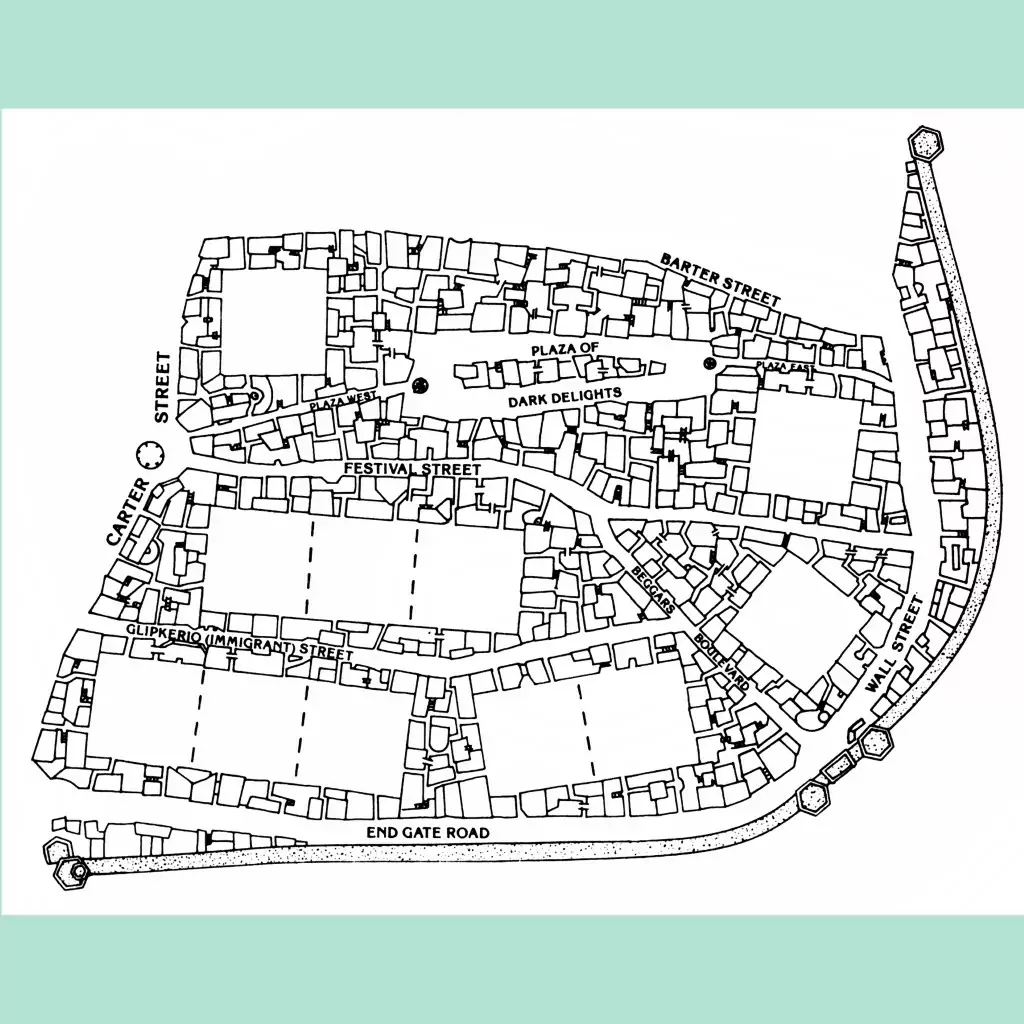
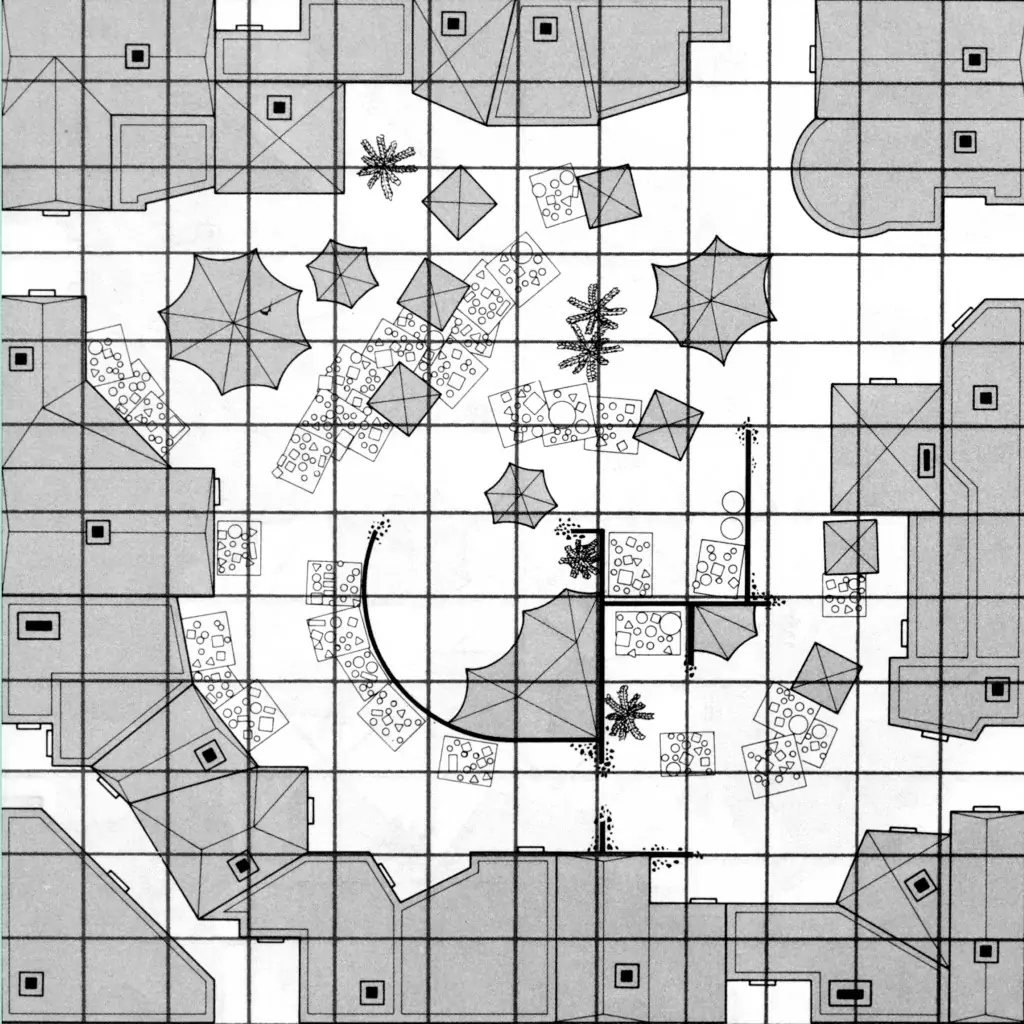
The real star is the city of Lankhmar though. This is the gold standard of D&D cities right here. There is the level of societal detail you’d expect, of course, but the real interesting thing is how Lankhmar was designed for customization. You’ll note a number of blank boxes the map – these are the backstreets of the city, unknown to casual passers-by. The DM is encouraged to design those section themselves (or use the included city geomorphs), making every Lankhmar different and strange.
One of the best D&D campaign settings ever made.