
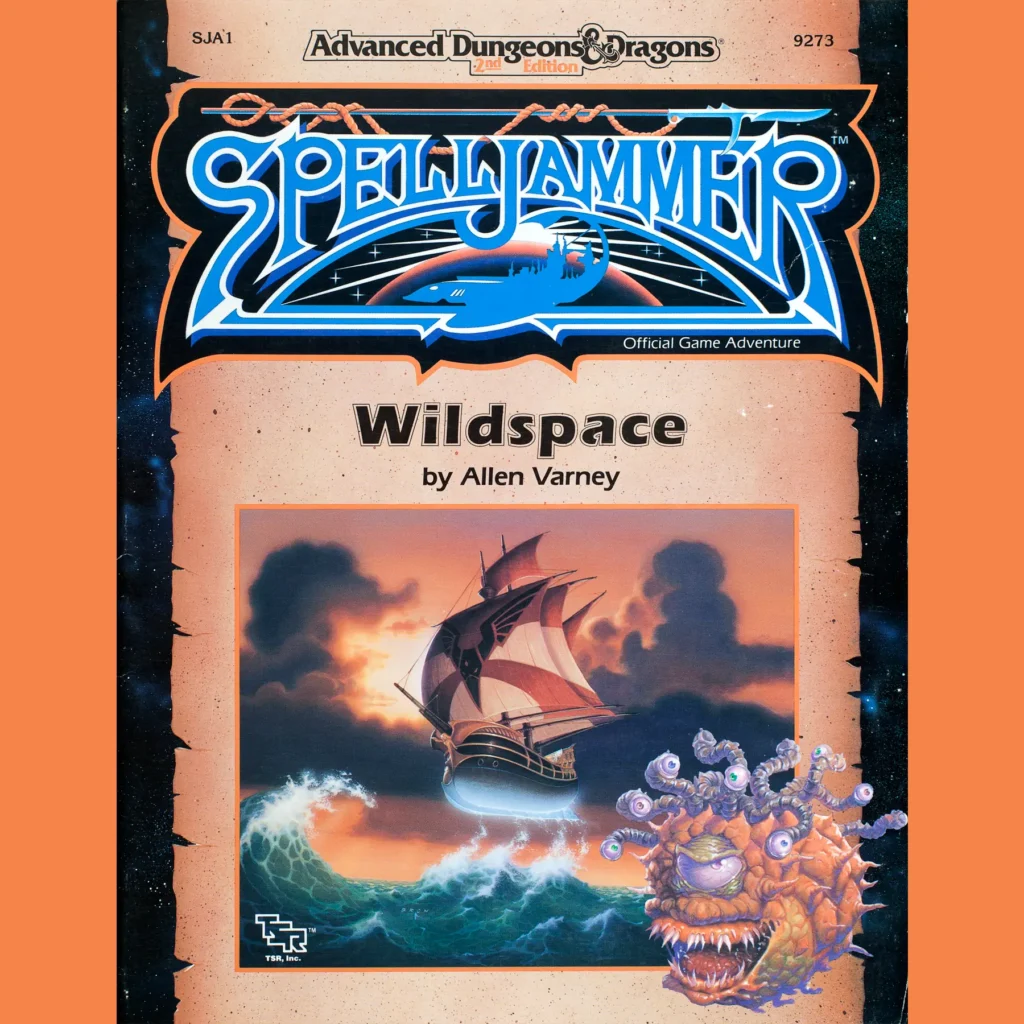
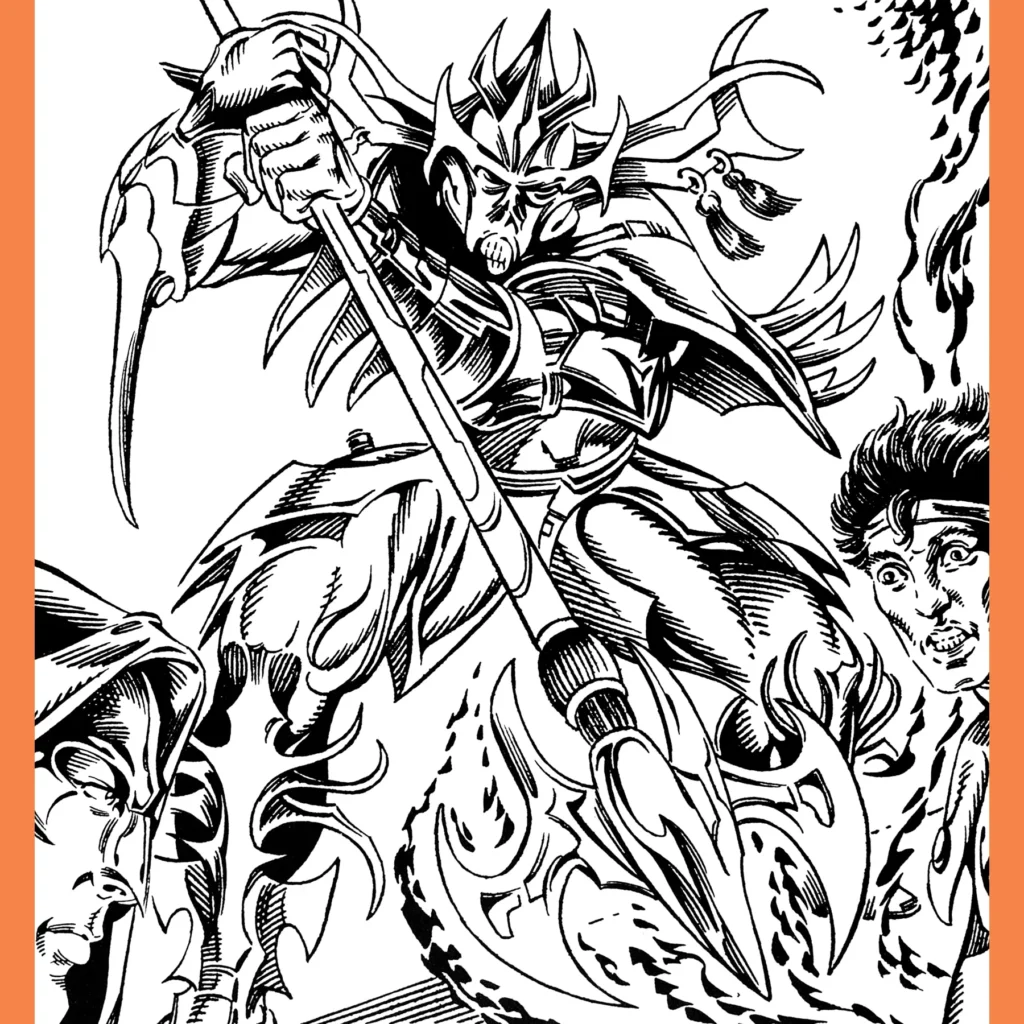
Wild Space (1990) is the first Spelljammer adventure module. I don’t know how I feel about the SJA-series trade dress combing a star field and some tattered parchment. I do like how each one of the covers features an inset of what is ostensibly the villain of the piece (in this case, a beholder, but not Shazogrox the blind beholder mage). The main cover painting is by Brom and I am pretty sure recycles art from a Basic D&D product. The beholder is uncredited. John Statema did the interiors and they’re OK.
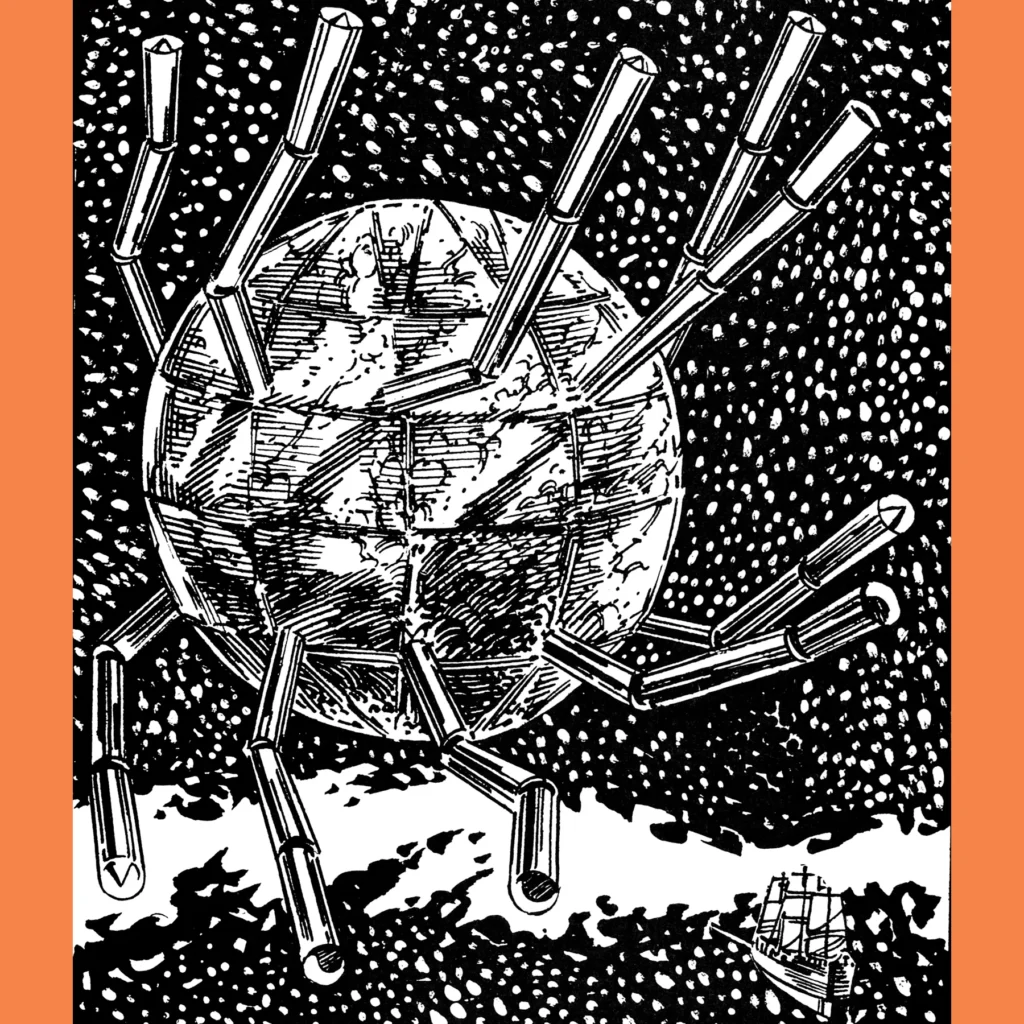
Very much an introductory scenario in many ways, the first portion of the adventure is event driven — players join a ship, players explore the ship, players fight with the ship against another ship. The task here is to find Ravager, a ship/asteroid/superweapon created by the beholder mage. It contains “The Biggest Dungeon” which is a measure of its entire area, not the number of rooms. Which is twelve. Twelve enormous rooms measured in miles. There are some curious things inside, like a forest, or walls that are a disintegration field. Eleven of the rooms are thematically connected to each of a dead beholder queen’s eyes, which are incarnated there and are also sentient and need to be destroyed. So, the “dungeon” often feels more like a wilderness, and exploring the interior is still pretty event-driven — once inside it is a race against the blind beholder. The players want to destroy the thing, the beholder wants to activate it as a weapon. Conflict is bound to erupt.
After the big battle, players can take a spelljammer ship and continue exploring wild space, or they can go back home. The fact that “go back home” is not just a viable option, but probably the optimal one, underscores some of the flaws of early Spelljammer products. Why on earth would you want to go home?

I never understood how SpellJamer and Planescape coexist in 2E. If I can use Planescape’s inter-dimensional magical portals to get around the various campaign settings/ worlds, why would I bother taking a ship, seems like the long way!