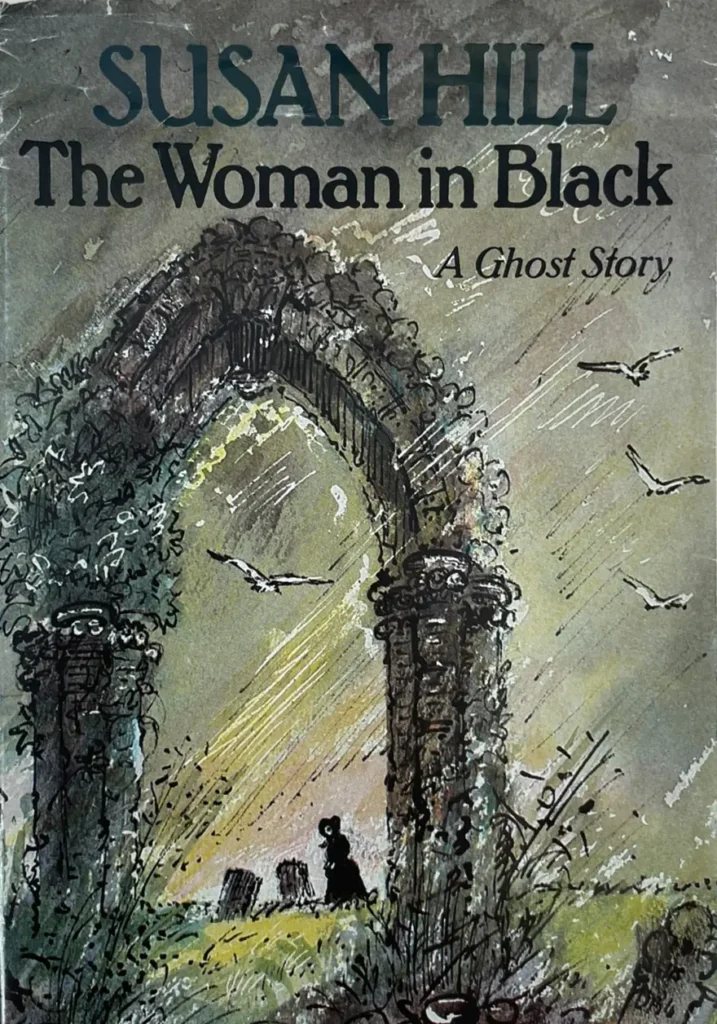
I recently watched the 1989 television film adaptation of The Woman in Black. I’d read Susan Hill’s original novel years ago and saw the Daniel Radcliffe film around when it came out in 2012, but the TV version proved elusive for many years. It aired just twice, on Christmas Eve in 1989 and again on Christmas Eve in 1994. Then, aside from a couple short run VHS releases, it disappeared into rights hell. The 2020 Blu-ray release made it accessible again, but I’ve let it kick around for a while, I think, because the Radcliffe film left so little impression. That’s a silly reason! Especially considering that the teleplay was written by Nigel “Quatermass” Kneale, who has yet to disappoint me, not to mention the fact that it apparently scared the crap out of unsuspecting audiences back in ’89.
All three versions have the same basic plot. A reclusive widow living in a dreary, isolated manor dies. The lawyer who goes to tidy up her estate winds up entangled in a supernatural curse that afflicts the town and emanates from the manor. Despite valiant attempts to lay the titular spectre, her wrath proves intractable.
The TV version is, perhaps, my favorite. Kneale’s screenplay tightens up some of the plot details in a way that draws out more thematic possibilities, which gives it the slightest advantage over the novel (though, to be fair, it’s been ages since I read it and it’s also worth noting that Kneale’s alterations annoyed Hill). As for the film version, it’s not a close contest. In fact, the disparity between the film and the television version is what has driven me to write this very essay.
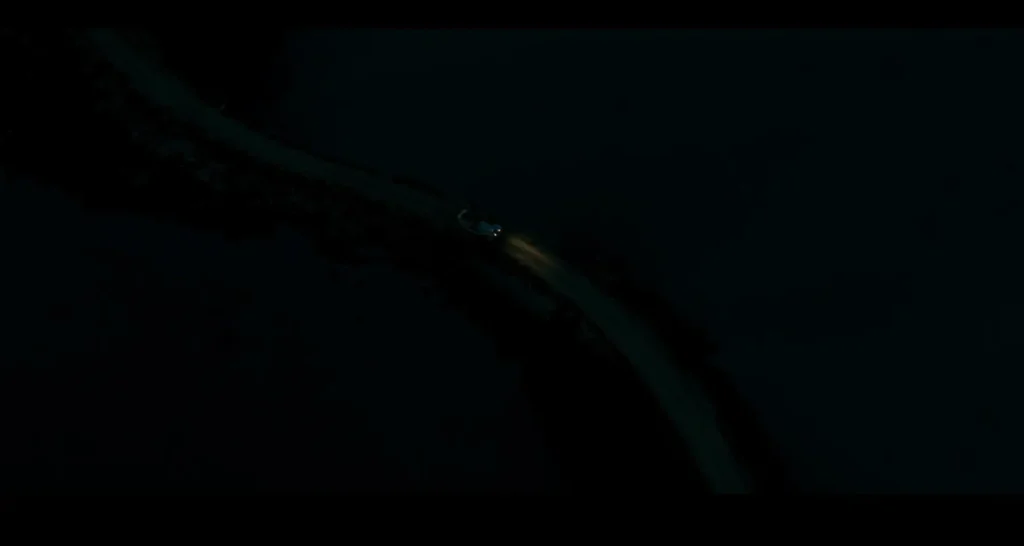
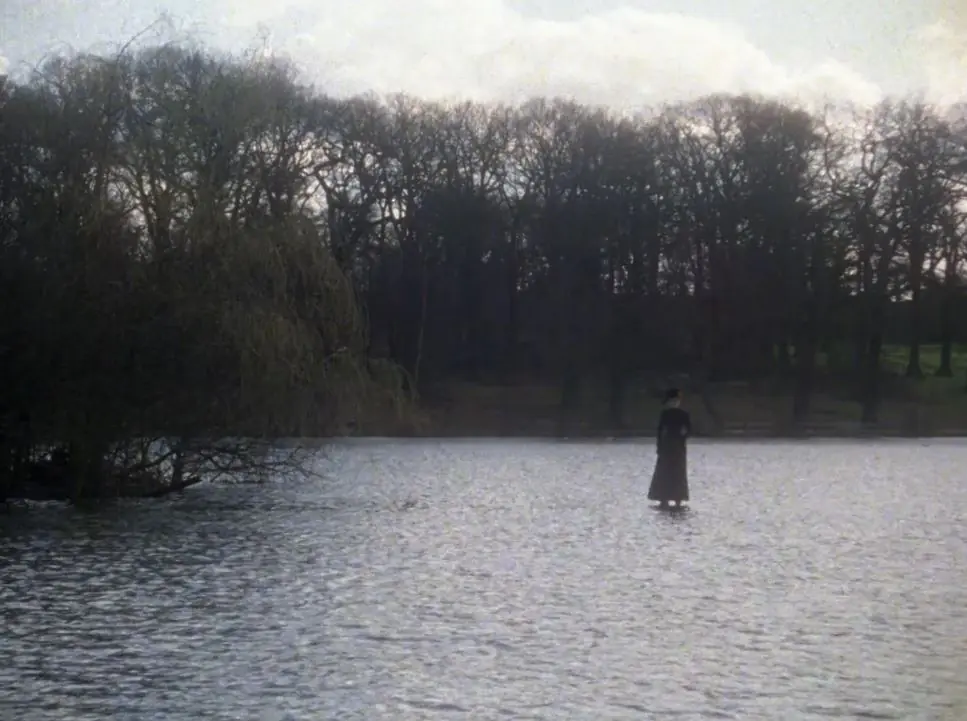
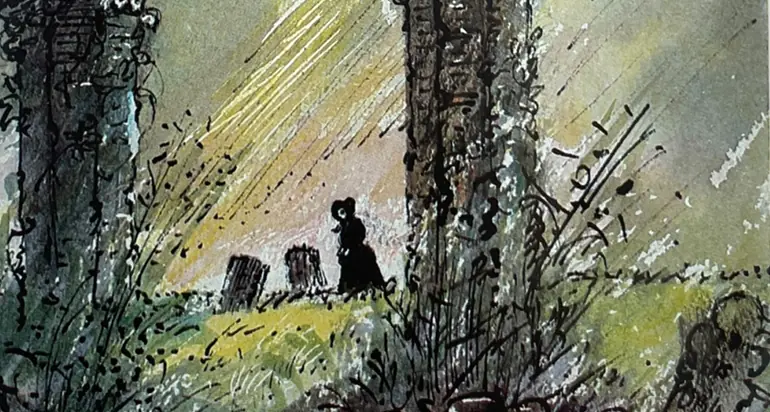
Before I watched the television version, I had very little memory of the film beyond the aggravating feel-good(ish) coda (a young dead family reunited, Jedi-like, for a happy afterlife) and the prevailing sense that the movie was filmed so dark that it verged on being indistinct. Watching the television version, though, I was impressed by myriad choices made for the production. Everything is well lit, for one. The real world of the narrative seems very mundane and plausible. One of the best moments in the runtime depends on the brightness of the day. Beginning with the widow’s funeral, the lawyer catches glimpses of a watching woman in black. The camera often swings to reveal her, then swings back again to show she’s gone, a standard horror film trick. Out at the manor, the lawyer walks into the brush to examine some overgrown grave plots near a ruined gothic arch. He grabs the back of his neck, a wonderful indication that a chill has run down his spine, and turns. The camera once again swings to reveal the woman watching and the lawyer staggers backwards. The camera swings away, tracking his movement, then swings back, but this time, she’s still there. She has him then, his fate is sealed, even though the film is only about a third of the way through.
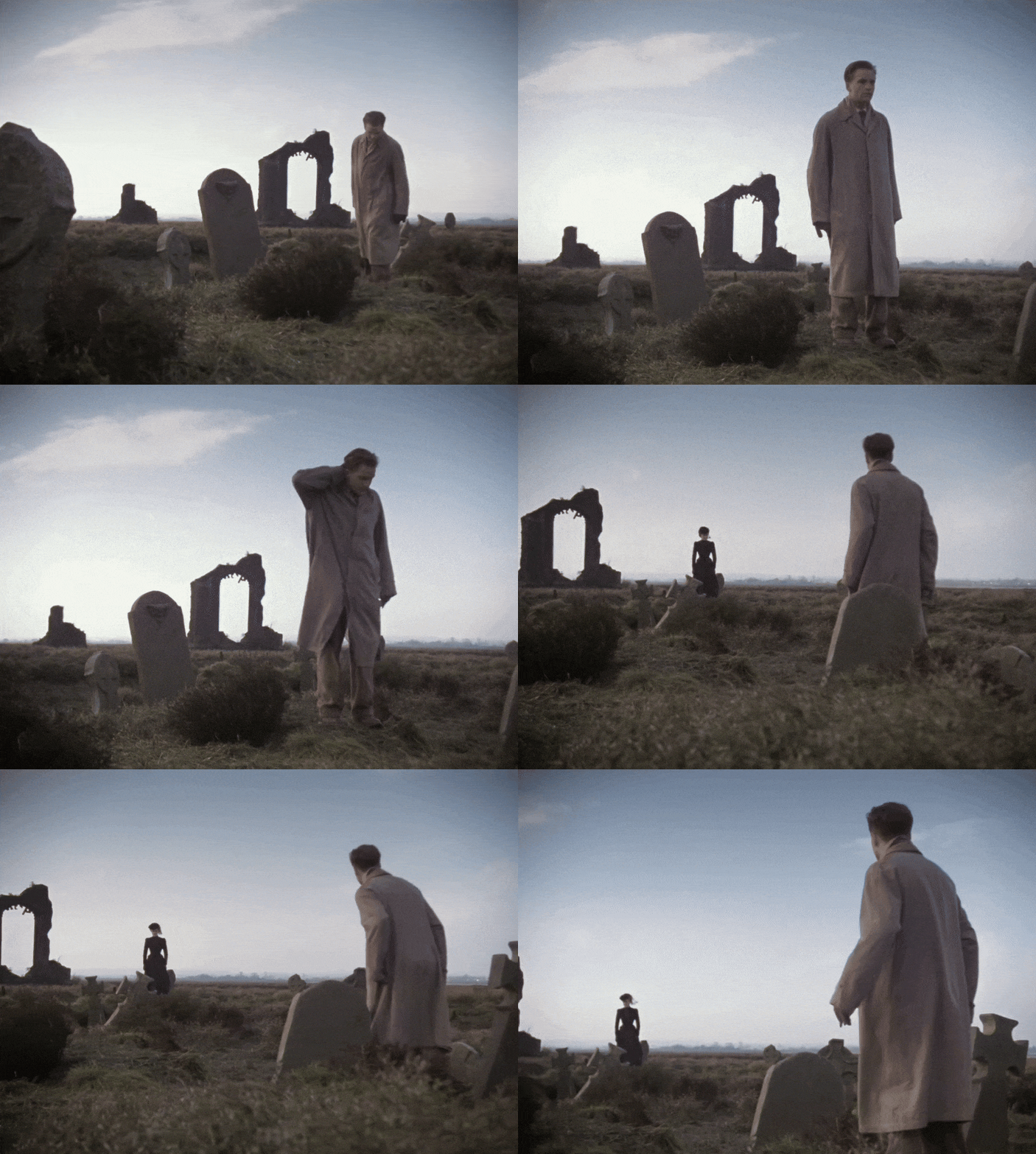
For the scene to be effective, the audience must see the action clearly. It’s a dreary, overcast day, yes, but the whole environment is legible and, mostly, prosaic. Even the woman herself is clearly a woman, even as she is a sinister dark blot on the landscape. In fact, her uncanniness isn’t conveyed by special effects, but merely by her physical presence: a slightly old-fashioned dress, her pallor, her behavior and, mostly, the fact that she simply shouldn’t be where she clearly is (and was not, a moment ago).
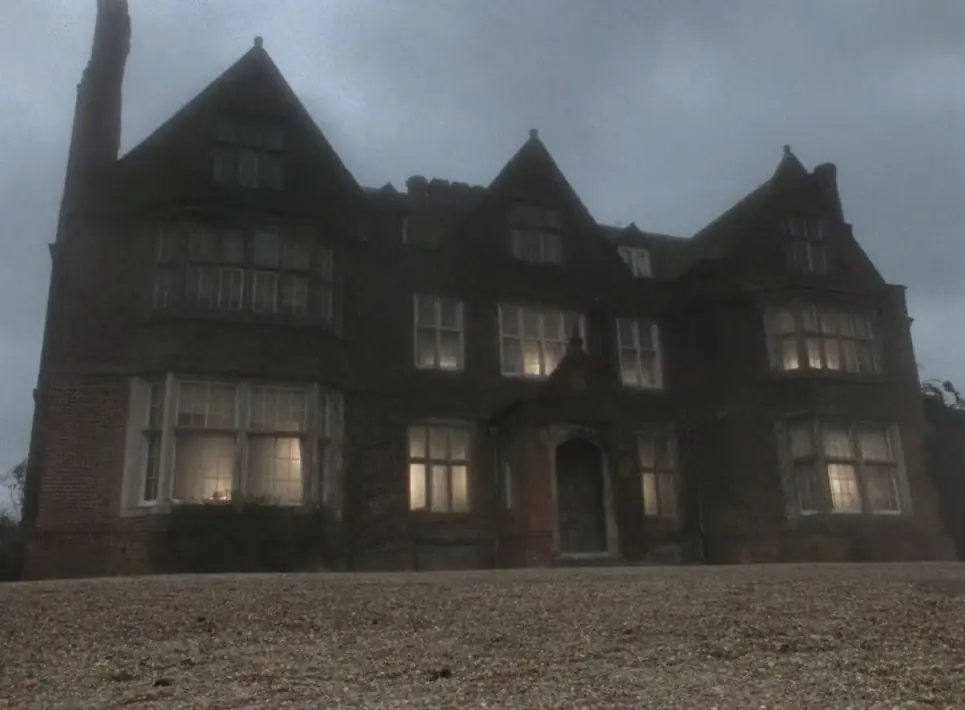
Similarly, Eel Marsh House of the small screen is a fairly conventional English manor despite its colorfully miserable name. When the electric lights are on, it verges on cozy. It’s a bit cluttered, but well-kept both inside and out. It doesn’t beggar belief that, until recently, an old woman lived there alone (though she did so with the aid of a caretaker who visits via the causeway, when it’s passable during low tide). At night, shadows crowd in, but the rooms are still recognizable as such.
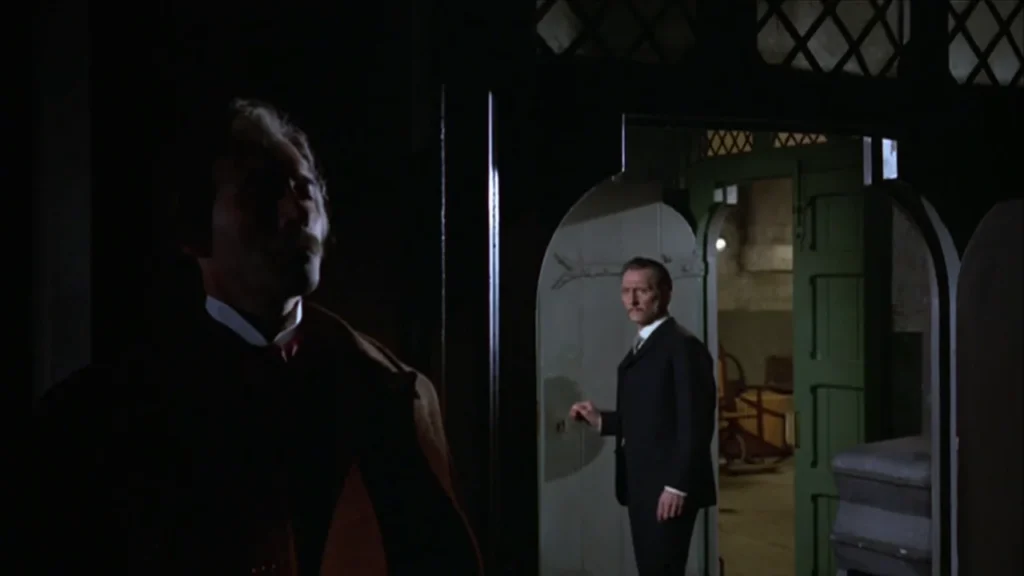
This treatment is of a kind with many of the horror films from the ’50s and ’60s that I’ve been watching this year. I’ve been fixating on the sets, because they demand attention. These are often (seemingly) huge, sumptuously dressed sound stages, or real-world locations full of gorgeous historical texture. But vast or intimate, they’re always well lit. Details fill the frame and I can look at them, if I want. Which may seem like a silly thing to say about a movie, but with modern horror films, I often don’t notice the sets at all. With Woman in Black, I now understand why.
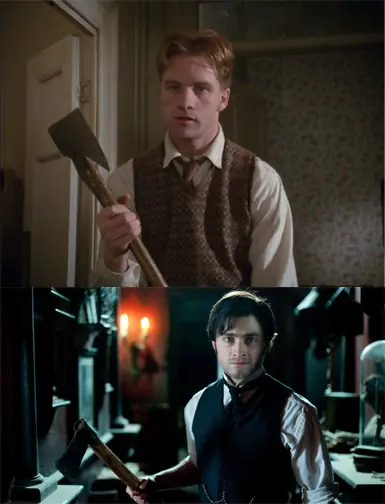
There is a sequence in both films when the lawyer rushes through the darkened house with an ax. Adrian Rawlins’ Kidd is clearly dashing through something recognizable as a house. There are doors with hinges and wallpaper and wood molding. I have been in houses like that, my house has those things. Radcliffe’s Kipps, on the other hand, is in a place that is incomprehensible as a space humans might live in or traverse. It’s all shape and shadow, cluttered but lacking detail. There’s nothing to look at except Radcliffe, which is wild because he only takes up about a third of the frame.
In fairness, those sets from old Hammer and Corman films I mentioned don’t always look like habitable environments either, and that’s fine! But I can see them and make sense of them in a way that I cannot understand the space of Eel Marsh House in the Radcliffe film. Beyond legibility, this seems like a crucial mistake for the material. There are three main scare scenes in the 1989 version, all of which feature camera that lingers on what is unmistakably a physical presence that the characters (and the audience) have to reckon with because of the tension between that physicality and its impossibility. All the rest of the movie’s dread and doom derive from atmospherics: the reactions of characters, the use of spaces, the fog, the sounds. The 2012 version instead conflates darkness for scariness, resulting in the most powerful moments being obscured.
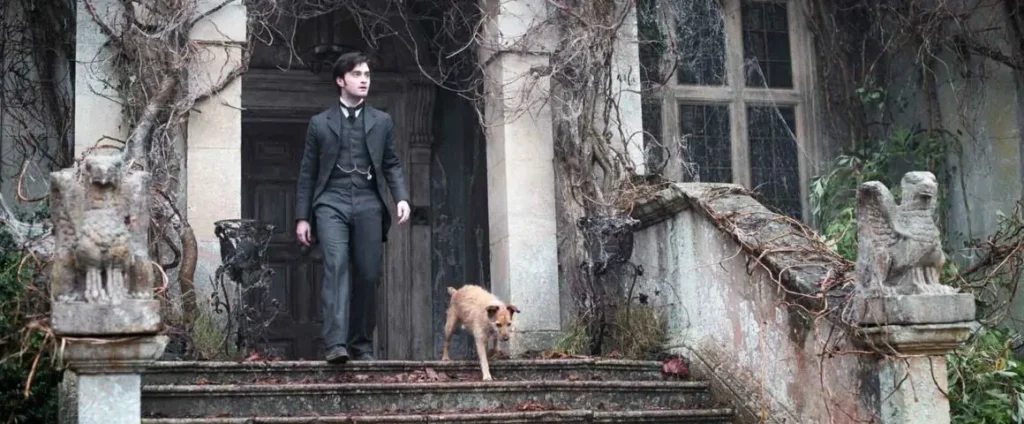
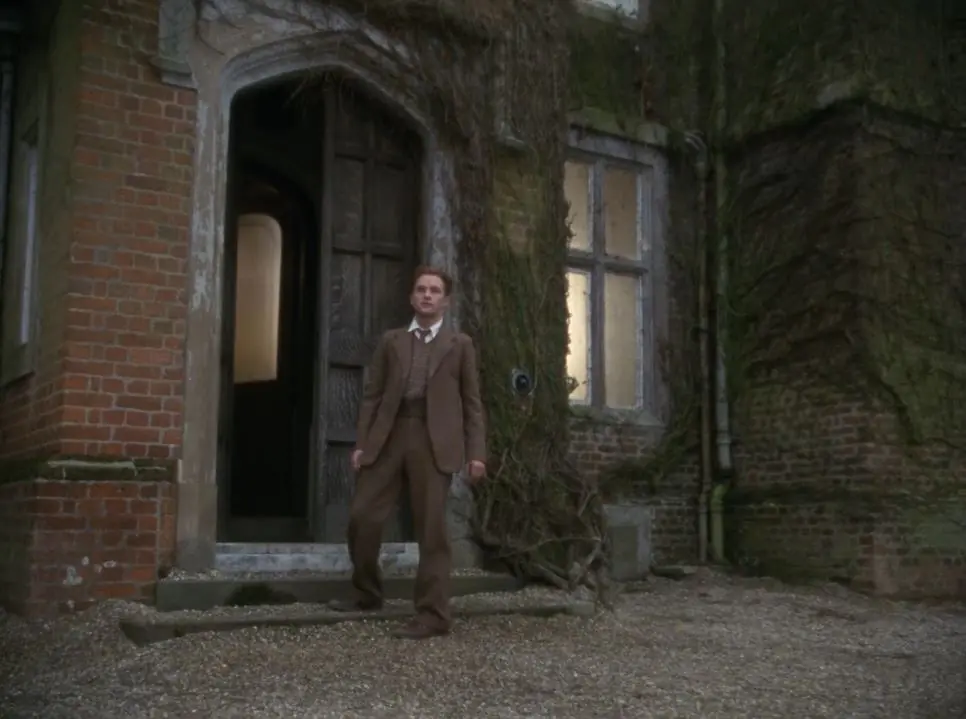
When the 2012 film does choose to depict detail, it’s almost comical in how awful and decayed and decrepit everything is. This quality is most clear in the depiction of Eel Marsh House as overgrown, cobwebbed, dusty and moldering. At a glance, I already know I would never want to visit, let alone sleep there, any more than I would an abandoned house in New Jersey. There is no surprise the townsfolk don’t come here! It’s dangerous in a more pressing way than the possibility of encountering a spectral harbinger of death. The television adaptation understands this. Yes, the house is remote and often cut off by the tides and the sea fog, but it is still a nice enough house. When the townsfolk react so dramatically to the idea of visiting, the viewer understands that something else is going on. It isn’t rotten floorboards and tetanus keeping folks away, it’s her.
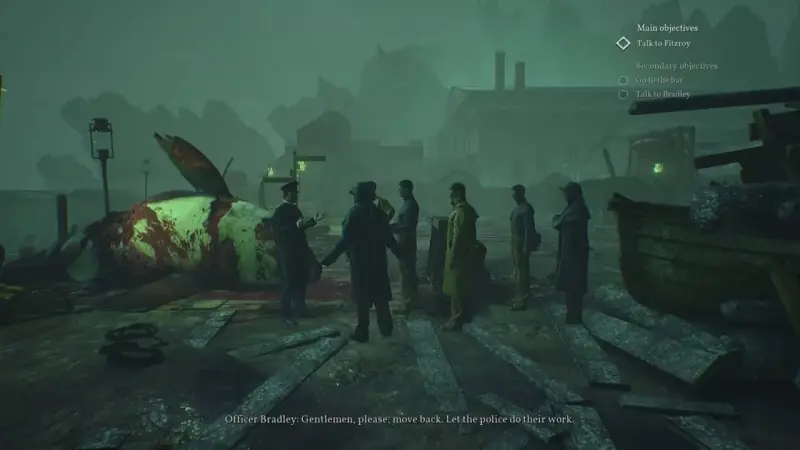
Something similar drove me to distraction in the 2018 Call of Cthulhu videogame. The main character shows up at a town called Darkwater and things are awful from the get-go. There are weird, monolithic rocks on the coast, the whole town is ramshackle and slimy, the inhabitants surly and mutated. By starting off this way, the eventual intrusion of the cosmic and its incomprehensible monsters is diminished, because the reality they’re intruding on is already miserable and horrible. Annabelle, the haunted doll from The Conjuring franchise has the same disease, a design so overdone it is better suited for a horror parody like Scary Movie (the “real” Annabelle was just a standard Raggedy Ann). The 2012 Woman in Black actually beat The Conjuring to the punch with implausibly creepy dolls by a whole year. The movie is full of them, many broken and dirty, looking like refugees from a Nine Inch Nails video or a Brothers Quay short.
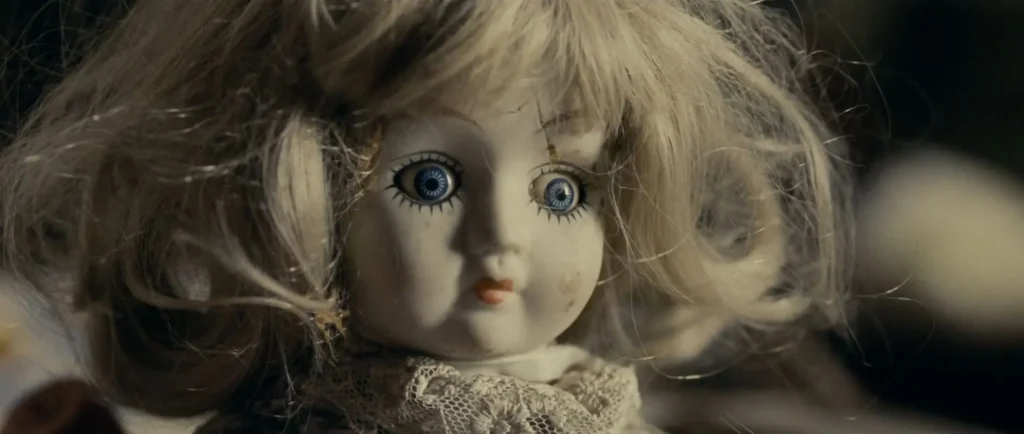
Perhaps more than anything, these forlorn toys are the evidence that the production team was trying too hard. There’s a sense to me that the 2012 film lacks confidence; whether that doubt is turned inward at its ability to frighten, or outward at the audience’s ability to understand why they should be frightened, I’m uncertain. Whatever the reason, all that overdone stage dressing, the pitch-black frames, the derelict dolls, the piles of corpses, it all seems to insist that this is a Horror Film. Yet, every bit of it winds up diminishing the impact of the horror it so desperately wants to convey.
When I was looking around for Woman in Black stills, I found an essay by Lucía Muñoz comparing both films. I’ve not read it yet in full, but one bit jumped out at me: “…it feels like the new one is trying to pre-chew all the information for you before you consume it…” There’s something to that. A certain strain of modern films, the 2012 Woman in Black among them, are packed with the visual signifiers of horror: looming shadows, curtains of cobwebs, the physical evidence of decay. These blunt symbols insist to audiences that they’re frightening without bothering to solve the complicated emotional calculus of evoking fear, dread or any of the other emotional states associated with the genre. That might make for a smooth, easy-to-digest cinematic roller coaster, but ultimately, it’s one that’s forgotten as soon as the ride is over. Instead, it’s the modest 45-year-old made-for-TV movie that does the original novel justice, primarily by having the nerve to trust the psychological power of the source material. And like a bad dream, or a haunting, it lingers.