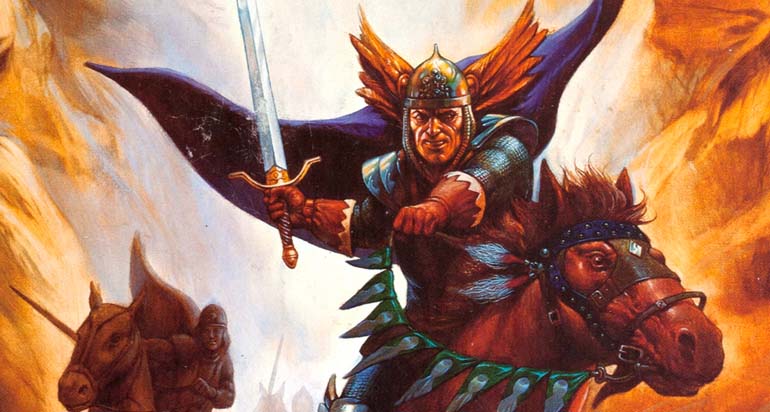
The Player’s Handbook got the same aesthetic and organizational makeover as the DMG. And thank goodness. I can’t stress enough how much I appreciate a good index.

PHB is where the 2E controversies cropped up. Gone are monks, assassins and half-orcs, as well as everything in Unearthed Arcana. That really chaffed some folks, but I dunno, Unearthed Arcana is broken as hell and I suspect that is why players love it so. They also either fixed or irrevocably broke the bard, depending on who you talk to. Proficiencies added a (let’s be honest: broken, confusing and probably often ignored) skill system. Fun fact though: 2E is 1E compatible, so you can import all your favorite missing stuff from the earlier edition.
I should come clean about some biases here. 2E is the edition I played in my teens, which means it is the one that I devoted the most time to, which means it is the one I know best. That’s what I mean when I say that 2E is the best D&D – it’s the best for me. And while I love D&D, at this point I am kind of over elaborate rules for simulation – I’ve never once played with a group that didn’t house rule the crap out of any given edition of D&D, which tells me that a lot of the rules are an impediment to the fun. So, if we’re choosing impediments, my preferred impediment is 2E. (Refer back to this when I eventually cover 3-5E.)
Anywho. The PHB and DMG for 2E are very much siblings – sturdy, a bit dull, but you can drive the rules off a cliff and they will still pretty much work. PHB, for my money, organizes its spells the best, with master tables preceding alphabetical descriptions by level, followed by listings by school and sphere. When it comes down to it, spells want to/should be on cards, but if they have to be in a book, this is the way I want them.
Finally, the art is mostly unremarkable. I will say, though, that I always hated the Elmore painting of the party with the dead young dragon. The older I get, the more it underscores the quicksand that D&D’s system of morality is built on.


